
Pruning
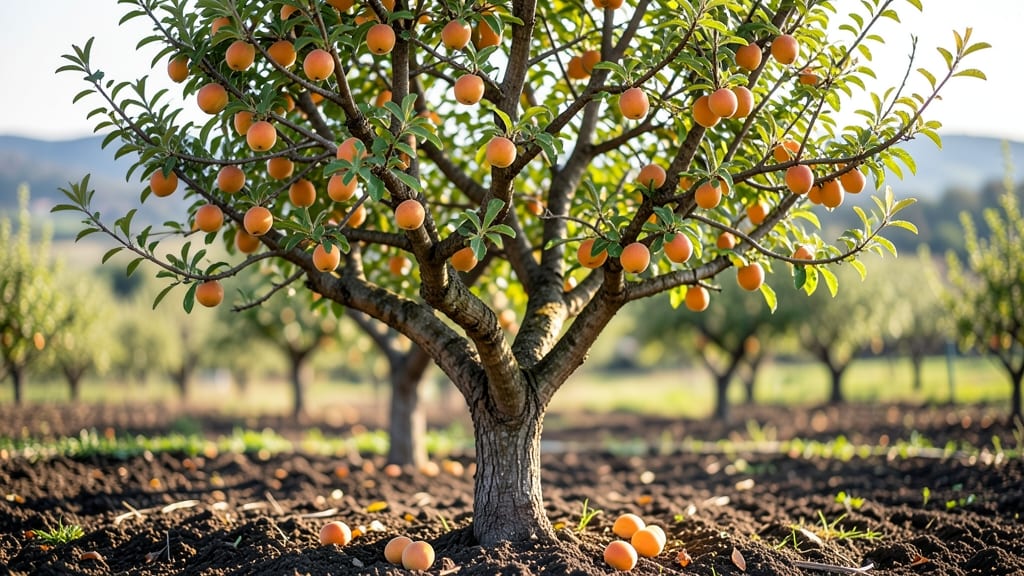
Understanding your apricot tree's height determines whether you end up with a manageable backyard fruit producer or a towering nuisance that blocks sunlight. 🌳 Standard varieties can reach 15-25 feet tall, while dwarf types stay under 8 feet—a game-changer for small spaces or container growing.
The difference isn't just aesthetics; it affects fruit quality, harvest ease, and even how often you need to prune.
Most apricot trees grow 1-2 feet per year when young, then slow as they mature. That means your 5-foot sapling could be a 15-footer in a decade if left unchecked. The good news?
Pruning in late winter—before buds swell—lets you control height by removing 1/3 of last year's growth while encouraging outward branches that produce more fruit. Dwarf varieties need similar care but on a smaller scale.
You'll end up with a tree that fits your space while delivering heavier crops because pruning improves airflow and sunlight penetration. A well-managed standard tree might yield 50-100 pounds of fruit annually, while a dwarf could give you 10-20 pounds—enough for jams, fresh eating, or sharing with neighbors.
The key is consistent pruning and knowing when to stop cutting.
Regional differences matter: apricots thrive in USDA zones 5-9, but southern climates push faster growth, while northern zones may need cold-hardy varieties. Whether you're working with a full-size tree or a patio-sized dwarf, the same pruning principles apply—just scaled to your space. Let's get those branches under control.
📚 In This Guide
- What you need
- Instructions
- Tips and common mistakes
- Wrapping up and next steps
What you need
- ● Pruning shears: Bypass pruners (for small branches, ¼"–½" thick)
- ● Loppers: 1 pair (for branches ½"–1½" thick)
- ● Pruning saw: One-handed or folding saw (for branches 1½"–3" thick)
- ● Disinfectant: 70% isopropyl alcohol or bleach solution (1 part bleach:9 parts water) to sterilize tools between cuts
- ● Gloves: Heavy-duty work gloves (to protect from thorns and sap)
- ● Ladder or step stool: Sturdy, tall enough to reach the tree’s highest branches (check weight capacity!)
- ● Tarp or drop cloth: Medium-sized (to collect debris)
- ○ Pruning sealant (optional): Tree wound paste (for large cuts, ½" or wider)
- ● Knowledge: Basic understanding of apricot tree anatomy (e.g., water sprouts vs. fruiting wood)
- ● Timing: Prune during dormant season (late winter/early spring, before buds swell)
- ● Weather: Dry, calm day (avoid pruning if rain is forecasted within 24 hours)
- ○ Safety gear (optional but recommended): Safety glasses
- ● Long sleeves/pants (to avoid sap burns)
- ● Tree health check: Inspect for pests/diseases before pruning (treat if needed!)
How to prune apricot trees for controlled height and abundant fruit
Here's the method I use to keep apricot trees under control while maximizing fruit production—tested over years in my own orchard.
✂️ Step 1: Time the Pruning for Optimal Growth
Prune your apricot tree during late winter or early spring, just before buds swell but before new growth begins. This timing ensures the tree focuses energy on fruit production rather than excessive vertical growth. I always prune 3-4 weeks before last frost—any earlier and you risk encouraging late-season growth that won't harden off properly.
If you missed the winter window, summer pruning is your next best option. Focus on removing only water sprouts and diseased branches during this period, as heavy pruning can stress the tree when it's already busy fruiting. Avoid pruning in fall, as new growth won't have time to harden before winter.
🌿 Step 2: Remove Dead, Diseased, and Crossing Branches First
Start by eliminating dead, diseased, or damaged branches—these are your first priority. Look for branches with no leaves, blackened bark, or cankers (sunken, discolored areas). Cut these back to the main trunk or a healthy lateral branch, making clean cuts at a 45-degree angle just outside the branch collar.
Next, remove any branches that are rubbing against each other—these create wounds that invite disease and rot. You'll also want to eliminate water sprouts (thin, upright shoots) that grow straight up from the trunk or limbs. These compete with fruit-bearing branches for energy and should be cut back to their point of origin.
☀️ Step 3: Shape the Canopy for Light Penetration
Apricot trees thrive with an open, vase-like shape that allows sunlight to reach all branches. Start by selecting 3-5 strong, well-spaced scaffold branches—these should be 12-18 inches apart and evenly distributed around the trunk. Remove any competing branches that grow too close to these main limbs.
For height control, focus on limiting vertical growth. If a branch is growing straight up, cut it back to a lateral bud (a bud that grows outward rather than upward). This encourages the tree to fill out horizontally, which is ideal for fruit production. Aim to keep the tree's final height between 8-10 feet—tall enough for good air circulation but manageable for harvesting.
⏰ Step 4: Thin Out Overcrowded Areas
Look for areas where branches are too dense—this often happens where multiple limbs grow close together. Thin these out by removing one of every two or three branches in crowded spots. This improves air circulation, reduces disease risk, and helps fruit ripen evenly. You'll know you've done enough when you can see light filtering through the canopy from above.
Pay special attention to suckers (shoots growing from the base of the tree) and shoots growing from the graft union (the bump where the tree was grafted onto its rootstock). These should be removed immediately—they divert energy from fruit production and can weaken the tree's structure. Use sharp pruning shears to make clean cuts at the base.
🪴 Step 5: Maintain Height Over Time with Annual Pruning
After the initial pruning, light maintenance cuts are needed each year to keep the tree at your desired height. In early spring, remove any shoots that grow taller than 12 inches in a single season—these are likely to become unmanageable. Instead, encourage shorter, bushier growth by cutting back to a lateral bud.
Every 2-3 years, reassess the tree's structure and repeat the shaping process. This ensures the tree stays compact, productive, and easy to harvest. Avoid the temptation to prune too aggressively—even mature apricot trees should never be reduced by more than 25% of their foliage in a single year. Over-pruning stresses the tree and can reduce fruit yield.
Tips & tricks for perfect apricot tree pruning
A few subtle adjustments can transform your apricot tree from a wild, unruly giant into a manageable, fruit-producing powerhouse. Here's what I've learned after years of trial and error in my own orchard.
Timing is Everything: The 3-4 week window before last frost in late winter/early spring is non-negotiable for serious pruners. I've seen trees stressed by late-season pruning—new growth simply doesn't have time to harden before winter. Pro tip: Check your local frost dates and mark your calendar. For summer pruning, stick to minimal cuts—only remove water sprouts and diseased branches to avoid shocking the tree during its fruiting cycle.
The 45-Degree Angle Secret: When cutting branches, make clean cuts at a 45-degree angle just outside the branch collar. This prevents water from pooling and causing rot. I learned this the hard way after seeing multiple cankers develop from improper cuts. For branches thicker than your wrist, use a pruning saw for cleaner results. Always sterilize your tools between cuts to prevent disease spread.
Canopy Light Test: Your goal should be to see sunlight filtering through the canopy from above. In Step 4, when thinning crowded areas, remove one of every two or three branches until you can see light through the center. This isn't just about aesthetics—proper light penetration ensures even fruit ripening and reduces disease risk. Think of it as creating an open umbrella rather than a dense thicket.
Annual Maintenance Hack: Set a reminder for early spring each year to check for shoots growing taller than 12 inches in a single season. These vertical growers become unmanageable quickly. Instead of removing them completely, cut back to a lateral bud to encourage horizontal growth. This simple annual check keeps your tree at that ideal 8-10 foot height without major pruning efforts.
Pro Tips for Apricot Tree Height
- A few subtle adjustments can transform your apricot tree from a wild, unruly giant into a manageable, fruit-producing powerhouse.
- Timing is Everything: The 3-4 week window before last frost in late winter/early spring is non-negotiable for serious pruners.
- The 45-Degree Angle Secret: When cutting branches, make clean cuts at a 45-degree angle just outside the branch collar.
Frequently asked questions
Got questions about managing your apricot tree’s height? You’re not alone! Here are some of the most common concerns—plus straightforward answers to keep your tree thriving and your pruning game strong.
How tall do apricot trees typically grow if left unpruned?
Unpruned apricot trees can reach 15–25 feet tall (4.5–7.5 meters), depending on the variety and growing conditions. Dwarf varieties, like ‘Goldcot’ or ‘Tilton,’ max out around 8–12 feet (2.5–3.5 meters). Pruning early encourages a manageable height while boosting fruit production.
When is the best time to prune an apricot tree for height control?
Prune your apricot tree during late winter or early spring (before buds swell) to shape it for the season. Avoid heavy pruning in fall—it can stimulate new growth vulnerable to frost. Light maintenance pruning (removing dead branches) can happen year-round, but never prune after harvest to preserve energy for fruit production.
Can I prune an apricot tree too much? What are the signs?
Yes! Over-pruning (cutting more than 25–30% of the canopy) stresses the tree, reducing fruit yield and inviting pests. Signs include stunted growth, sparse foliage, or excessive suckers at the base. Focus on selective thinning—remove only dead, crossing, or overcrowded branches.
What’s the difference between pruning for height vs. fruit production?
Pruning for height control involves cutting back vertical growth (especially on young trees) to encourage a bushier shape. For fruit production, prioritize open-center pruning: remove inward-growing branches and thin out dense areas to improve airflow and sunlight penetration. Balance both goals for a healthy, productive tree!
Are there apricot varieties that stay naturally shorter?
Consider dwarf or semi-dwarf varieties like:
- ‘Goldcot’ (6–8 ft / 1.8–2.4 m)
- ‘Tilton’ (8–10 ft / 2.5–3 m)
- ‘Cot’n’Gold’ (10–12 ft / 3–3.5 m)
Wrapping up and next steps
Ready to shape your apricot tree into a thriving, fruit-packed beauty? 🌳🍑 The key lies in understanding its natural height—typically 10–15 feet—and mastering pruning techniques to keep it compact, healthy, and productive. With the right tools, timing, and patience, you’ll enjoy a bountiful harvest while maintaining a manageable canopy.
Now’s your chance to take action! Start by assessing your tree’s current structure, then roll up your sleeves for that first pruning session. Your future apricot feasts depend on it—let’s get growing! 🌱✨