
Diseases
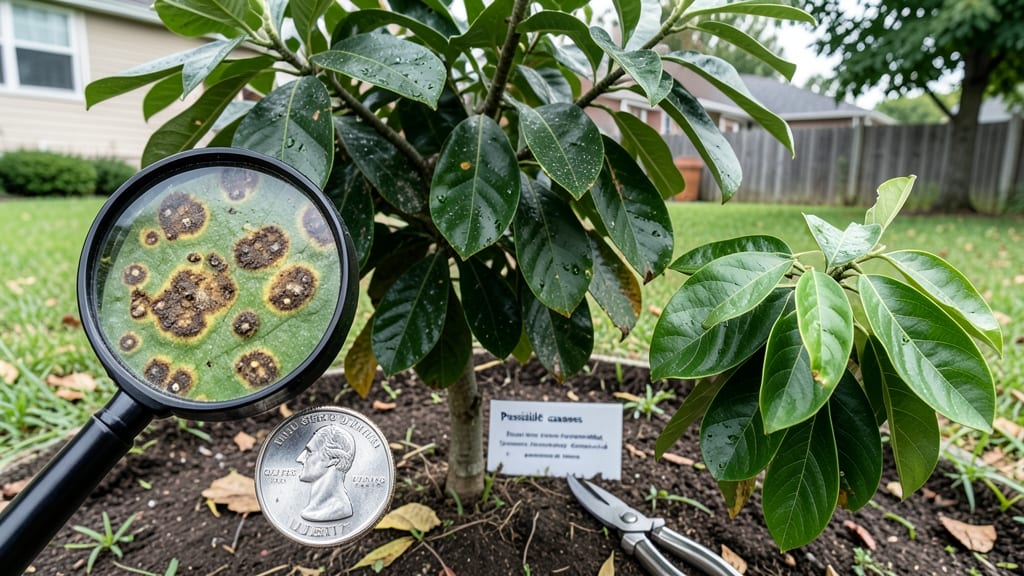
Your avocado tree’s 🥑 brown spots on leaves could mean a fungal infection or a nutrient deficiency—and the fix depends on knowing which one it is.
Picture this: You’ve watered your tree just right, but those unsightly brown patches keep spreading. The question isn’t just why—it’s how to stop it before it spreads.
Without the right diagnosis, you might waste time on the wrong treatment, and that’s how a healthy avocado tree turns into a sad, struggling one.
Fungal diseases like anthracnose or leaf spot often start with small, dark spots that grow larger and may even ooze. Nutrient deficiencies, on the other hand, usually show up as yellowing between veins or crispy edges.
Below, I’ll walk you through the key differences so you can act fast and save your tree.
You’ll learn how to test for both issues at home, the best treatments for each, and simple prevention tips to keep your avocado tree thriving. No guesswork—just clear, actionable steps to restore those leaves to their rich, green glory.
How to identify fungal vs nutrient deficiency leaf spots on avocado trees
When you spot brown spots on avocado tree leaves, your first instinct might be panic—but don’t worry! These spots can stem from two main culprits: fungal infections like anthracnose or nutrient deficiencies such as iron, manganese, or zinc. The key to saving your tree lies in accurate identification.
Fungal spots often appear as dark, raised lesions with fuzzy edges, while nutrient deficiencies create yellow halos or interveinal chlorosis (yellowing between veins). Let’s break down how to tell them apart.
Start by examining the shape and texture of the spots. Fungal leaf spots, like those caused by anthracnose or leaf spot fungi, usually have irregular, dark brown borders and may develop a powdery or fuzzy coating as they spread.
Nutrient deficiencies, on the other hand, often present as small, crispy brown patches with yellow edges, especially on younger leaves. Pay close attention to whether the spots are spreading rapidly (fungal) or staying static (nutrient-related).
Leaf discoloration is another critical clue. Fungal infections often cause dark brown to black spots that may eventually crust over or fall out, leaving holes. In contrast, nutrient deficiencies like iron chlorosis create yellow leaves with green veins, while manganese deficiency leads to brown spots between veins on older leaves. Check both new and old leaves—if only the younger leaves show symptoms, it’s likely a nutrient issue.
Now, let’s compare these symptoms side by side to make diagnosis easier:
Don’t overlook the underside of leaves—fungal spores often appear as black or white dots on the leaf undersides. If you notice these, it’s a strong sign of a fungal infection. For nutrient deficiencies, check the soil pH (avocados thrive in slightly acidic soil (pH 6.0-7.0)).
If your soil is too alkaline, nutrients like iron and manganese become unavailable to the plant, leading to those telltale brown spots.
Another red flag for fungal issues is leaf drop. If your avocado tree is shedding leaves alongside the spots, it’s likely battling a fungal pathogen. Nutrient deficiencies, however, usually cause yellowing without premature leaf drop.
Take note of whether the spots are concentrated on lower leaves (common in fungal infections due to poor airflow) or spread evenly (often a nutrient issue).
For a quick at-home test, gently scrape a spot with your fingernail. If you see
Step-by-step diagnostic tests for avocado tree leaf spots
When you spot brown patches on your avocado tree leaves, your first instinct might be to panic—but don’t! A few simple diagnostic tests can reveal whether your tree is battling a fungal infection or suffering from a nutrient deficiency.
Start by gathering basic tools like a hand lens, pH test kit, and a sterilized knife for safe sampling.
Begin with a visual inspection of the spots. Fungal issues often appear as dark, irregular patches with fuzzy edges, while nutrient deficiencies usually show as yellowing between veins with crisp, brown borders.
If you’re unsure, don’t guess—test first to avoid wasting time on the wrong treatment. Here’s how to confirm your suspicions at home.
🔍 Step-by-Step Diagnostic Tests
-
Step 1: Leaf Scraping Test
Gently scrape a small section of a brown spot with a sterilized knife. If black fungal spores appear, it’s likely anthracnose or another fungal disease.
-
Step 2: Moisture Check
Press a finger 1 inch into the soil. If it feels damp or soggy, overwatering may be promoting fungal growth. Adjust your watering schedule immediately.
-
Step 3: pH Soil Test
Use a soil pH test kit to check acidity. Avocados thrive in slightly acidic soil (pH 6.0-7.0). A pH below 5.5 or above 7.5 can lock out nutrients like iron or manganese.
-
Step 4: Leaf Analysis
Send a leaf sample to a lab for nutrient testing (or use a DIY leaf test kit). Look for low levels of iron, zinc, or manganese, which cause interveinal chlorosis (yellowing between veins).
-
Step 5: Fungicide Response Test
Apply a copper fungicide (like Bordeaux mixture) to a small area. If new spots stop appearing within 7-10 days, fungi are the culprit.
⚠️ When to Call a Pro: If spots spread rapidly or your tree shows wilting, dieback, or oozing sap, consult an arborist or plant pathologist for advanced testing.
Once you’ve completed these tests, you’ll have a clear picture of whether your avocado tree’s brown spots stem from a fungal infection or a nutrient deficiency.
For example, if your soil pH is too high and leaves show yellowing between veins, you’ll need to lower pH with sulfur and apply chelated iron. If fungi are confirmed, prune infected leaves and improve air circulation around the tree.
Remember, early action is key. Fungal diseases spread quickly in humid conditions, while nutrient deficiencies can stunt growth if ignored. With these tests, you’ll be equipped to diagnose and treat your avocado tree like a pro—saving both time and your plant’s health. 🌱
Pro tip: Keep a gardening journal to track spot progression, treatments, and environmental changes. This helps you spot patterns and adjust care for future seasons. 📝