
Trees
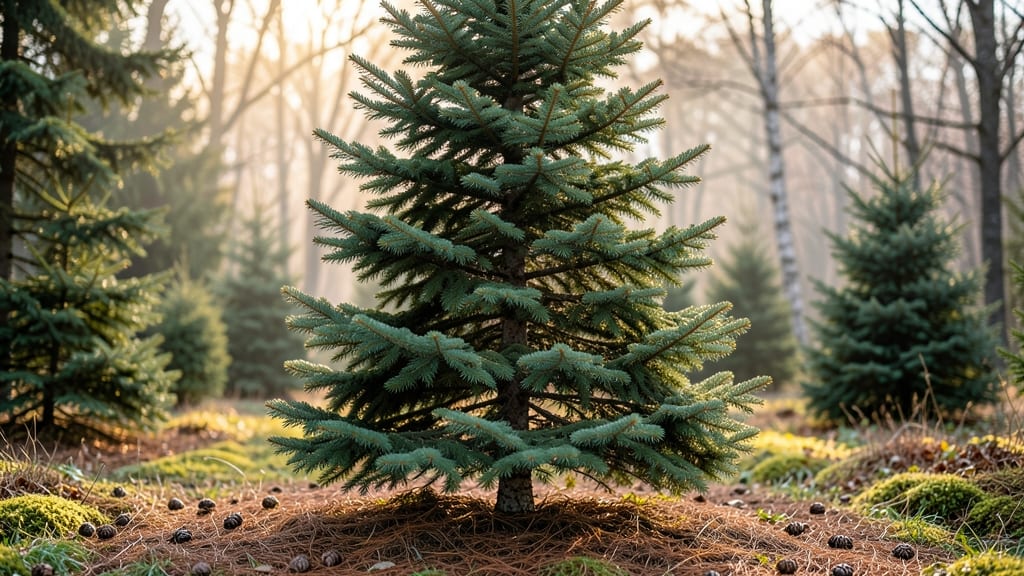
The balsam fir Christmas tree scent creates that nostalgic holiday aroma through its unique blend of natural oils—terpenes like limonene and pinene—combined with a subtle vanilla-like sweetness from its bark. This combination evokes memories of candy canes and fresh pine forests, especially when the cold air intensifies the fragrance.
The balsam fir's signature holiday fragrance isn't just about pine—it's a complex mix of chemical compounds that interact with temperature. 🌲 The terpenes in its needles react with cold air, releasing more volatile aromatic molecules, which is why freshly cut trees smell stronger in winter.
This same chemistry explains why balsam firs dominate Christmas tree lots: their scent is both familiar and uniquely comforting, triggering holiday nostalgia. The vanilla notes actually come from compounds in the bark that blend with the piney terpenes, creating that signature candy-cane-like aroma that defines Christmas decorations.
What makes this scent so special is how it evolves over time. When you first bring a balsam fir indoors, the aroma is sharp and resinous, but within hours it softens into that warm, sweet holiday fragrance we all recognize.
This transformation happens because the tree's natural oils gradually stabilize at room temperature, releasing their most pleasant compounds. For maximum impact, place your tree near a heat source (but not too close) to gently diffuse those aromatic molecules throughout your home.
💡 In This Article
- Chemistry Behind Balsam Fir’s Signature Holiday Aroma
- How to Maximize Balsam Fir Scent in Your Home
Chemistry behind balsam fir’s signature holiday aroma
The balsam fir's iconic scent begins with its terpene profile, a complex blend of volatile organic compounds like limonene (which smells citrusy), pinene (sharp pine), and myrcene (earthy, musky). These compounds are stored in specialized cells called resin ducts throughout the needles and bark.
When you cut the tree, these ducts rupture, releasing the terpenes into the air. The limonene concentration alone can reach 0.5-1.5% of the tree's total volatile oils—enough to fill a room with that familiar citrus-pine punch.
Cold air plays a crucial role in amplifying the scent. At temperatures below 40°F, the terpenes become more volatile, evaporating faster and carrying their aroma farther. This is why freshly cut balsam firs smell strongest in winter—cold air acts like a natural scent amplifier.
The bark contributes the vanilla-like notes through compounds called vanillin and eugenol, which blend with the piney terpenes to create that candy-cane-like fragrance. Interestingly, these bark compounds are more stable than the needle oils, which is why the scent evolves from sharp to sweet over time.
What makes this scent so unique is the chemical synergy between the terpenes. Limonene, for example, doesn't just smell citrusy—it interacts with other compounds to create a more complex aroma. When heated gently (like near a fireplace), these interactions become even more pronounced, releasing additional aromatic molecules.
This is why placing your tree near a warm but not hot heat source (like a baseboard heater) can enhance its fragrance without drying it out.
The scent's intensity also depends on the tree's harvest freshness. A freshly cut balsam fir can release up to 50% more volatile oils in the first 24 hours compared to a tree that's been sitting in a lot for days.
This is why professional tree farms harvest and transport trees quickly—delayed cutting allows the resin ducts to seal partially, reducing aroma. For the best scent, look for trees with bright green needles that snap (not bend) when touched—a sign of freshness.
Here's a breakdown of the key scent components and their roles:
- Limonene: Citrusy, fresh note (0.5-1.5% of volatile oils)
- Alpha-Pinene: Sharp pine aroma (1-2% of volatile oils)
- Beta-Pinene: Earthy, woody undertones (0.3-0.8%)
- Myrcene: Musky, herbal depth (0.1-0.5%)
- Vanillin/Eugenol: Vanilla-like sweetness from bark (trace amounts)
This chemical orchestra is why balsam firs smell so different from other Christmas trees. Unlike Scotch pines (which have a stronger, resin-heavy scent), balsam firs offer a balanced, sweet-pine aroma that's universally appealing. The secret lies in that perfect ratio of sharp and sweet—nature's own holiday fragrance engineering! 🌟