
Pruning
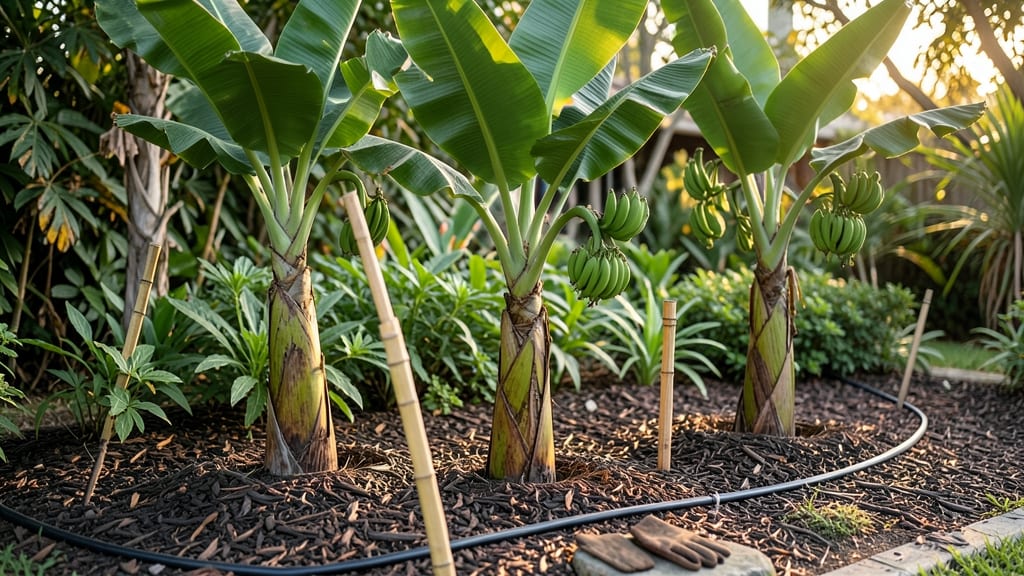
Your fast-growing privacy screen might just be the banana tree you never expected. 🌿 These tropical giants shoot up 10 feet in a single season, turning bare yards into lush, living walls within just three years—no fence required.
The secret lies in the right varieties: Musa basjoo (hardy to Zone 5) or Musa acuminata (more tropical) both deliver massive foliage. Plant them 8–10 feet apart in rich, well-draining soil, and watch them fill gaps faster than any hedge.
Mulch heavily to protect roots in winter, and you’ll avoid the common pitfall of winter dieback. Imagine summer afternoons shaded by broad, banana-shaped leaves while neighbors envy your instant privacy. The trade-off? Occasional fruit (edible but messy) and a need for winter protection in colder zones.
With proper care, these plants become the backbone of your landscape—bold, beautiful, and functional.
Pair them with dwarf bamboo or ornamental grasses at the base to soften the look, and add climbing vines like passionflower for extra height. The key is spacing: too close, and they’ll fight for sunlight; too far, and gaps remain.
Aim for that sweet spot of 8–10 feet between trunks for a dense, natural curtain by year three.
Climate matters—banana trees thrive in Zones 8–11 but can survive winters in colder areas with heavy mulch and frost cloth. In hotter zones, they’ll grow year-round, while northern gardeners might need to dig up and store tubers in winter.
The payoff? A low-maintenance, high-impact privacy solution that outshines any fence.
Start with three to five plants for a small yard, and scale up for larger spaces. By year two, you’ll have a 12-foot-tall green wall—no construction, no permits, just nature doing its thing. The only challenge? Resisting the urge to harvest those occasional bananas.
📚 In This Guide
- What you need
- Instructions
- Tips and common mistakes
- Wrapping up and next steps
What you need
- ● Banana tree saplings: 3–5 healthy, disease-free plants (depending on desired height and width). Look for Musa spp. varieties like Musa acuminata or Musa balbisiana for faster growth.
- ● High-quality potting soil: 10–15 bags (50 lbs each) of well-draining, organic-rich soil (mix with perlite or sand if your soil is heavy).
- ● Compost or organic fertilizer: 5–10 lbs of well-aged compost or a balanced fertilizer (10-10-10 ratio) for planting.
- ● Mulch: 10–15 cubic feet of wood chips or straw to retain moisture and suppress weeds.
- ● Shovel or spade: 1 medium-sized (for digging holes).
- ● Garden trowel: 1 small (for transplanting saplings).
- ● Measuring tape: 1 (to space plants 6–10 feet apart).
- ● Gloves: 1 pair (heavy-duty for protection).
- ● Watering can or hose with nozzle: 1 (for gentle watering).
- ● Pruning shears: 1 (for trimming dead leaves or shaping).
- ○ Stakes or bamboo supports (optional): 3–5 (if your area is windy).
- ● Sunlight: A location with full sun (6+ hours/day)—banana trees thrive in warmth!
- ● Space: Ensure at least 6–10 feet between plants for mature growth (they can reach 10–15 feet tall!).
- ● Water source: Easy access to water for regular deep watering (especially in the first year).
- ● Climate check: Banana trees love USDA Zones 10–11. If you’re in a cooler zone, opt for container-growing or cold-hardy varieties.
How to create a fast-growing banana tree privacy screen
Here's the method I've used to establish a lush, tropical barrier in just three seasons—no waiting decades for slow-growing alternatives.
🌱 Step 1: Select and Prepare Planting Sites
Choose a location with 6-8 hours of sunlight daily and well-draining soil. Banana trees thrive in warm climates but can tolerate brief cold snaps if protected. I always test soil drainage by digging a 12-inch deep hole—if water pools after 30 minutes, amend with 2-3 inches of compost and a mix of coarse sand to improve aeration.
Mark planting spots 8-10 feet apart in a staggered pattern. This spacing ensures mature foliage will interlock without crowding. Use a garden hose to trace circles where each tree will go—you'll see the final shape take form as you plant. For a 4-tree screen, arrange them in a straight line or slight curve for visual appeal.
🌿 Step 2: Plant Banana Trees at the Right Depth
Dig holes twice as wide as the root ball but no deeper. The top of the root ball should sit 1-2 inches above ground level—this prevents waterlogging and encourages strong root growth. Gently remove the tree from its container and loosen any circling roots with your fingers.
Place the tree in the hole and backfill with native soil mixed with 1 part compost. Tamp down lightly every 2 inches to eliminate air pockets. Water deeply until moisture reaches 6 inches down, then add a 2-inch layer of mulch around the base, keeping it 6 inches away from the trunk to prevent rot.
☀️ Step 3: Provide Immediate Support and Watering
Banana trees grow fast but need staking to prevent toppling in wind or storms. Install 3-4 foot bamboo stakes on either side of each tree and secure with soft ties. You'll see new leaves unfurl within 2-4 weeks—this is your cue that the plant is establishing roots.
Water 2-3 times per week for the first month, ensuring 1-2 inches of water per session. After that, reduce to once weekly unless temperatures exceed 90°F. Overwatering is the biggest mistake—yellowing leaves signal excess moisture. Let the top 2 inches of soil dry between waterings.
✂️ Step 4: Prune for Density and Health
Remove any damaged or yellowing leaves immediately to redirect energy to new growth. When the plant reaches 6 feet tall, trim back the oldest leaves at the base to encourage bushier growth. I always prune in early spring before new shoots emerge—this timing maximizes regrowth.
Watch for suckers—small shoots growing from the base. Keep 2-3 strongest suckers and remove the rest to avoid overcrowding. These suckers become your next generation of privacy screen trees. Fertilize lightly in spring with a balanced 10-10-10 formula to support rapid growth without burning the roots.
⏰ Step 5: Protect and Monitor Through Seasons
In fall, reduce watering as temperatures drop. Banana trees go dormant in cooler weather, so cut back on fertilizing and remove dead fronds completely. Wrap young trees in burlap if frost is forecasted—even a light freeze can damage emerging leaves.
By year three, your screen will reach 10-12 feet tall with dense foliage. The key to maintaining speed is consistent care: water deeply, prune aggressively, and protect from extreme weather. You'll see the barrier fully mature within 36 months, blocking views while adding tropical beauty to your property.
Tips & tricks for fast-growing banana tree privacy screens
These key strategies will help you accelerate growth and ensure your tropical screen thrives in just three years.
Sunlight Optimization: While 6-8 hours of sunlight is ideal, banana trees can adapt to partial shade—just expect slightly slower growth. If your location gets less than 6 hours, consider using a reflective surface like white walls or mirrors to bounce sunlight onto the foliage during peak hours. This small adjustment can make a noticeable difference in leaf production, especially during the crucial first year when establishing your screen.
Root Establishment Secret: The 30-minute drainage test in Step 1 is critical—don't rush this step. Poor drainage is the #1 reason banana trees fail. If your soil drains slowly, mix in additional coarse sand or even small gravel at the bottom of the planting hole. This creates a natural drainage layer while keeping the root ball properly elevated. I've seen trees wither within weeks when planted in heavy clay without this modification.
Watering Precision: Those 2-3 weekly waterings in the first month are non-negotiable, but timing matters just as much as quantity. Water deeply in the morning to allow foliage to dry before evening—this prevents fungal issues that can stunt growth. Use a rain gauge or tuna can (marked with measurements) to ensure you're delivering exactly 1-2 inches per session. Overwatering causes yellowing leaves, while underwatering creates crispy edges that weaken the plant.
Growth Acceleration: The 6-foot pruning trigger in Step 4 is your signal to push growth. When you see the plant reach this height, trim back the oldest leaves at the base—this forces energy into developing new suckers. I've found that plants pruned at this stage can grow an additional 2-3 feet in just one growing season. Just be sure to use sharp, sterilized pruners to avoid introducing diseases that could slow your progress.
Pro Tips for Banana Tree Privacy
- These key strategies will help you accelerate growth and ensure your tropical screen thrives in just three years.
- Sunlight Optimization: While 6-8 hours of sunlight is ideal, banana trees can adapt to partial shade—just expect slig...
- Root Establishment Secret: The 30-minute drainage test in Step 1 is critical—don't rush this step. Poor drainage is t...
Frequently asked questions
Got questions about using a banana tree as a privacy screen?
You’re not alone! Here are answers to the most common concerns—from planting to maintenance—so you can plan with confidence.
How fast will a banana tree grow for privacy?
A banana tree (like Musa basjoo) can grow 10–15 feet tall in just 3–5 years with ideal conditions—think warm climates, full sun, and regular watering. For faster results, plant multiple trees in a staggered row to create an instant screen. Pro tip: Use dwarf varieties (e.g., Musa acuminata) if space is limited—they’ll still hit 6–8 feet in 2–3 years!
Can banana trees block noise and wind effectively?
Yes! A dense banana tree screen can reduce noise by 30–50% and soften wind gusts, especially once the large leaves mature. For maximum privacy, plant trees 6–8 feet apart and pair them with taller shrubs (like bamboo) for layered coverage. Warning: In windy areas, stake young trees to prevent leaning.
Will banana trees produce fruit in a privacy screen setup?
Most ornamental banana trees (like Musa basjoo) are sterile and won’t fruit, so you’ll enjoy only the foliage. If you want edible bananas, choose dwarf Cavendish or Red Dacca—but note they grow slower (3–4 years for privacy) and need tropical conditions. Trade-off: Sterile varieties are easier to maintain!
How do I prune a banana tree for a tidy privacy screen?
Prune in late winter or early spring to remove dead fronds and shape the tree. Cut back 1/3 of the oldest leaves to encourage new growth, but never prune more than 30% at once. For a uniform screen, trim all trees evenly and avoid cutting into the pseudostem (the tree’s trunk). Tool tip: Use sharp bypass pruners to avoid tearing leaves!
What’s a good alternative if banana trees don’t thrive in my climate?
If your zone is below 7–10, try these fast-growing, cold-hardy alternatives:
- Bamboo: Clumps like Fargesia grow 6–12 ft in 3 years (non-invasive if planted in root barriers).
- Arborvitae: Evergreen and dense; reaches 15 ft in 5–7 years.
- Leyland Cypress: Grows 3–4 ft per year but needs well-drained soil.
- Hornbeam: Deciduous but fast (8–10 ft in 3 years) with a clean look.
Wrapping up and next steps
Transforming your outdoor space with a banana tree privacy screen is a rewarding project that combines beauty, speed, and sustainability! 🌿 These fast-growing tropical plants deliver lush foliage in just three years, offering natural privacy without the hassle of fences or synthetic barriers.
Whether you’re shielding a balcony, patio, or backyard, the results are worth the effort—and the shade is a bonus!
Ready to get started? Sketch a simple plan based on your space, gather your tools, and plant your first banana tree this weekend. Your private oasis is just a few shovels away—happy gardening! 🌱✨