
How To
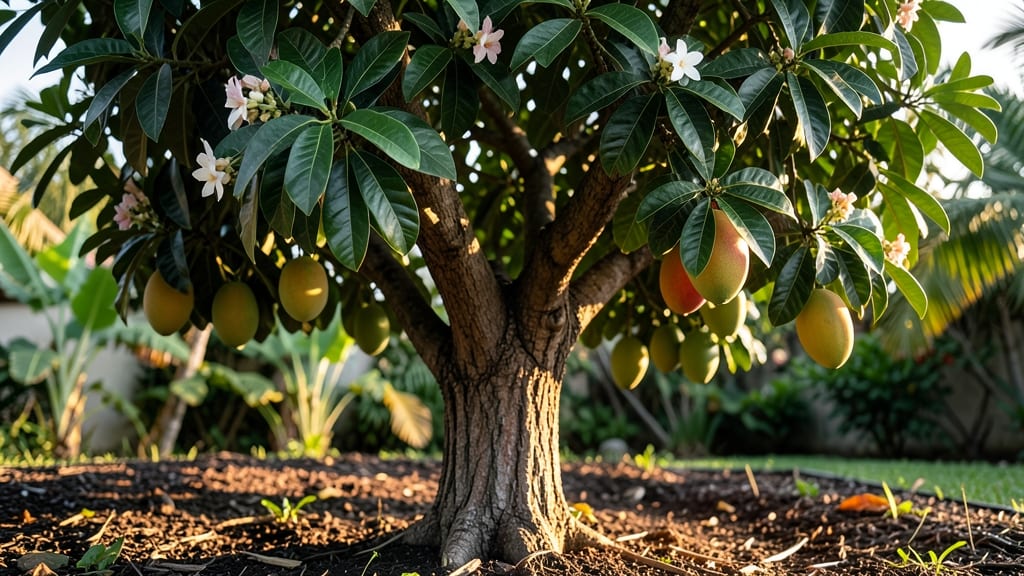
A mango tree grows to between 20 and 100 feet tall—taller than your house, your neighbor’s house, and maybe even the stop sign at the end of your street.
Dreaming of a tropical backyard oasis? Mango trees aren’t just stunning—they’re edible powerhouses, but their towering growth can catch even seasoned gardeners off guard.
Most varieties stretch toward the sky like skyscrapers, but don’t let that scare you off. With the right variety, pruning, and space planning, you can grow a fruit-bearing giant—or a compact backyard staple—depending on your goals.
Here’s what you need to know about height ranges, the fastest-growing varieties, and how to keep your mango tree from outgrowing your property—without sacrificing those sweet, juicy rewards.

Mature height of mango trees: varieties that defy expectations
Mango trees (Mangifera indica) are legendary for their tropical grandeur, but their mature height can vary wildly—from dwarf varieties that fit patio pots to giant specimens towering over 100 feet.
If you're planning a backyard orchard, knowing these height ranges is critical to avoid planting a 30-foot monster where a 10-foot tree would thrive.
Climate plays a huge role: tropical regions (like Florida or Hawaii) push trees to their maximum potential, while subtropical zones (e.g., Southern California) may stunt growth slightly.
Even soil quality and water access can influence how tall your mango tree grows—poor drainage or nutrient deficiencies can limit height, while rich, well-draining soil fuels rapid vertical growth.
Fast-growing varieties like ‘Keitt’ or ‘Haden’ can shoot up 3-5 feet per year in ideal conditions, while dwarf types like ‘Cogshall’ stay under 15 feet even at maturity. Below, I’ve broken down the height expectations for the most popular commercial and heirloom varieties, so you can pick the perfect fit for your space.
The ‘Keitt’ mango is one of the fastest-growing commercial varieties, often reaching 60-100 feet in tropical climates. Its canopy spread can match its height, so expect a 40-60 foot diameter at maturity—this isn’t just a tall tree, it’s a shade-providing giant.
If you’re in Florida or Hawaii, this variety will thrive, but in cooler subtropical zones, its growth may slow slightly.
For smaller spaces, the ‘Cogshall’ dwarf mango is a game-changer. Despite its 10-15 foot height, it produces full-sized, sweet fruit and is surprisingly cold-hardy for a mango—making it ideal for USDA Zone 9 gardens.
However, don’t let the "dwarf" label fool you: its canopy spread (8-12 feet) still requires space, so avoid planting it too close to fences or structures.
If you’re torn between height and fruit quality, the ‘Julie’ semi-dwarf strikes a balance. Clocking in at 15-25 feet, it’s tall enough to produce high yields but compact enough for medium-sized backyards.
Its growth rate of 1.5-2.5 feet per year means you’ll see noticeable height gains within a few seasons—just be prepared for a wide canopy that loves sunlight.
One common misconception is that all mango trees grow equally tall in the same climate. In reality
Space requirements for mango trees: how to plan for root spread
Mango trees may look elegant with their lush canopies, but their root systems spread even wider than their branches. A 20-foot-tall mango tree can have roots extending 30+ feet outward, competing with nearby plants for nutrients and water.
Understanding these space needs prevents overcrowding and ensures your tree thrives for decades.
Root spread depends on soil type, variety, and planting method. Clay soils restrict roots downward, forcing lateral expansion, while sandy soils allow deeper growth but still require ample horizontal space.
Container-grown mangoes need large pots (200+ gallons) with drainage holes, but their roots will eventually seek more room if left unrestricted.
Here’s how to plan for root spread based on your setup:
| Planting Method | Minimum Spacing (Feet) | Root Spread Potential | Best For |
|---|---|---|---|
| In-Ground (Standard Varieties) | 30–50 ft from structures/buildings | 40–60 ft diameter | Large properties, rural areas |
| In-Ground (Dwarf Varieties) | 15–25 ft from structures | 20–30 ft diameter | Suburban backyards, small farms |
| Container (Large Pots, 200+ gal) | 10–15 ft from neighbors | 15–25 ft (roots circle pot) | Patios, balconies, urban spaces |
| Container (Small Pots, <50 gal) | 5–8 ft from neighbors | 8–12 ft (roots bind pot) | Temporary placements, indoor/outdoor |
To control root spread, prune roots annually during dormant seasons (late winter). Use a sharp spade to trim roots 12–18 inches from the trunk, redirecting growth downward. This technique reduces lateral expansion by 30–50% without harming fruit production.
For container-grown mangoes, upgrade pots every 2–3 years to accommodate root growth. A 300-gallon container can support a 10-foot-tall tree for 5+ years, but monitor roots escaping drainage holes as a sign to repot.
Pro tip: Plant mangoes near fast-growing ground covers like clover or creeping thyme to suppress weeds while allowing roots to breathe. Avoid dense mulch, which can suffocate roots over time.