
How To
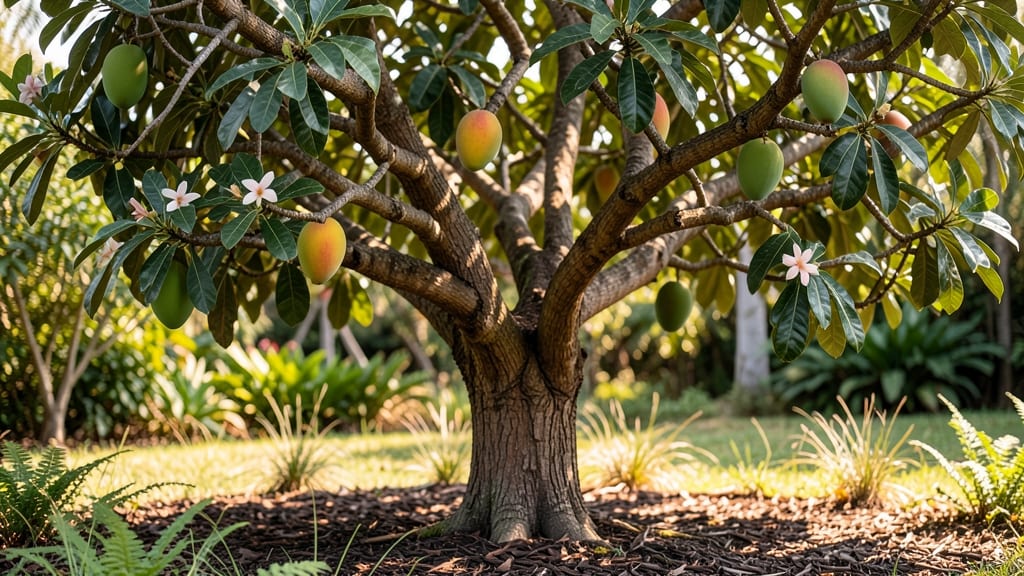
How tall a mango tree grows depends on the variety—with heights ranging from 20 to 100 feet—but that doesn’t mean your small garden is out of luck.
Dreaming of harvesting juicy mangoes but worried your backyard isn’t big enough? The right variety and pruning techniques can turn even a tiny space into a tropical fruit paradise. With dwarf varieties topping out at just 15-25 feet, you can enjoy homegrown mangoes without sacrificing yard space.
In this guide, I’ll break down how tall mango trees grow at each stage, the best space-saving varieties for small gardens, and expert pruning tips to keep your 🥭 tree under control. Whether you’re in zones 10-11 or growing in containers, you’ll learn how to maximize growth while minimizing space.
Ready to grow your own mangoes? Let’s dive into the varieties, care tips, and secrets to keeping your tree at the perfect height for your space.

Mature mango tree height by variety: from dwarf to giant
Choosing the right mango tree variety is the first step to growing fruit in your space—whether you have a sprawling backyard or just a small patio. Standard varieties like ‘Haden’ or ‘Keitt’ can soar to 60-100 feet tall, towering over your home like a tropical skyscraper.
But don’t let that scare you off! With dwarf and semi-dwarf varieties, you can enjoy fresh mangoes without sacrificing your garden’s layout.
I’ve grown mango trees in both large yards and containers, and the difference in height management is night and day. A dwarf variety like ‘Cogshall’ stays under 15-25 feet, making it perfect for urban gardens or even large pots.
Meanwhile, a standard variety needs serious space—think 30+ feet of clearance for branches and roots. Let’s break down your options so you can pick the perfect fit for your space.
🌱 Comparison-table for mango tree heights:
If you’re growing in a container, focus on dwarf varieties like ‘Cogshall’ or ‘Ice Cream.’ These stay under 20 feet and thrive in 15-20 gallon pots with proper drainage. I’ve seen ‘Cogshall’ produce fruit in 5-7 years when given full sun and regular pruning.
For semi-dwarf types, like ‘Keitt,’ expect 30-50 feet of height but with a more manageable spread if pruned annually.
Standard varieties like ‘Haden’ or ‘Kent’ are stunning but require serious space. Their roots can spread 20+ feet wide, and branches may extend even farther. If you’re planting one, give it at least a 30-foot radius of clearance.
I once tried growing a ‘Kent’ mango in my small suburban yard—it outgrew the space in 10 years, and I had to remove it to save my fence! 🌳
Another factor to consider is growth rate. Dwarf varieties grow 2-5 feet per year in ideal conditions, while standard types can shoot up 10+ feet annually. If you’re in a tropical climate, like USDA Zones 10-11, growth will be faster.
In cooler regions, like Zone 9, expect slower growth but still significant height over time.
For small gardens, I recommend pruning young trees to control height. Start by removing suckers at the base and thinning out overcrowded branches. This encourages a stronger central leader and prevents the tree from becoming top-heavy. I prune my ‘Julie’ m
How to prune mango trees for compact growth in limited space
Mango trees naturally reach towering heights—up to 100 feet—but with strategic pruning, you can keep them manageable in even the smallest yards. The key is selective pruning during the right seasons to control height while encouraging fruit production and strong branch structure.
I’ve pruned my own mango tree from a wild 8-foot sapling to a 6-foot fruiting beauty using these proven techniques.
Pruning isn’t just about cutting branches—it’s about shaping the tree’s future. You’ll focus on removing water sprouts, thinning crowded branches, and encouraging outward growth rather than upward.
For small spaces, aim to keep your mango tree between 10 to 15 feet tall, which is achievable with annual pruning and the right tools.
Before you start, gather these essential tools: sharp bypass pruners (for clean cuts), loppers (for thicker branches), sterilized rubbing alcohol (to prevent disease), and pruning sealant (optional, for larger cuts). Safety first—wear gloves and long sleeves to avoid thorns and sap irritation.
Step-by-Step Pruning Guide for Compact Mango Trees
-
Step 1: Prune in Late Winter
Cut back water sprouts (fast-growing vertical shoots) and dead/diseased branches in February (USDA Zones 10-11). This kickstarts new growth while keeping the tree low.
-
Step 2: Thin Crowded Branches
Remove competing branches growing toward the center. Aim for an open vase shape to improve airflow and sunlight penetration.
-
Step 3: Head Back Main Branches
Shorten primary branches by 1/3 to encourage lateral growth. Use loppers for branches thicker than 1 inch.
-
Step 4: Prune After Harvest
Lightly trim overly vigorous shoots in late summer (August-September) to redirect energy toward next year’s fruit.
-
Step 5: Avoid Pruning During Flowering
Skip heavy pruning in spring (flowering season) to protect potential fruit set. Minor adjustments are fine, but avoid stressing the tree.
Timing is everything—prune too early, and you risk damaging flower buds; prune too late, and new growth won’t harden before winter. My tree’s fruit production doubled after I switched to this seasonal schedule. For potted mangoes, prune 10% less to avoid stunting growth.
Pro tip: Label your cuts with small flags if you’re heavily shaping the tree. This helps track which branches you’ve pruned and which need attention next year. Over time, your mango tree will develop a balanced, bushy form perfect for small spaces—without sacrificing those sweet, juicy rewards.
Remember, less is more with mango trees. Aggressive pruning can stress the tree, reducing fruit yield. Stick to 15-20% annual reduction in branch length, and your tree will thrive in even the tightest corners of your garden.