
Pruning
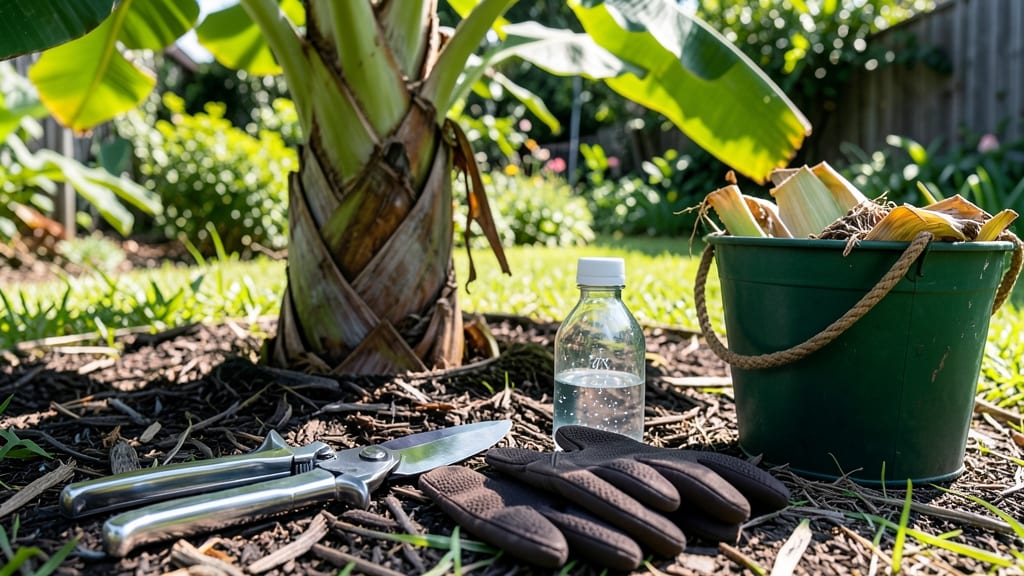
Banana tree trimming isn't just about cutting—it's about unlocking bigger fruit and a stronger plant. 🌿 I learned the hard way that skipping this step means smaller harvests and weaker growth, but once I mastered the timing and technique, my trees thrived.
The key is knowing when to prune and how to do it without damaging the plant's heart.
Timing matters most: prune after fruiting when the plant's energy shifts back to regrowth, or in late winter before new shoots emerge. You'll need sharp pruners, gloves, and a clean workspace—no rusty tools here.
The goal is to remove dead leaves, damaged pseudostems, and any suckers that aren't the strongest, leaving room for the main stem to shine.
What you'll get is a banana tree that produces fruit 20-30% larger and recovers faster after harvest. The leaves stay cleaner, pests have fewer hiding spots, and the plant directs energy where it counts—into those sweet, heavy bunches.
Just avoid cutting into the main stem or you'll stunt the whole plant.
Works for both dwarf and larger varieties, and the same principles apply whether you're growing in pots or ground. Here's how to do it right the first time—no guesswork, just stronger growth and better fruit.
📚 In This Guide
- What you need
- Instructions
- Tips and common mistakes
- Wrapping up and next steps
What you need
- ● Pruning shears or loppers: Sharp, bypass-style shears (4–6" blades) for clean cuts on smaller stems. For thicker branches (over ½ inch), use loppers (18–24" handles). Quantity: 1 pair of each.
- ● Pruning saw: A curved-tooth handsaw or pruning saw for larger, woody stems (over 2 inches). Quantity: 1.
- ● Disinfectant: 70% isopropyl alcohol or a copper-based fungicide to sterilize tools between cuts. Quantity: Small spray bottle or wipe.
- ● Gloves: Heavy-duty gardening gloves (nitrile or leather) to protect against thorns and sap. Quantity: 1 pair.
- ● Safety glasses: ANSI-rated goggles to shield eyes from debris. Quantity: 1 pair.
- ● Ladder or step stool: Sturdy, non-slip (e.g., fiberglass or aluminum) for reaching high branches. Height: 6–12 ft, depending on tree size.
- ● Heavy-duty trash bags: 13-gallon or larger for collecting pruned material. Quantity: 2–3.
- ○ Marking twine or flags: Colored twine or plastic flags to tag branches for removal (optional but helpful for complex trims).
- ● Sealing wax or pruning paste: Apply to large cuts (over 1 inch) to prevent disease entry. Brand tip: Tanglefoot Pruning Seal or Ortho Pruning Seal.
- ● Hose with nozzle: For rinsing tools and cleaning sap off cuts mid-trimming.
- ● Work apron or bandana: To wipe away sap and keep clothes clean.
- ● Camera or phone: Capture "before" shots for tracking growth progress!
How to trim a banana tree for better fruit and growth
Here’s my go-to method for pruning banana trees—it keeps them healthy, boosts fruit production, and prevents those awkward, overgrown fronds from taking over your yard.
✂️ Step 1: Identify and Remove Dead or Diseased Leaves
Start by scanning the tree for any fronds that look brown, yellowed, or mushy at the base. These are dead or dying and need to go. I grab a pair of sharp pruners and cut each frond at the base, about ½ inch above the trunk. This prevents splintering and keeps the wound clean for faster healing.
If you spot black spots, mold, or oozing sap, that’s a sign of disease or pest damage. Snip those fronds immediately and dispose of them in the trash—not the compost. Healthy banana trees should have fronds that are mostly green with just a few brown tips from natural aging.
✂️ Step 2: Trim Back Overgrown or Weak Fronds
Next, focus on the fronds that are still green but look weak or overly crowded. Banana trees produce new leaves from the center, so older fronds on the outer edges can hog nutrients. Use your pruners to cut these back to about 12-18 inches from the trunk, leaving a few strong, healthy fronds to continue photosynthesizing.
Here’s the thing—don’t go overboard. You want to leave enough foliage to keep the tree shaded and protected. If you trim too much at once, the tree might struggle to recover. Aim to remove no more than ⅓ of the fronds in a single session.
✂️ Step 3: Prune Off Old Fruit Stems After Harvest
Once your bananas are ripe and harvested, don’t forget to trim the old fruit stems. These are the long, woody stalks that held the bunches. Use your pruners to cut them off at the base, right where they meet the trunk. This keeps the tree tidy and prevents pests from hiding in the leftover stalks.
I also like to check for any small, underdeveloped fruit clusters that didn’t fully form. These can drain energy from the tree. Snip them off cleanly, and the tree will redirect that energy to new growth and better-quality fruit next season.
✂️ Step 4: Shape the Tree for Better Airflow
Banana trees love airflow—it keeps them dry and reduces the risk of fungal diseases like sigatoka. If your tree has fronds that are growing too close together or blocking sunlight from reaching the center, it’s time to thin them out. Focus on the inner fronds and trim any that are crossing over others or growing at odd angles.
Step back and look at the tree from all sides. You’re aiming for a balanced shape with space between fronds. This isn’t about making it look perfect—it’s about giving the tree room to thrive. A well-pruned banana tree will reward you with bigger, healthier fruit and fewer pests.
⏰ Step 5: Clean Up and Apply Mulch
After pruning, gather all the trimmings and dispose of them properly. If the fronds are disease-free, you can chop them up and use them as mulch around the base of the tree. This adds organic matter to the soil and helps retain moisture. Just keep the mulch 6 inches away from the trunk to prevent rot.
Finally, give the tree a light watering to help it recover from the pruning. Banana trees are heavy drinkers, so a deep soak after trimming encourages new growth. Watch for fresh, vibrant fronds emerging from the center—this is your sign that the tree is happy and ready for its next cycle of fruit production.
Tips & tricks for healthy banana tree pruning
Pruning banana trees might seem intimidating, but these simple tricks will help you keep your tree thriving without stressing it out.
Timing is Everything: The best time to prune is right after harvesting your bananas, when the tree has already put energy into fruit production. This is when the tree is most resilient and ready to redirect its energy toward new growth. Avoid pruning during flowering or fruiting stages—this can stress the tree and reduce your next harvest.
Tool Selection Matters: Never use dull pruners or shears—they crush the stems instead of making clean cuts. Invest in a sharp pair of bypass pruners for a clean cut that heals faster. Disinfect your tools with rubbing alcohol between cuts to prevent spreading any potential diseases from infected fronds to healthy parts of the tree.
Visual Cues for Healthy Pruning: When trimming back those 12-18 inches from the trunk in Step 2, look for fronds that are mostly green with just a few brown tips. These are mature but still productive. The key is to leave at least 3-4 strong fronds to continue photosynthesizing. You'll know you've done well when you see fresh, vibrant growth emerging from the center within weeks.
Seasonal Considerations: In tropical climates, prune during the dry season when fungal diseases are less likely to spread. If you're in a cooler climate, wait until spring when new growth naturally begins. This timing ensures your tree has optimal conditions to recover and grow strong for the next harvest season.
Pro Tips for Banana Tree Trimming
- Pruning banana trees might seem intimidating, but these simple tricks will help you keep your tree thriving without stressing it out.
- Timing is Everything: The best time to prune is right after harvesting your bananas, when the tree has already put energy into fruit production.
- Tool Selection Matters: Never use dull pruners or shears—they crush the stems instead of making clean cuts.
Frequently asked questions
Got questions about trimming your banana tree? You’re not alone! Here are some of the most common concerns—and straightforward answers—to help you prune with confidence.
When is the best time to trim a banana tree?
The ideal time to trim a banana tree is after it has fruited or during its dormant season (late fall/winter in most climates). Avoid trimming during active growth or flowering, as this can stress the plant. If your tree looks overgrown but isn’t fruiting yet, focus on removing dead or damaged leaves first.
How do I know which leaves to cut?
Trim leaves that are yellow, brown, or completely dry—these won’t recover. For healthy leaves, remove only the oldest outer ones (about 1/3 of the plant) to encourage new growth. Never cut into the pseudostem (the thick, false trunk), as this can harm the tree’s core.
Can I trim a banana tree too much?
Yes! Over-trimming—especially cutting into the pseudostem or removing too many leaves at once—can weaken the tree or even kill it. Stick to the 1/3 rule: Never prune more than one-third of the foliage in a single session. If your tree looks stressed, scale back and monitor its recovery.
Will trimming my banana tree affect fruit production?
Pruning correctly actually boosts fruit production by redirecting energy to new growth. However, if you trim during flowering or fruiting, you may reduce yield. Time your cuts for post-harvest or dormant seasons to maximize both health and harvest.
What should I do if my banana tree dies after trimming?
If your tree shows signs of decline (wilting, blackened pseudostem, or no new leaves), it may have been over-pruned or stressed. Act fast: Reduce watering, apply a balanced fertilizer, and avoid further cuts. In some cases, the tree may recover—but if the pseudostem rots, it’s likely beyond saving. Prevent future issues by trimming gradually and only when necessary.
Wrapping up and next steps
Trimming your banana tree isn’t just about keeping it tidy—it’s a game-changer for healthier fruit, stronger growth, and long-term vitality. 🌱 By following the right techniques and timing, you’ll encourage lush foliage, better air circulation, and even bigger harvests.
Whether you’re a seasoned gardener or a beginner, a little pruning goes a long way!
Ready to give your banana tree the care it deserves? Grab your tools, mark your calendar, and get trimming! Your future harvest—and your happy, thriving plant—will thank you. 🍌✨