
Trees
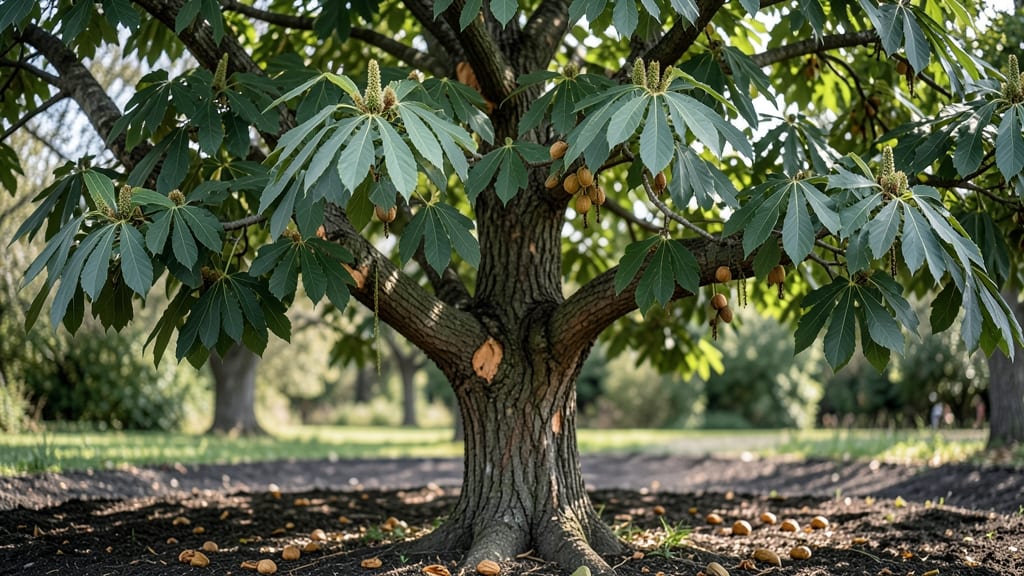
The big green tree nut you're looking for is the English walnut, a large, round nut encased in a thick green husk that comes from Juglans regia trees. These nuts deliver a rich, buttery flavor and thrive in temperate climates, making them a favorite for cooking, baking, and even landscape gardening.
The English walnut tree (Juglans regia) is easily recognizable by its compound leaves with 5-9 leaflets and its distinctive diamond-shaped bark. 🌿 These trees love well-drained soil and full sun, growing best in USDA zones 4-9.
The nuts inside that thick green husk are packed with healthy fats, protein, and antioxidants, which is why they're so popular in everything from candies to gourmet dishes.
When harvesting, wait until the husks turn brown and split open naturally—usually in late fall. Once collected, store the nuts in a cool, dry place or shell them immediately to preserve their rich flavor. Just beware of walnut husk fly and aphids, which can damage the crop if left unchecked.
💡 In This Article
- Identifying and Cultivating English Walnut Trees
- Harvesting and Using Walnuts from Your Tree
Identifying and cultivating English walnut trees
The English walnut tree (Juglans regia) stands out with its distinctive features that make identification straightforward. Its leaves are compound, featuring 5-9 leaflets arranged alternately along the stem, each measuring 4-8 inches long with serrated edges.
The bark develops a rugged, diamond-patterned texture as the tree matures, resembling alligator skin. Young trees have smoother bark that gradually thickens and darkens over time, creating a striking visual contrast.
These trees thrive in temperate climates, particularly in USDA zones 4-9, where they can grow up to 50 feet tall with a spread of 30-40 feet. They prefer well-drained soil with a slightly acidic to neutral pH (6.0-7.5) and full sun exposure for optimal growth.
The roots are deep and extensive, requiring space to avoid competition from other plants. In ideal conditions, a walnut tree can produce nuts as early as 5-7 years old, with peak production around 20-30 years.
Understanding the tree's seasonal growth patterns is key to successful cultivation. In spring, the tree bursts into yellow-green catkins before the leaves emerge, followed by male and female flowers that appear together.
By late summer, the green husks form around the developing nuts, turning brown and splitting open in late fall (October-November)—a clear signal that harvest time has arrived. The nuts themselves are large, round, and encased in a 1-inch-thick husk that protects them from pests and environmental damage.
One fascinating aspect of walnut trees is their allelopathic properties—they release juglone, a chemical that inhibits the growth of certain plants nearby. This means you should avoid planting sensitive species like tomatoes, potatoes, or apples within a 50-foot radius of your walnut tree.
Instead, opt for companion plants like clover, beans, or grasses that thrive in juglone-rich soil. 🌱
For home gardeners, selecting the right variety matters. Popular cultivars like 'Franquette' or 'Hartley' are known for their large nuts and disease resistance, while 'Serr' is favored for its early maturity. When planting, dig a hole twice as wide as the root ball and mix in compost to improve drainage.
Mulching around the base helps retain moisture and regulate soil temperature, which is especially important during the tree's early years.
Patience is key when cultivating English walnut trees, as they take time to establish and reach full productivity. However, the reward is worth it—a bountiful harvest of those prized big green tree nuts that are as valuable in the kitchen as they are in the landscape.
The rich, buttery flavor of the nuts comes from their high oil content (65% fat), making them a nutritional powerhouse and a staple in both sweet and savory dishes.