
Trees
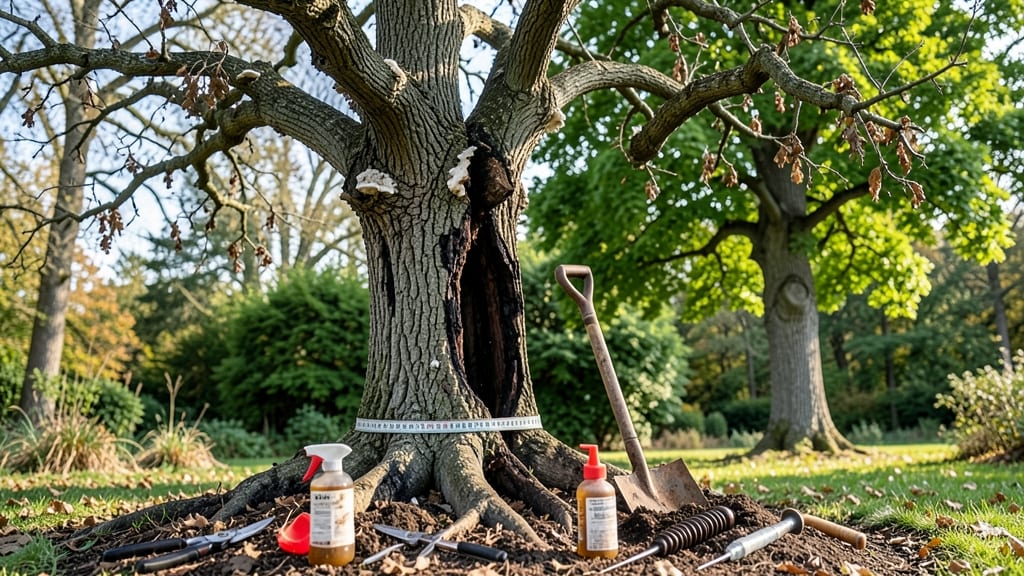
Big tree killers eliminate large trees by targeting their transport systems or roots, with fast-acting chemical options like triclopyr or glyphosate delivering results in weeks, while natural solutions such as vinegar or salt demand consistent reapplication for effectiveness. Safety precautions are essential to protect surrounding plants and ecosystems.
Chemical tree killers dominate because they work systemically—absorbed through leaves or bark, they travel to the roots and disrupt the tree's vascular system where nutrients and water move. 🌳 This process starves the tree from within, often causing death in just 2-6 weeks depending on the species and herbicide strength.
Natural methods like vinegar or salt, while eco-friendly, rely on direct contact and repeated applications, making them slower and less reliable for large trees. The key difference lies in persistence: chemicals provide immediate results, while natural options require patience and diligence.
For best results, I recommend using chemical treatments during active growth seasons (spring or fall) when trees are most vulnerable. Always wear protective gear and avoid spraying on windy days to prevent drift onto desirable plants.
Natural methods, though less potent, can be effective for smaller trees or when chemical use isn't an option—just be prepared for multiple treatments over several months.
💡 In This Article
- How Chemical Tree Killers Disrupt Growth Systems
- Natural Big Tree Removal Methods and Their Limitations
How chemical tree killers disrupt growth systems
Chemical tree killers primarily work by mimicking plant hormones or blocking essential biological pathways, forcing trees into a state of metabolic collapse. The most effective herbicides like triclopyr and glyphosate target the tree's vascular system—specifically the xylem and phloem—where water, nutrients, and sugars travel.
Triclopyr, for example, disrupts auxin production, a crucial growth hormone that regulates cell division. Without proper auxin levels, the tree's cells can't grow or repair themselves, leading to rapid decline. 🌿
Glyphosate takes a different approach by inhibiting a specific enzyme called EPSP synthase, which is vital for producing amino acids the tree needs to survive. This stops protein synthesis entirely, causing the tree to starve at a cellular level.
The key advantage of systemic herbicides (those absorbed and transported throughout the plant) is their ability to reach the roots, where the tree's life support system resides. A single application can kill even massive trees because the chemical spreads through the entire vascular network.
For comparison, contact herbicides like imazapyr only affect exposed surfaces, requiring direct bark application and multiple treatments.
Application method matters tremendously—foliar sprays work best during active growth when leaves are fully developed, while stem injections deliver concentrated doses directly into the transport system.
A 10% triclopyr solution applied in late spring or early fall can kill a 20-foot oak within 4-6 weeks, while glyphosate may take slightly longer due to its broader mechanism. The speed depends on tree species, size, and environmental conditions like temperature and soil moisture. 🌱
Safety is critical because these chemicals can persist in soil for months. Triclopyr, for instance, degrades slowly in moist conditions but can leach into groundwater if overused. Glyphosate, while generally soil-bound, requires careful application to avoid harming nearby plants.
Always use protective gear and follow label instructions precisely—even a small miscalculation can lead to unintended damage to desirable vegetation or wildlife habitats.
For maximum effectiveness, combine chemical treatment with proper timing. Young trees with thinner bark absorb herbicides more efficiently, while mature trees may require stem injections or basal bark applications for deeper penetration.
The visual signs of success include yellowing leaves, wilting branches, and eventual bark sloughing as the tree's internal systems fail. This process is irreversible once initiated, making precision application essential. 💥