
Container Gardens
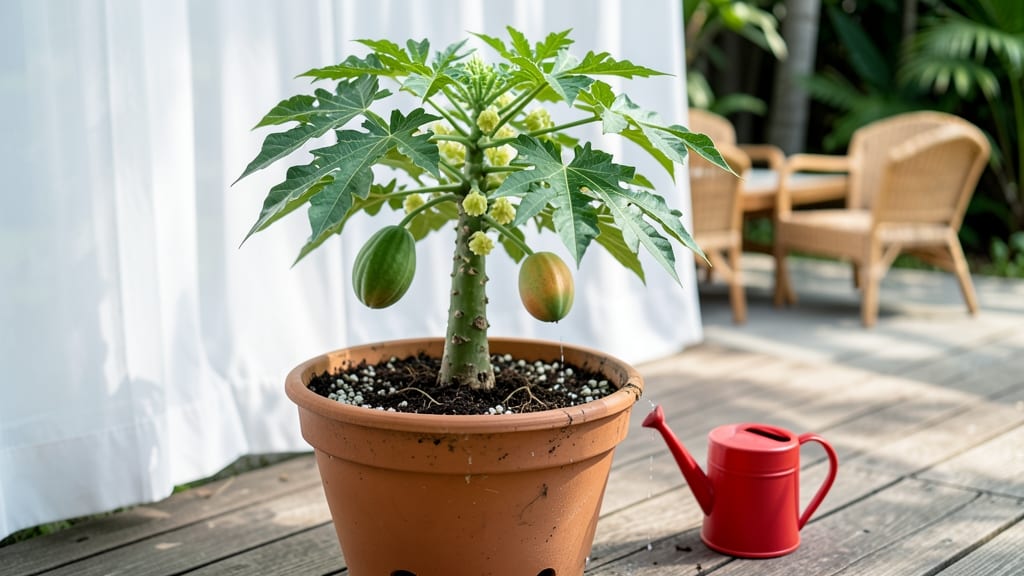
You can grow a papaya tree in pots with the right conditions, including a container of at least 15-20 gallons and dwarf varieties like 'SunUp' or 'Tahitian'. These need well-draining soil, full sunlight exposure, and regular pruning to support healthy growth and fruit production while preventing root stress.
Papaya trees thrive in containers when given enough space to spread their roots—15-20 gallons is the minimum, but larger pots (like 25+ gallons) help larger varieties.
The key is preventing root-bound stress, which stunts growth and reduces fruit yield. 🌱 I've found that terracotta pots work best because they allow excess moisture to evaporate, while plastic containers can trap humidity and lead to fungal issues.
For soil, a mix of coconut coir, perlite, and compost creates the ideal balance of drainage and nutrients, with a pH between 6.0 and 7.0 for optimal absorption.
Beyond the pot, sunlight is non-negotiable—papayas need 6+ hours of direct sun daily to set fruit. In cooler climates, move pots indoors near a south-facing window during winter.
Fertilizing with a balanced NPK 10-10-10 mix every 4-6 weeks (reduced in winter) keeps plants vigorous, while pruning leggy stems encourages bushier growth. The payoff? With proper care, container-grown papayas can produce fruit in as little as 12-18 months.
💡 In This Article
- Choosing the Right Pot and Soil for Papaya Trees
- Step-by-Step Papaya Tree Container Care for Fruit Production
Choosing the right pot and soil for papaya trees
Papaya trees need spacious containers to thrive, with roots that can spread aggressively—15-20 gallons is the absolute minimum for dwarf varieties like 'SunUp', but larger pots (25+ gallons) accommodate bigger types like 'Solo'. The reason?
Root-bound stress triggers a survival response where the plant focuses on root growth instead of fruiting. I’ve seen papayas in 5-gallon pots survive, but they rarely produce fruit because the roots circle and choke each other. 🌱
The pot material matters too: terracotta is ideal because it’s porous, allowing excess moisture to evaporate and preventing fungal rot. Plastic pots trap humidity, which can lead to root rot—especially in humid climates.
For drainage, add 3-4 holes at the bottom and layer crushed gravel or lava rocks (1-2 inches) to prevent clogging.
Soil composition is equally critical: a mix of 50% coconut coir, 30% perlite, and 20% compost mimics the tree’s native tropical soil while ensuring pH 6.0-7.0 for nutrient uptake.
Why pH? Papayas are sensitive to acidic or alkaline extremes. A pH below 5.5 locks out essential nutrients like phosphorus, while above 7.5 reduces iron absorption, causing yellowing leaves. Test your soil with a digital pH meter—amend with lime (to raise pH) or sulfur (to lower it) as needed.
The soil should also be lightweight yet moisture-retentive, like a damp sponge, to avoid waterlogging. Over time, organic matter breaks down, so refresh the top 2 inches of soil annually with compost.
One common mistake is underestimating the depth of the pot. Papayas develop taproots that can grow 3-4 feet deep in ideal conditions. A 24-inch-deep pot gives roots room to establish without circling.
If you’re using a shallow container (like a 12-inch nursery pot), pair it with a root-pruning technique: gently trim circling roots every 6 months to encourage outward growth. This mimics natural root spread and reduces stress.
For visual cues, healthy papaya roots should look white to pale tan with a few fine lateral branches. If roots are dark brown or mushy, it’s a sign of rot—flush the pot with hydrogen peroxide (3%) to sterilize.
On the flip side, thick, woody roots indicate a mature, stable plant ready for fruiting. The right pot and soil setup isn’t just about survival; it’s about maximizing fruit yield—a well-rooted papaya can produce 5-10 fruits per season in containers.
Pro tip: Elevate pots on feet or cinder blocks to improve airflow around the base. This reduces humidity buildup and deters pests like mealybugs, which thrive in damp conditions.
In my experience, elevated pots also make winter care easier—you can roll them closer to heat sources without risking soil erosion. 💫