
Container Gardens
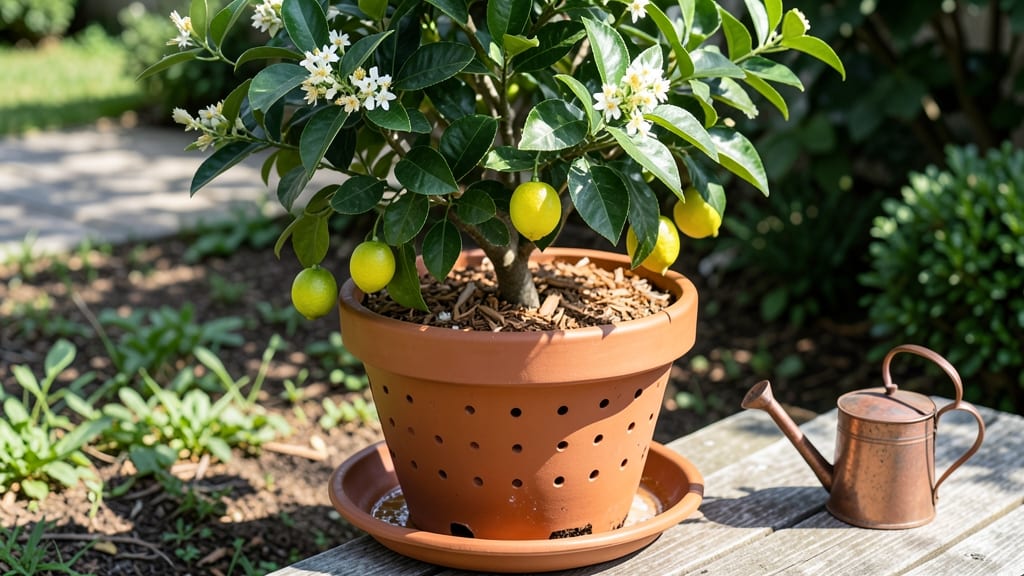
You can keep a lemon tree in a pot, particularly with dwarf varieties like 'Meyer' or 'Improved Meyer,' which adapt well to container life when given adequate sunlight, well-draining soil, and consistent pruning to control size and fruit output.
Container-growing lemon trees is all about choosing the right variety and mimicking their natural Mediterranean environment. 🌿 Dwarf types like 'Meyer' produce sweeter, smaller fruit and handle cooler temperatures better than standard varieties, making them perfect for patios or balconies.
The key is using a pot with drainage holes—at least 15 gallons for mature trees—and repotting every 2-3 years to refresh the soil. I've found that placing the pot in a south-facing spot with 6-8 hours of sunlight daily yields the best results, while avoiding cold drafts prevents winter stress.
Proper care extends beyond sunlight. Lemon trees in pots need watering when the top inch of soil feels dry, and a balanced citrus fertilizer every 4-6 weeks during growing season.
Pruning isn't just for size control—it also improves air circulation and encourages fruit production. With these basics covered, you can enjoy homegrown lemons year after year, even in limited space.
💡 In This Article
- Best Dwarf Lemon Tree Varieties for Container Growing
- Essential Care Tips for Potted Lemon Trees
Best dwarf lemon tree varieties for container growing
Dwarf lemon trees are specifically bred to thrive in containers, making them ideal for patios, balconies, or even sunny windowsills. The 'Meyer' lemon stands out as the most popular choice, reaching only 6-10 feet tall with proper pruning, compared to full-sized trees that can grow 20+ feet.
Its hybrid origins (lemon × mandarin) give it sweeter, thinner-skinned fruit that ripens year-round in warm climates. For even better cold tolerance, the 'Improved Meyer' variety handles temperatures down to 20°F without leaf damage, thanks to its thicker leaves and stronger root system.
If you prioritize fruit production over size, consider the 'Eureka' or 'Lisbon' varieties—both are dwarf versions of classic commercial lemons. These produce 20-50 lemons per year in containers, though they require slightly larger pots (15-20 gallons) and may need winter protection in colder zones.
The trade-off? Their fruit is more tart and thicker-skinned, better suited for cooking than fresh eating. 🌱 For visual appeal, 'Meyer' trees develop a dense, bushy canopy with glossy leaves, while 'Eureka' types grow more upright with a slightly open habit.
Pot size directly impacts growth and fruit yield. A 5-gallon container works for young trees (1-2 years old), but mature trees need at least 15 gallons to prevent root binding. I’ve found that wider pots (shallow but broad) encourage stronger root systems than tall, narrow ones.
For multiple trees, space pots 3-4 feet apart to allow airflow and prevent disease spread. The right variety and container combo transforms your balcony into a miniature citrus grove.
Cold hardiness varies dramatically between types. 'Meyer' lemons can survive brief dips to 25°F, while 'Eureka' types struggle below 30°F. In freezing climates, move pots indoors or wrap them in frost cloth.
The secret to winter survival lies in the roots—well-draining soil prevents frost heave, while mulching the pot’s base insulates against temperature swings. Even in mild winters, lemons need 6+ hours of sunlight daily to set fruit.
Consider your growing zone when selecting. In USDA Zones 9-11, 'Meyer' trees thrive outdoors year-round, while Zones 8 and below require winter protection.
For container growers in cooler areas, 'Improved Meyer' is the safest bet—its compact growth (5-8 feet) and cold resistance make it the ultimate patio citrus tree. The right choice depends on whether you want sweet fruit for snacks or tart lemons for cooking.
Pro tip: Start with a 1-gallon nursery tree in a 5-gallon pot to establish roots before upgrading.
This gradual transition reduces transplant shock and gives you time to perfect your care routine. 💫 With the right variety, your lemon tree could bear fruit within 1-2 years—imagine fresh lemons picked from your balcony!