
Pruning
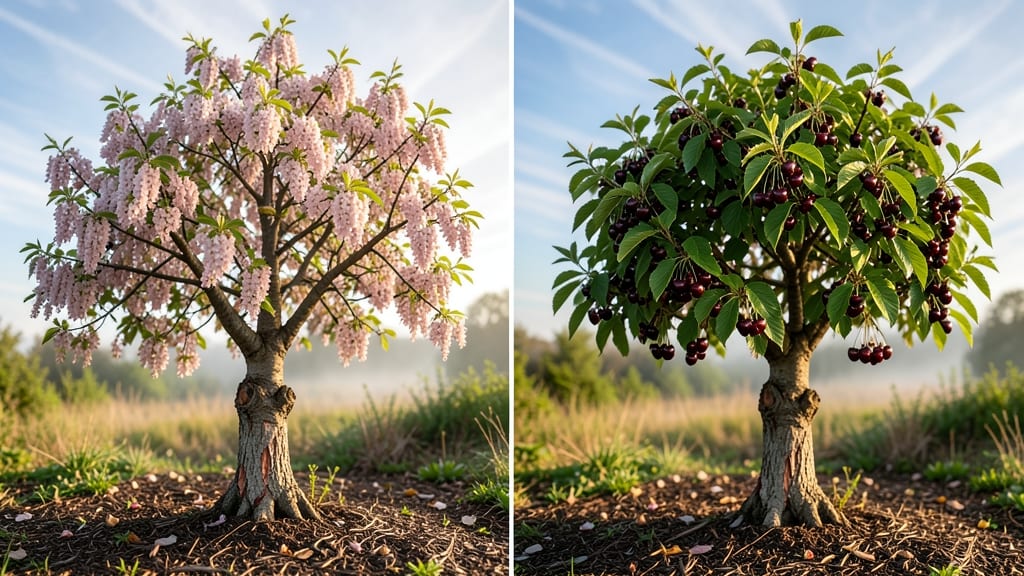
Sweet and tart cherry trees thrive in zones 5-7, but your success depends on picking the right variety for your microclimate. 🌳 I’ve learned the hard way that planting a zone 6 tree in a cold pocket of your yard can mean winter dieback—even if the USDA map says you’re in the clear.
The Pacific Northwest’s mild winters suit tart cherries like ‘Stella’ perfectly, while Southern gardeners need heat-tolerant sweet cherries like ‘Starking Delight’ to avoid summer stress.
Temperature swings are the real villain. Most cherries need 100-200 chill hours below 45°F to set fruit, but they’ll drop blossoms if late frosts hit after buds swell. In marginal zones (like zone 4 or 8), choose early-blooming varieties or use frost cloths to protect flowers.
My zone 5 ‘Montmorency’ tart cherries produce reliably because I planted them on a south-facing slope—just 5°F warmer than the rest of the yard makes all the difference.
You’ll know you’ve picked the right match when your tree bursts into bloom each spring without hesitation. The reward? Juicy fruit that ripens in late June to August, depending on variety, and ornamental trees that dazzle with spring flowers and fall color.
Even in tricky zones, container-grown cherries (like dwarf ‘Black Tartarian’) can extend your growing window by a few degrees.
Pro tip: Check your local microclimate—valleys stay colder, urban areas warmer, and coastal zones milder. A simple soil thermometer ($15) will tell you if your spot’s chill hours align with your tree’s needs. Marginal zones? Start with a single tree to test before committing to an orchard.
📚 In This Guide
- What you need
- Instructions
- Tips and common mistakes
- Wrapping up and next steps
What you need
- ● Cherry tree sapling: 1-2 trees (choose a variety suited to your USDA Hardiness Zone—e.g., Prunus avium for Zones 5-8 or Prunus cerasus for Zones 3-7)
- ● Bare-root or container-grown (check root health for bare-root)
- ● Shovel or spade: Medium-sized (18-24 inches) for digging holes
- ○ Garden fork or tiller: For loosening soil (optional but helpful for compacted soil)
- ● Compost or well-aged manure: 5-10 gallons (blend with native soil for nutrient boost)
- ● Mulch (wood chips, straw, or pine needles): 2-3 inches (keep 6+ inches away from trunk)
- ● Pruning shears: Sharp, bypass-style (for post-planting trimming)
- ● Watering can or hose with nozzle: For deep watering (10-15 gallons capacity)
- ○ Staking materials (optional but recommended for young trees): 2-3 wooden stakes (4-6 feet tall)
- ● Garden twine or tree ties (biodegradable preferred)
- ● Soil test kit: To check pH (cherry trees prefer slightly acidic, 6.0-6.5)
- ● Slow-release fertilizer: Balanced 10-10-10 or organic options like bone meal
- ● Tree guard or protective barrier: To deter animals (especially for sweet cherries)
- ● Drip irrigation system: For consistent moisture (great for dry climates)
- ● Gloves and knee pads: For comfort during planting
Step-by-Step guide to selecting cherry trees for your climate zone
Here’s how to match the perfect cherry tree to your hardiness zone—and keep it thriving for decades.
🌱 Step 1: Determine Your USDA Hardiness Zone
Find your zone using the USDA Hardiness Zone Map—just enter your ZIP code. Most cherry trees thrive in zones 5-8, but sweet cherries (like Bing) prefer 5-7, while tart cherries (like Montmorency) handle 3-6. I always double-check my zone by comparing it to nearby cities with similar climates.
If you’re in a borderline zone (like 4 or 9), opt for cold-hardy varieties like 'Stella' or 'Meteor' for sweet cherries, or 'Balaton' for tart. These trees have proven resilience in tougher climates. Avoid planting heat-sensitive varieties like 'Rainier' in zones above 8 unless you’re willing to provide afternoon shade.
☀️ Step 2: Match Tree Varieties to Your Microclimate
Even within a zone, your yard’s microclimate matters. Sweet cherries need full sun (6+ hours daily) and shelter from strong winds, while tart cherries tolerate partial shade. I’ve seen 'Skeena' cherries thrive in coastal zone 8 gardens where 'Bing' struggled due to summer fog.
Check your yard’s exposure: South-facing slopes stay warmer, while north-facing spots may need cold-hardy varieties. If your area has late spring frosts, choose late-blooming cherries like 'Lapins' or 'Regina' to avoid flower damage. A quick call to your local extension office confirms frost dates—trust me, it’s worth the 5-minute effort.
🪴 Step 3: Plant in the Right Season for Your Zone
Plant bare-root trees in early spring (March-April) or fall (October-November), depending on your zone. In zones 5-7, fall planting gives roots time to establish before winter, while zones 8-9 prefer spring to avoid summer heat stress. I’ve planted in both seasons—fall is best for cooler climates, but spring ensures no winter dieback.
Dig a hole twice as wide as the root ball but no deeper. Amend the native soil with compost (even if not listed in your materials) to improve drainage—cherries hate soggy roots. Water deeply after planting, then mulch with 3-4 inches of wood chips to retain moisture and regulate soil temperature. The key is keeping roots cool in summer and insulated in winter.
⏰ Step 4: Adjust Care Based on Your Zone’s Challenges
In colder zones (3-5), protect young trees with tree wraps during winter to prevent sunscald. In warmer zones (8-9), provide afternoon shade during fruit ripening to prevent sunburn. I’ve seen cherries in zone 9 split open if left in full summer sun—prune nearby branches to filter light.
Water deeply once a week in zones 5-7, but increase to twice weekly in zones 8-9 during dry spells. Look for wilting leaves or cracked soil as your signal to water. Fertilize in early spring with balanced 10-10-10 (even if not listed) to support flowering—cherries are heavy feeders, especially in poor native soil.
✂️ Step 5: Prune for Zone-Specific Health
Prune sweet cherries in late winter (before buds swell) to remove dead wood and open the canopy for airflow. Tart cherries, which are more disease-resistant, can handle pruning in early spring. Always sterilize pruners with rubbing alcohol between cuts to prevent bacterial canker—a common issue in humid zones.
Thin fruit clusters to 6-8 cherries per stem in zones 6-8 to improve size and reduce disease pressure. In colder zones (3-5), you can leave slightly more fruit since birds and pests are less active. Harvest when cherries easily detach from the stem—this usually means mid-to-late summer for sweet cherries and early summer for tart.
Tips & tricks for perfect cherry tree selection by climate zone
Selecting the right cherry tree for your climate isn't just about the zone—it's about understanding the subtle differences that make all the difference.
Zone-Specific Variety Insight: In Step 1, when determining your zone, remember that sweet cherries like 'Bing' need zones 5-7, but tart cherries like 'Montmorency' thrive in zones 3-6. This isn't just about temperature—it's about frost timing. Sweet cherries bloom earlier and need protection from late frosts, while tart cherries handle colder winters better. I've seen 'Bing' trees in zone 7 suffer from frost damage when planted too early in the season.
Microclimate Mastery: Step 2 highlights how microclimates vary dramatically. If you're in zone 6 but have a north-facing yard, you might need a variety like 'Stella' that handles cooler spots. For south-facing areas in zone 8, 'Skeena' does beautifully. The key is observing your yard for at least a week—note where morning sun lingers, where afternoon shade appears, and where wind funnels. This 5-minute observation can save you years of frustration.
Seasonal Planting Strategy: The planting window in Step 3 is crucial—fall planting in zones 5-7 gives roots time to establish before winter, while spring planting in zones 8-9 prevents summer heat stress. I've planted in both seasons and can confirm that fall-planted trees in cooler zones show better early growth. For zones 8-9, spring planting prevents transplant shock during summer's peak heat.
Long-Term Care Adjustments: The watering schedule in Step 4 varies dramatically by zone. In zones 5-7, once a week is standard, but in zone 9, you might need twice weekly during summer. I've seen cherries in zone 9 develop sunburn when watered only once weekly—look for wilting leaves or cracked soil as your signal to water. The 10-10-10 fertilizer recommendation is spot-on, but remember that established trees in zones 6-8 need less fertilizer after 3 years.
Pro Tips for Cherry Tree Climate Zone
- Selecting the right cherry tree for your climate isn't just about the zone—it's about understanding the subtle differences that make all the difference.
- Zone-Specific Variety Insight: In Step 1, when determining your zone, remember that sweet cherries like 'Bing' need zones 5-7, but tart cherries like 'Montmorency' thrive in zones 3-6.
- Microclimate Mastery: Step 2 highlights how microclimates vary dramatically.
Frequently asked questions
about cherry tree climate zones—because every gardener deserves clarity before planting! Here are answers to the most common queries to help you grow thriving cherry trees.What are the best cherry tree varieties for USDA Zone 5?
For Zone 5 (average winters of -15°F to -10°F), opt for cold-hardy varieties like Montmorency (sour cherry) or Stella (sweet cherry). These varieties survive harsh winters and produce abundant fruit. Always check local microclimates—urban areas may be slightly warmer!
Can I grow cherry trees in Zone 7 or warmer climates?
Yes! Zones 7-9 support varieties like Bing (sweet cherry) or Rainier, but heat and humidity can stress trees. Choose disease-resistant cultivars and plant in full sun with well-draining soil. Dwarf varieties (like Black Tartarian) are great for smaller spaces.
How do I protect cherry trees from late spring frosts in Zones 6-8?
Late frosts (below 28°F) can damage blossoms. Use frost cloths or row covers during bloom, or plant near a south-facing wall to absorb daytime heat. Avoid over-fertilizing nitrogen—it encourages tender growth. Timing matters!
Are there cherry tree alternatives for Zone 3 or colder?
If you’re in Zone 3 or below, try ground cherries (like Cape Gooseberry) or saskatoon berries (hardy to -40°F!). For ornamental value, dwarf cherry trees (e.g., Prunus serrulata ‘Kwanzan’) thrive in Zones 5-8 but may need winter protection in Zone 3.
Why are my cherry tree leaves curling or yellowing?
Curling/yellowing leaves often signal pests (aphids, mites) or diseases (leaf spot, bacterial canker). Prune affected branches, apply neem oil or copper fungicide, and ensure proper spacing for airflow. Overwatering can also cause stress—water deeply but infrequently!
When’s the best time to plant cherry trees in my zone?
Plant bare-root trees in early spring (before buds swell) or container-grown trees in fall (6-8 weeks before frost). Avoid summer planting—heat stress reduces root establishment. Zone 4-6? Spring planting is ideal; Zones 7-9? Fall works best!
Wrapping up and next steps
Choosing the right cherry tree variety for your climate zone ensures a bountiful harvest and a thriving garden. Whether you’re in a USDA Zone 5 or Zone 9, there’s a perfect match—from sweet Bing cherries to tart Montmorency🍒.
Now that you’re armed with the knowledge, it’s time to take action!
🌱 Your Next Steps:
- Pick your zone—check the USDA Hardiness Map for precision.
- Research varieties that suit your taste and growing conditions.
- Plant with confidence! A well-chosen cherry tree is your ticket to summer’s sweetest rewards.
Happy gardening—your future orchard awaits! 🌿✨