
Fertilization
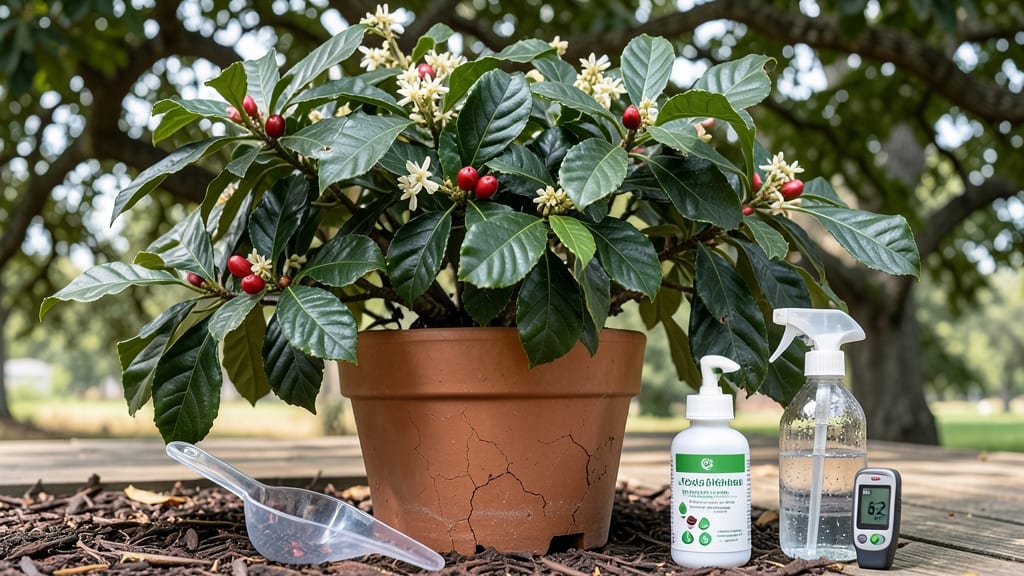
Your coffee tree’s lush leaves and rich beans start with the right fertilizer—getting this wrong means weak growth or bitter-tasting cherries. ✨ I’ve learned the hard way that coffee trees aren’t like other houseplants: they crave nitrogen-heavy feedings but hate overdoing it, especially in winter.
The secret? Balancing quick-release fertilizers with slow-release organics to match their tropical roots’ needs without burning them.
Most gardeners overlook the NPK ratio (nitrogen, phosphorus, potassium) for coffee trees—it’s not the same as for tomatoes or roses. You’ll want a 3-1-2 or 4-1-2 blend (more nitrogen for leaves, phosphorus for roots, potassium for fruit).
Organic options like composted manure or worm castings work well, but synthetic fertilizers (like 10-10-10) give faster results when used correctly. The key is seasonal timing: fertilize heavily in spring and summer, then taper off in fall and winter.
By the end of your first full growing season, you’ll notice darker green leaves, more flowers, and heavier bean production—if you avoid the common mistakes. Too much nitrogen? Yellow leaves and fewer beans. Too little?
Stunted growth. The sweet spot is every 4-6 weeks during active growth, with a light feeding in early spring to kickstart new shoots. Even a small potted coffee tree responds dramatically when fed right.
This method works for both container-grown coffee trees (like the popular Coffea arabica varieties) and in-ground plants in warm climates. Just adjust the fertilizer amount based on pot size—half the recommended dose for containers to prevent salt buildup.
Ready to transform your tree’s health? Let’s break it down step by step.
📚 In This Guide
- What you need
- Instructions
- Tips and common mistakes
- Wrapping up and next steps
What you need
- ● Nitrogen-rich fertilizer: Choose a balanced fertilizer with a higher nitrogen (N) content, such as a 10-10-10 or 20-20-20 formula. Aim for 2–3 pounds per 100 square feet of soil.
- ● Organic compost or well-rotted manure: Use 2–3 inches of compost mixed into the top 6 inches of soil to improve soil structure and nutrient retention.
- ○ Slow-release fertilizer (optional but recommended): Products like osmocote or coffee-specific granules (e.g., Miracle-Gro Shake 'n Feed) for steady nutrient release over 3–6 months.
- ● pH testing kit: Ensures soil pH is between 6.0–6.5 (ideal for coffee trees). Adjust with lime (to raise pH) or sulfur (to lower pH) if needed.
- ● Watering can or hose: With a gentle spray nozzle to avoid disturbing the soil.
- ● Gloves and protective eyewear: For handling fertilizers and soil safely.
- ● Garden trowel or spade: For mixing fertilizer into the soil (6–8 inches deep for young trees, 12 inches deep for mature ones).
- ● Measuring scoop or scale: To ensure precise fertilizer application (avoid overdoing it!).
- ● Mulch (e.g., wood chips or straw): Spread a 2–3 inch layer around the base (keep it 3–4 inches away from the trunk) to retain moisture and regulate temperature.
- ○ Foliar spray (optional): A liquid nitrogen supplement (e.g., fish emulsion) for quick green-up during growing seasons.
- ● Soil moisture meter: To monitor hydration levels—coffee trees thrive with consistently moist (not soggy) soil.
Step-by-step guide to fertilizing coffee trees for maximum yield
Here’s how I keep my coffee trees thriving with the right nitrogen-rich feeding schedule.
🌿 Step 1: Understand Your Coffee Tree’s Nutrient Needs
Coffee trees thrive on a balanced fertilizer with a 3-1-2 or 4-1-2 NPK ratio—that means more nitrogen for lush foliage and beans, with phosphorus and potassium to support root growth and flowering. I test soil pH first (aim for 6.0-6.5) because acidic soil locks out nutrients. If your soil is too alkaline, amend it with sulfur before fertilizing.
Young trees (under 3 years) need light feeding—just enough to encourage leaf growth without stressing roots. Mature trees (3+ years) can handle heavier applications twice a year. I mark my calendar for early spring (March) and late summer (August)—these are the critical windows for coffee trees to build energy for flowering and fruiting.
💧 Step 2: Choose the Right Fertilizer Type and Application
For organic growers, I blend composted manure (aged 6+ months) with blood meal (10-12% nitrogen) and bone meal (3-4% phosphorus). Synthetic growers can use a slow-release granular fertilizer like 10-10-10 or a liquid nitrogen boost (like urea) diluted to half-strength. Never apply straight nitrogen—it burns roots and washes away.
Spread fertilizer in a 4-inch band around the tree’s drip line (the edge of the canopy), then water deeply to activate it. I use a soaker hose to avoid wetting leaves—this prevents fungal issues. For container-grown coffee trees, mix fertilizer into the top 2 inches of soil and water immediately to distribute nutrients evenly.
☀️ Step 3: Feed in Stages for Optimal Growth
First feeding (March): Apply half the recommended dose of nitrogen-rich fertilizer. This jumpstarts leaf production without overwhelming the tree. I monitor for dark green, glossy leaves—that’s your sign the tree is absorbing nutrients. If leaves yellow (chlorosis), your soil may need iron chelate or a pH adjustment.
Second feeding (August): Switch to a lower-nitrogen, higher-phosphorus blend (like 5-10-10) to encourage flowering. Coffee trees need 12-14 weeks of cool weather to set fruit, so this late-summer boost is critical. I also side-dress with wood ash (sparingly) for potassium—just a handful per tree. Stop fertilizing 6 weeks before harvest to let the beans mature fully.
✂️ Step 4: Maintain Soil Health Between Feedings
Coffee trees hate compacted soil. I mulch with 3-4 inches of wood chips or coffee grounds (composted!) to retain moisture and feed microbes. Avoid fresh coffee grounds—they’re too acidic and can stunt growth. Every 6 months, I top-dress with worm castings for micronutrients and mycorrhizal fungi to boost root absorption.
Watch for over-fertilization signs: crispy leaf edges, stunted growth, or white crust on soil. If you see these, flush the soil with water (2x the pot’s volume) to leach excess salts. I also rotate fertilizer brands seasonally to prevent nutrient lockout—diversity keeps the soil ecosystem balanced.
⏰ Step 5: Adjust for Climate and Tree Age
In hot, dry climates, coffee trees need more frequent light feedings (every 6 weeks) because nutrients leach out faster. In cooler regions, reduce to once every 8 weeks—overfeeding in damp soil causes root rot. Young trees (under 2 years) only need fertilizer in spring; mature trees (5+ years) can handle 3 feedings per year if they’re heavy producers.
Here’s my pro tip: Observe the beans. If they’re small and underdeveloped, your tree needs more phosphorus. If leaves are huge but beans are sparse, it’s a potassium deficiency. Adjust next year’s fertilizer blend based on what you see—not just the label. Coffee trees tell you exactly what they need if you’re paying attention.
Tips & tricks for perfect coffee tree fertilization
Here's what nobody tells you about keeping your coffee trees thriving year after year.
Soil pH is non-negotiable: That 6.0-6.5 target isn't just a recommendation—it's critical for nutrient availability. I test my soil every spring before fertilizing. If your pH is off by even 0.5 points, nutrients like iron and manganese become locked away, even when you're applying them. Use a simple soil test kit from your garden center—it's the difference between healthy trees and chronic yellowing leaves.
Timing matters more than quantity: The March and August feedings align with your tree's natural growth cycles. In March, focus on nitrogen for leaf growth, but remember to use only half the recommended dose. Too much nitrogen now can delay flowering. August's switch to higher phosphorus is what triggers those critical flower buds—don't skip this step, even if your tree looks healthy. The 12-14 week cool period after August is when your tree decides how many beans it will produce next year.
Application technique prevents waste: That 4-inch band around the drip line isn't arbitrary—it's where your tree's feeder roots are actively growing. I've seen beginners sprinkle fertilizer randomly under the canopy, which wastes product and can burn leaves. For container trees, mixing into just the top 2 inches ensures roots get access without overwhelming them. And always water deeply after applying—fertilizer needs moisture to activate and move into the soil profile.
Visual cues are your best tool: Dark green, glossy leaves after the March feeding mean your tree is happy. Yellowing between veins (chlorosis) means iron deficiency, while crispy edges signal over-fertilization. The white crust on soil? That's salt buildup from too much synthetic fertilizer. Your tree's appearance tells you exactly what it needs—learn to read these signals before you reach for another fertilizer bag.
Pro Tips for Coffee Tree Fertilizer
- Here's what nobody tells you about keeping your coffee trees thriving year after year.
- Soil pH is non-negotiable: That 6.0-6.5 target isn't just a recommendation—it's critical for nutrient availability.
- Timing matters more than quantity: The March and August feedings align with your tree's natural growth cycles.
Frequently asked questions
Got questions about coffee tree fertilizer?
You’re not alone! Whether you're a first-time coffee grower or a seasoned plant parent, these answers will help you keep your coffee tree thriving.
What’s the best time of year to fertilize a coffee tree?
Fertilize your coffee tree during its active growing season, typically spring and early summer. Avoid fertilizing in late fall or winter when the tree is dormant. For tropical climates, apply fertilizer every 4–6 weeks during the growing season. Pro tip: Light, frequent feedings work better than heavy doses!
Can I over-fertilize my coffee tree?
Over-fertilizing can burn roots, stunt growth, or even kill your tree. Signs include yellowing leaves, leaf drop, or white crusts on soil. Always follow package instructions, and water thoroughly after applying fertilizer. If you suspect over-fertilization, flush the soil with water and reduce future doses.
What’s a good natural alternative to commercial coffee tree fertilizer?
If you prefer organic options, try compost, worm castings, or banana peels (rich in potassium). Coffee grounds (used, composted) also work but should be mixed into soil—never applied fresh. For a balanced boost, use a 10-10-10 or 20-20-20 organic fertilizer (like fish emulsion or seaweed extract).
Why are my coffee tree’s leaves turning yellow after fertilizing?
Yellow leaves often signal nitrogen overload, root burn, or poor drainage. Check if you’re using too much fertilizer or if the soil is waterlogged. Flush the soil with water, reduce fertilizer strength, and ensure well-draining soil. If yellowing persists, test your soil’s pH (coffee trees prefer 6.0–6.5).
How often should I fertilize if my coffee tree isn’t producing beans?
Low bean production often means your tree needs more phosphorus and potassium (not just nitrogen). Switch to a balanced or phosphorus-rich fertilizer (e.g., 5-10-10) and apply it every 6–8 weeks during the growing season. Also, ensure your tree gets 6+ hours of sunlight and proper watering—beans thrive with consistent care!
Can I use the same fertilizer for coffee trees and other plants?
While some balanced fertilizers (like 10-10-10) work for multiple plants, coffee trees crave nitrogen-heavy blends (e.g., 30-10-10) for lush foliage and beans. Avoid high-potassium fertilizers (like those for flowering plants), as they can reduce bean production. Always match the fertilizer to your tree’s current needs (leaves vs. fruit).
Wrapping up and next steps
Choosing the right coffee tree fertilizer—especially one rich in nitrogen—can transform your plants from struggling to thriving, yielding lush leaves and bountiful beans.
Whether you opt for organic compost, synthetic blends, or homemade solutions like banana peels or grass clippings, consistency is key. Your effort will pay off with healthier coffee plants and a better harvest!
Ready to give your coffee trees the boost they deserve? Start small, monitor progress, and adjust as needed. Happy gardening—your next cup of coffee might just taste even better! ☕🌱