
Trees
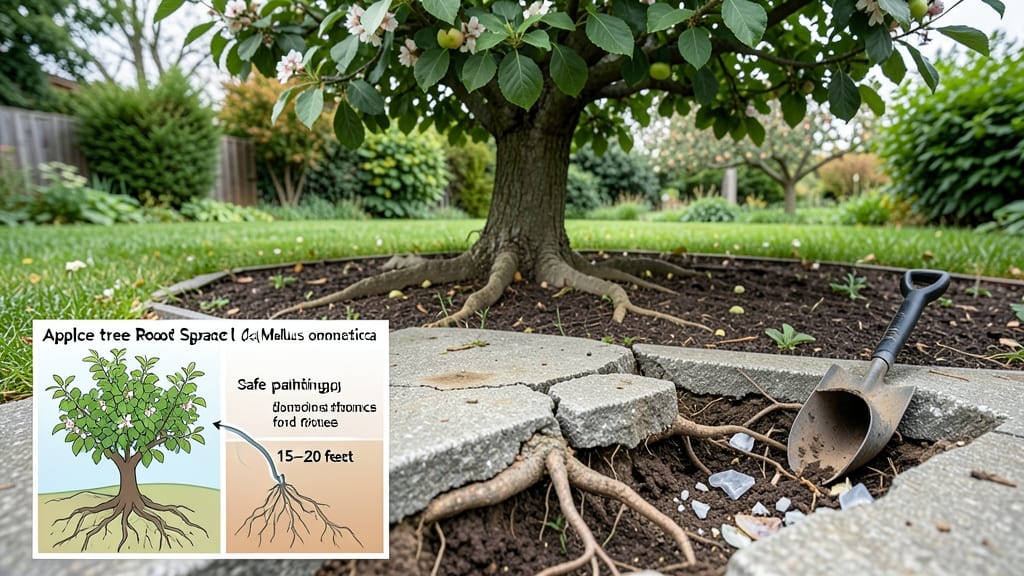
Apple tree roots do cause damage by spreading aggressively up to 3-5 times the tree’s canopy width, often lifting sidewalks, cracking foundations, and competing with nearby plants for water and nutrients. Strategic spacing and root barriers are key to preventing these issues.
Apple tree roots grow far beyond what most people realize—some varieties develop lateral roots that stretch 30-50 feet from the trunk, while deep taproots can reach 6-8 feet underground. 🌳 The damage happens when these roots encounter structures or other plants, especially in clay-heavy soils where expansion is more aggressive.
I’ve seen cases where mature apple trees lifted concrete patios or drained lawns dry, leaving neighboring shrubs struggling for moisture.
What’s surprising is how subtle the early warning signs can be. Uneven pavement or cracks in foundations often appear years after planting, by which point removal becomes costly. The good news? Proper planning—like planting at least 20 feet from structures and using root barriers—can prevent most conflicts.
Even better, some apple varieties like ‘Liberty’ or ‘Enterprise’ have naturally shallower roots, making them safer choices for urban landscapes.
💡 In This Article
- How Apple Tree Roots Grow and Spread
- Preventing Apple Tree Root Damage to Structures and Plants
How apple tree roots grow and spread
Apple tree roots develop a complex system with two primary components: the deep taproot and the extensive network of lateral roots. The taproot grows straight down, often reaching depths of 6-8 feet in search of water, while lateral roots spread horizontally, sometimes extending 30-50 feet from the trunk.
This spread is typically 3-5 times the tree’s canopy width, which explains why damage often occurs far beyond the drip line of the branches. 🌱
The growth pattern varies by soil type—roots in clay-heavy soils tend to spread wider and shallower due to poor drainage, while sandy soils encourage deeper, more vertical growth.
For example, a ‘Honeycrisp’ apple tree in clay soil might develop lateral roots within the top 12-18 inches of soil, increasing the risk of pavement heaving. In contrast, the same variety in loamy soil would have roots penetrating deeper but still spreading aggressively.
This explains why some homeowners notice damage years after planting, as roots gradually encroach on structures.
One surprising factor is how roots prioritize resources. Apple trees are phreatophytes, meaning they draw heavily from groundwater when available, but they’ll also aggressively compete with nearby plants for moisture.
I’ve observed cases where a mature apple tree drained a 10-foot radius of soil, leaving ornamental grasses and shrubs wilting despite regular watering. The roots release chemicals that inhibit the growth of competing plants, a process called allelopathy, further reducing the health of surrounding vegetation. 🌿
Comparing apple trees to other fruit trees reveals key differences.
While peach trees have roots that spread 2-3 times their canopy width, apple trees are more aggressive due to their larger size and longer lifespan (often exceeding 50 years). Cherry trees, on the other hand, have roots that spread more uniformly, making them slightly less disruptive.
This is why landscapers often recommend spacing apple trees at least 20 feet from buildings, driveways, and other plants to minimize conflicts.
The depth of root penetration also plays a critical role in structural damage. While the taproot may reach 6-8 feet, most lateral roots grow within the top 2-3 feet of soil, where they can lift sidewalks, crack foundations, or clog drainage systems.
For instance, a 4-inch diameter lateral root can exert enough upward pressure to lift a 4-inch thick concrete slab, especially in freeze-thaw cycles where water expands in root channels. This is why early intervention—like installing root barriers—is far more effective than waiting for visible damage to appear.
Understanding these growth patterns helps explain why some apple varieties cause more problems than others. ‘Fuji’ and ‘Gala’ trees, for example, tend to have more aggressive root systems compared to ‘Liberty’ or ‘Enterprise’, which were bred for disease resistance and shallower root growth.
Choosing the right variety can significantly reduce the risk of damage while still enjoying a productive fruit tree. 🍏