
How To
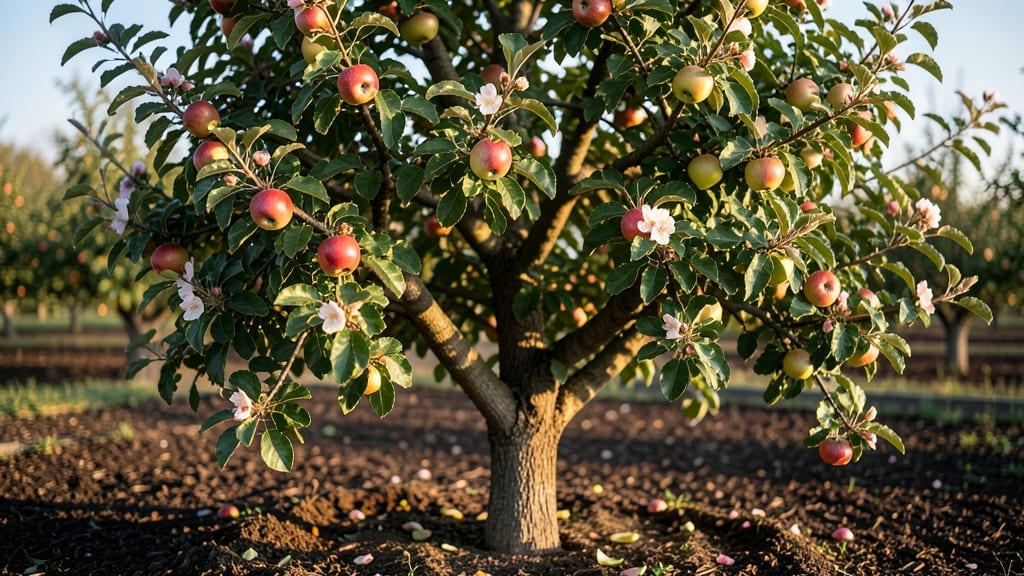
Growing an apple tree and wondering how tall does an apple tree grow? The answer depends on the variety—dwarf types stay under 12 feet, while standard trees can soar past 25 feet if left unchecked.
Picture this: a waist-high tree bearing fruit in your backyard or a towering giant that needs a ladder just to pick apples. The difference comes down to the variety, your pruning habits, and even your local climate.
If you’ve ever dreamed of fresh apples but worried about space, you’re in the right place.
Below, I’ll break down the exact heights of popular apple tree types—from compact dwarfs to full-size standards—and share proven tips to keep your tree at your ideal height, whether you’re working with a tiny urban lot or a sprawling rural orchard.
You’ll also discover how spacing, pruning, and grafting can shape your tree’s future size, so you can plan for years of harvests without sacrificing your lawn (or sanity). Let’s get started.

Apple tree height by variety: dwarf to standard to giant sizes
Choosing the right apple tree size is crucial for your garden layout. Dwarf varieties stay under 10 feet, while standard trees can reach 20-30 feet or more. The difference comes from rootstock—dwarf trees are grafted onto stunted root systems, while standard trees grow on their own roots.
Understanding these categories helps you pick the perfect tree for your space and care capacity.
Your backyard's size and sunlight availability will determine which category suits you best. Urban gardeners often opt for dwarf or semi-dwarf varieties, while rural properties can accommodate standard or even giant trees.
Below, we break down the height ranges for each category, including popular varieties you might recognize from grocery stores.
| Category | Mature Height | Popular Varieties | Best For |
|---|---|---|---|
| Dwarf | 6-12 ft | 'Red Delicious', 'Granny Smith', 'Honeycrisp' | Containers, small yards, urban gardens |
| Semi-Dwarf | 12-16 ft | 'Fuji', 'Gala', 'Ambrosia' | Medium yards, backyard orchards |
| Standard | 20-30 ft | 'Jonathan', 'McIntosh', 'Rome' | Large properties, rural orchards |
| Giant | 30-50+ ft | 'Northern Spy', 'Winesap' | Commercial orchards, spacious farms |
A dwarf apple tree like 'Red Delicious' typically matures between 6-10 feet, making it ideal for containers or small patios. These trees produce full-sized fruit but require regular pruning to maintain their compact shape.
I’ve grown a dwarf Honeycrisp in a large pot on my balcony, and it yields 20-30 apples per season with minimal space.
If you have a medium-sized yard, a semi-dwarf like 'Fuji' will reach 12-16 feet and provide ample shade while staying manageable. These trees strike a balance between fruit production and ease of care. Just ensure you plant them at least 10-15 feet apart for proper airflow and sunlight penetration.
Standard apple trees like 'McIntosh' are classic choices for traditional orchards, growing 20-30 feet tall. They require more space and maintenance but offer higher yields and longer lifespan. These trees are perfect if you have open land and want to create a natural, rustic landscape.
For commercial orchards or large estates, giant apple trees like 'Northern Spy' can soar to 50 feet or more. These trees need wide spacing (30+ feet) and professional pruning to manage their size. While they produce exceptional fruit quality, they’re overkill for most home gardens.
Remember, these heights are general guidelines. Factors like soil quality, sunlight exposure, and pruning practices can influence how tall your tree grows. For example, a dwarf tree in poor soil might stay shorter, while one in rich, well-drained soil could reach the upper end of its range.
When selecting a tree, consider your long-term goals. If you want easy harvesting, a dwarf or semi-dwarf is ideal. For shade or wildlife habitat, a standard tree offers more benefits. Always check the rootstock type when purchasing—this determines the tree’s ultimate size.
Pro tip: If you love Honeycrisp apples but lack space, look for dwarf rootstock versions. These trees stay under 10 feet while producing the same sweet, crisp fruit. I’ve seen them thrive in 5-gallon containers with proper care!
Now that you know the height ranges, you can confidently choose an apple tree that fits your space and lifestyle. Whether you dream of a backyard orchard or a patio-friendly dwarf, there’s a perfect variety waiting for you. 🍎
How to control apple tree height: pruning, spacing, and grafting tips
Controlling your apple tree's height starts with understanding its natural growth potential. Without intervention, standard apple trees can reach 20-30 feet tall, while dwarf varieties stay between 6-12 feet.
The key to managing height lies in three strategies: pruning techniques, proper spacing, and grafting methods. Each approach offers unique benefits for different garden sizes and goals.
For urban gardeners with limited space, dwarf apple trees are ideal because they mature at 6-12 feet—perfect for containers or small backyards. However, even these compact trees need strategic pruning to maintain their shape and productivity.
Semi-dwarf varieties (12-18 feet) offer a middle ground, balancing manageable height with higher yield potential.
🌱
Grafting determines 90% of an apple tree's mature height. A dwarf rootstock + standard scion creates a semi-dwarf tree, while columnar rootstock produces ultra-compact 6-foot trees. Choose rootstock based on your space!
Pruning is your most powerful tool for height control. Start by removing suckers (shoots growing from the base) and water sprouts (vertical shoots) in late winter or early spring.
For height reduction, focus on cutting back vertical leaders by 25-30% each year. This encourages lateral branching while slowing upward growth.
Proper spacing prevents overcrowding, which forces trees to grow taller for sunlight. Dwarf varieties need 8-10 feet between trees, while standard trees require 20-30 feet. Planting too close triggers competitive growth, making height management nearly impossible. Always check the mature spread of your chosen variety when planning placement.
Grafting offers precise control by combining a desired scion variety (e.g., Honeycrisp) with a rootstock that dictates size. Columnar rootstock (e.g., Urban Apple) produces trees under 6 feet, while semi-dwarf rootstock (e.g., M.9) yields 12-16 foot trees. Nurseries often label rootstock types—always verify before purchasing.
To train young trees, use temporary stakes and flexible ties to guide the main trunk at a 45-degree angle for the first 2-3 years. This promotes stronger branching and reduces the risk of wind damage as the tree matures.
Combine this with annual summer pruning to shape the canopy and prevent excessive height growth.