
Pruning
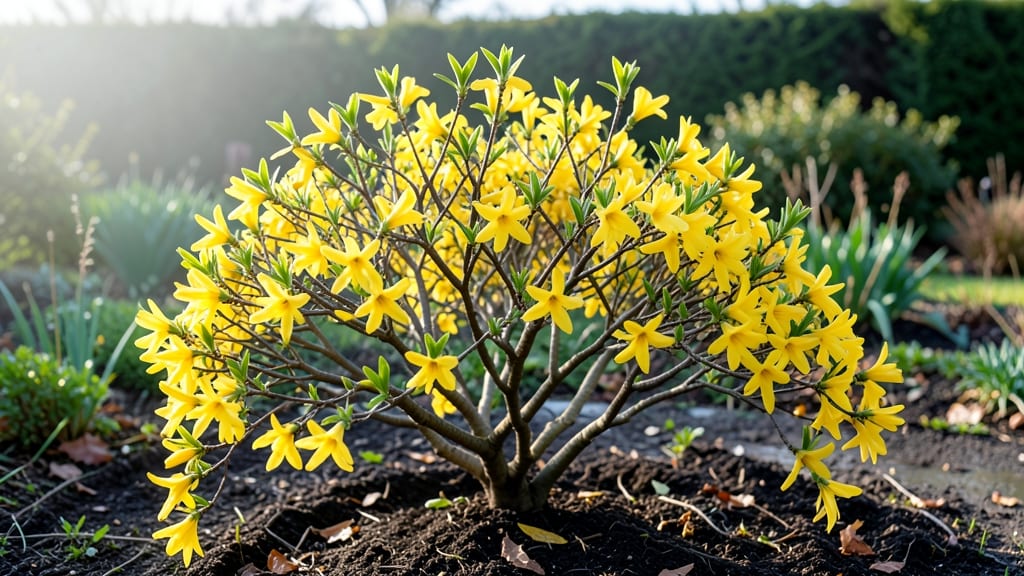
Your forsythia’s natural arching branches can become the backbone of your garden’s structure—whether you want a small tree, a multi-stemmed shrub, or an espaliered masterpiece. ✨ I’ve trained mine into all three forms, and the key is pruning at the right time to guide growth before the spring blooms even appear.
Start by choosing your vision: a single-trunk tree needs early pruning to encourage upward growth, while a shrub thrives with multiple stems left at the base. For espalier, you’ll need a sturdy trellis and patience—think of it like teaching a vine to climb vertically instead of sprawling.
The best time to shape is late winter or early spring, right before buds swell but before flowers open. You’ll end up with a plant that looks stunning in every season—bright yellow blooms in spring, lush green foliage in summer, and golden hues in fall.
The structure stays strong, the branches don’t get leggy, and you’ll have a focal point that neighbors will envy. Works for small yards, cottage gardens, or even urban spaces. Here’s how to sculpt yours without sacrificing those showstopping blooms!
📚 In This Guide
- What you need
- Instructions
- Tips and common mistakes
- Wrapping up and next steps
What you need
- ● Pruning shears: Bypass pruners with sharp, clean blades (for small branches). Recommended: Felco F-2 or similar (1 pair).
- ● Loppers: For thicker branches (up to 1.5 inches in diameter). Recommended: Corona or similar (1 pair).
- ○ Pruning saw: For branches thicker than 1.5 inches (e.g., Bahco or Fiskars). Optional but helpful: 1 saw.
- ● Gloves: Heavy-duty gardening gloves (cut-resistant, like Mechanix or similar). Quantity: 1 pair.
- ● Disinfectant: 70% isopropyl alcohol or a pruning sealant (to prevent disease spread). Quantity: Small bottle.
- ● Rope or twine: For temporary support if training branches (3–4 feet, natural fiber or plastic).
- ● Marking twine or ribbon: To tag branches for future reference (5–10 feet, bright color).
- ● Extension pole: For hard-to-reach branches (e.g., telescoping pole with pruning head).
- ● Ladder: Sturdy, non-slip ladder (if tree is over 8 feet tall).
- ● Hand pruners with ratchet: For effortless cutting (e.g., Felco Ratchet).
- ● Pruning paste: To seal larger cuts and prevent decay (small jar).
- ● Notebook & pen: To sketch your tree’s form before pruning (for planning).
How to shape a forsythia tree for natural, year-round beauty
Here's how I transform wild, sprawling forsythia into a graceful, structured tree that blooms beautifully and stays elegant year-round.
🌿 Step 1: Assess the Current Form and Plan Your Cuts
Start by examining your forsythia in late winter before new growth begins. Look for the strongest central leader—the main vertical stem—and identify any crossing, rubbing, or dead branches. I always sketch a rough outline of the tree shape I want, keeping in mind that forsythia naturally grows in a rounded, multi-stemmed form. Mark your cuts with a piece of twine or flagging tape to avoid confusion later.
Remove any branches growing directly upward from the base—they compete with your central leader and create a weak, crowded structure. Aim to keep 3-5 main scaffold branches spaced evenly around the trunk, about 12-18 inches apart. These will form the foundation of your tree's structure. Remember, forsythia responds well to pruning, so don't be afraid to make bold cuts—just avoid removing more than one-third of the tree's foliage in a single season.
✂️ Step 2: Prune for Structure and Airflow
Begin by removing dead, diseased, or damaged branches first—these are easy to spot as they're brown, brittle, or lack leaves. Cut these back to healthy wood or the main trunk. Next, prune branches that cross or rub against each other, as these will eventually damage the bark and create entry points for pests. Make your cuts just outside the branch collar, the swollen area where the branch meets the trunk, using sharp, clean pruners.
For branches that are too long or growing in the wrong direction, cut them back to a bud or side branch that faces where you want the new growth to go. This encourages the forsythia to grow in the direction you desire. Avoid cutting back to a stub—this leaves a wound that takes longer to heal. You'll know you're on the right track when you see open space between branches and a clear, upward-growing central leader.
☀️ Step 3: Refine the Shape and Encourage Blooms
After removing the structural branches, step back and assess the overall shape of your forsythia. Forsythia naturally grows in a rounded form, so I aim for a broad, vase-like silhouette with a slightly wider top than bottom. To achieve this, trim the outer branches slightly to encourage bushier growth. Cut just above an outward-facing bud to promote growth in the direction you want.
To maximize blooms, focus on pruning after the tree finishes flowering in spring. This ensures you don’t cut off next year’s flower buds, which form on last year’s wood. Lightly shape the tree in late summer or early fall if needed, but avoid heavy pruning during these seasons. You'll see the most dramatic improvement in 2-3 years, as the forsythia establishes new growth and fills in its structure.
🌱 Step 4: Maintain Year-Round for Long-Term Grace
Once your forsythia is shaped, maintain its form with light pruning in late winter or early spring, just before new growth begins. Remove any suckers or water sprouts that appear at the base of the tree—these compete with the main structure. Thin out crowded branches to improve airflow and reduce the risk of fungal diseases. I also like to step back every few years to assess the tree’s overall shape and make adjustments as needed.
Forsythia is drought-tolerant once established, but water deeply once a week during the first growing season to encourage strong root growth. Mulch around the base of the tree with 2-3 inches of organic mulch, like wood chips, to retain moisture and suppress weeds. With consistent care, your forsythia will reward you with vibrant yellow blooms in spring and a well-structured silhouette year-round.
Tips & tricks for perfect forsythia tree form
Transforming a wild forsythia into an elegant tree takes patience—and these pro tips will make all the difference.
Timing is Everything: Late winter is the absolute best time to prune, right before buds swell but before new growth appears. This timing ensures you're not cutting off flower buds that form on last year's wood. If you miss this window, wait until just after blooming in spring, but avoid heavy pruning in summer or fall when the tree is stressed. The 2-3 year timeline for dramatic improvement is real—stick with it!
The Branch Collar Trick: When cutting branches, always make your cuts just outside the branch collar (that swollen area where the branch meets the trunk). This helps the tree heal faster and prevents unsightly stubs. I've seen too many pruning mistakes where cuts were made too close to the trunk—this can actually kill the branch. Think of the branch collar as the tree's natural bandage for the wound.
Visual Cues for Perfect Pruning: After shaping, step back and look for open space between branches—this is your goal. You should see light filtering through the center, not dense foliage. For scaffold branches, imagine a clock face: space them evenly around the trunk, about 12-18 inches apart. This creates that beautiful vase-like silhouette we're aiming for. If you're unsure, take a photo before and after to track your progress.
Tool Maintenance Matters: Your pruners are just as important as your technique. Always use sharp, clean tools—dull blades crush stems instead of making clean cuts. I keep a small bottle of rubbing alcohol handy to wipe down blades between cuts, especially when dealing with diseased branches. Proper tool care makes the whole process smoother and safer for your tree.
Pro Tips for Forsythia Tree Form
- Transforming a wild forsythia into an elegant tree takes patience—and these pro tips will make all the difference.
- Timing is Everything: Late winter is the absolute best time to prune, right before buds swell but before new growth appears.
- The Branch Collar Trick: When cutting branches, always make your cuts just outside the branch collar (that swollen area where the branch meets the trunk).
Frequently asked questions
Got questions about shaping your forsythia tree? Here are answers to the most common ones—so you can keep those golden blooms looking their best year after year!
When is the best time to prune a forsythia tree to maintain its form?
Prune forsythia right after flowering (late spring) to avoid cutting off next year’s blooms. For shaping, focus on removing dead, crossing, or overcrowded branches during dormant seasons (late fall or early winter). Avoid heavy pruning in fall—it can stimulate tender new growth that may frost damage. Pro tip: Use sharp pruners for clean cuts!
Can I prune forsythia into a specific shape, like a hedge or espalier?
Forsythia is highly adaptable to shaping. For hedges, prune new growth in spring and summer to encourage bushiness. For espalier (flat against a wall), train branches horizontally in early spring, then prune to maintain the form. Just avoid over-pruning—forsythia thrives on light trimming to keep its vibrant blooms.
Why does my forsythia look leggy or sparse after pruning?
Leggy forsythia often means too much pruning at once or cutting back into old wood. To fix it, prune selectively—focus on outer branches to encourage inward growth. If the tree is mature, prune only 1/3 of the oldest stems per year. Over time, this will restore density. Bonus: Fertilize lightly in early spring to boost new growth!
Are there forsythia varieties that grow in a more compact or weeping form?
Yes! If you love forsythia but want a neater or cascading look, try:
- ‘Little Gold’ – Compact, bushy, and perfect for small gardens.
- ‘Spring Glow’ – Semi-dwarf with a rounded habit.
- ‘Weeping Forsythia’ (Forsythia × intermedia ‘Pendula’) – Grows in a graceful, weeping form.
What should I avoid when pruning forsythia to keep it healthy?
Steer clear of these pruning pitfalls:
- Pruning in late summer or fall – Encourages tender growth that may frost.
- Cutting back to the ground – Forsythia blooms on old wood, so heavy rejuvenation pruning reduces flowers.
- Using dull tools – Ragged cuts invite disease. Always sanitize pruners with rubbing alcohol!
- Ignoring branch structure – Avoid overcrowding; aim for an open center for airflow.
Wrapping up and next steps
Transforming your forsythia into a stunning, year-round focal point is all about patience, precision, and passion! 🌿 With the right tools, timing, and techniques, you can shape its branches into graceful arches, vibrant cascades, or even a dramatic espalier.
Remember, every trim is a step toward a healthier, more beautiful plant—so don’t hesitate to get creative while keeping its natural charm intact.
Ready to elevate your garden’s curb appeal? Start small—prune a single branch today, then gradually refine your skills. Before you know it, your forsythia will be the showstopper of your outdoor space! 🌸