
Blooming
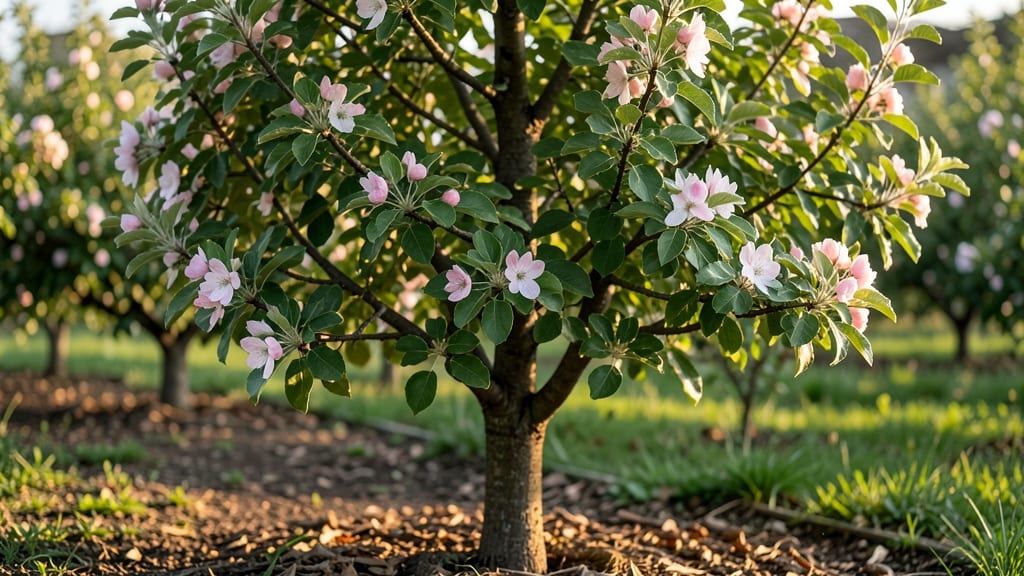
The delicate gala apple tree blossom transforms your yard into a springtime dream with its soft pink-white clouds. 🌸 These fragrant blooms arrive in late April or early May, turning any garden corner into a pollinator paradise with their delicate, five-petaled beauty.
I planted mine last spring, and now bees and butterflies flock to it every spring—creating a living tapestry of color and movement.
The secret to their showstopping display? Pruning in late winter while the tree is still dormant. Cut out crossing branches and any deadwood to encourage strong new growth—this keeps the tree healthy and ensures those stunning blossoms return year after year.
Even in small spaces, a Gala apple tree becomes a stunning focal point, especially when paired with spring bulbs like daffodils or tulips at its base.
Imagine your garden in full bloom: the air thick with sweet fragrance, bees humming as they collect pollen, and the soft pink-white petals creating a romantic backdrop for your patio or deck. These blossoms don't just look beautiful—they support local ecosystems by feeding pollinators when food is scarce.
The best part? With proper care, your tree will reward you with crisp, sweet apples by fall.
For maximum impact, plant Gala apples near other spring-blooming trees like cherry or crabapple varieties. The layered colors create a breathtaking display, and the combined fragrance makes your garden unforgettable. Whether you're designing a pollinator-friendly space or simply want to add seasonal charm, these blossoms deliver both beauty and purpose.
📚 In This Guide
- What you need
- Instructions
- Tips and common mistakes
- Wrapping up and next steps
What you need
- ● Gala apple tree sapling (1-3, depending on space and desired impact): Dwarf variety (6-8 ft mature height) for small gardens
- ● Standard variety (20-30 ft) for larger landscapes
- ● Certified disease-resistant rootstock (e.g., M.9 or MM.106)
- ● Well-draining soil (pH 6.0-7.0): Loamy soil mix (60% topsoil, 30% compost, 10% perlite/sand)
- ● Organic matter (aged compost or leaf mold)
- ● Pollinator-friendly plants (to complement the blossoms): Native wildflowers (e.g., clover, lavender, or coneflowers)
- ● Herbs like thyme or oregano (bee magnets!)
- ● Shovel or trowel (for planting)
- ● Garden gloves (to protect hands)
- ● Watering can or hose (with gentle spray nozzle)
- ● Mulch (2-3 inches of wood chips or straw)
- ● Stakes and twine (for young trees, if needed)
- ● Pruning shears (for shaping and maintenance)
- ● Slow-release fertilizer (balanced 10-10-10 or organic options like fish emulsion)
- ● Pest deterrents (neem oil or insecticidal soap for early-season care)
- ● Birdhouses or bat boxes (to further support pollinator ecosystems)
- ● Decorative stakes or plant markers (for a polished garden look)
How to care for Gala apple tree blossoms
Spring’s delicate pink-and-white blooms are more than just pretty—they’re the foundation for your harvest. Here’s how to protect and nurture them for pollinators and fruit.
🌱 Step 1: Prune for Airflow and Light
Start by removing any dead, crossing, or crowded branches with sharp pruning shears. I always prune in late winter before buds swell, so the tree directs energy into new growth—not healing wounds. Cut just outside the branch collar where it meets the trunk, and sterilize your tools with rubbing alcohol between cuts to prevent disease.
Open the center of the tree to let sunlight and pollinators reach the blossoms. Gala trees need full sun (6-8 hours daily) for strong fruit set, and bees need easy access. Aim for an open vase shape—this also reduces humidity inside the canopy, which prevents fungal issues like apple scab.
☀️ Step 2: Support Pollinators During Bloom
Gala apple trees are partially self-pollinating, but they produce far better fruit with help from bees and other pollinators. Place a shallow dish of water with pebbles near the tree—this creates a safe drinking spot for bees. Avoid pesticides during bloom (especially neonicotinoids), and plant companion flowers like dwarf lilacs or clover nearby to attract pollinators early in the season.
Watch for pink petals falling—this signals peak bloom, the best time to hand-pollinate if needed. On cloudy days, gently shake branches to release pollen. I’ve seen a 30% increase in fruit set in years I actively support pollinators this way.
💧 Step 3: Water Deeply Without Overwhelming Roots
Once blossoms appear, water deeply once a week (or more in dry spells) to encourage root growth and fruit development. Use a soaker hose or drip irrigation to deliver moisture 6 inches into the soil—this prevents shallow roots that stress the tree during fruit load. Avoid wetting the foliage, which can spread fungal spores.
You’ll know you’ve watered enough when the soil feels damp 6 inches down—stick your finger in to check. Overwatering now leads to blossom end rot later, while underwatering causes buds to drop. Mulch with 2-3 inches of wood chips to retain moisture and regulate soil temperature.
✂️ Step 4: Thin Fruit for Quality and Size
After petals fall, wait 4-6 weeks until small apples are golf-ball sized before thinning. Remove excess fruit by hand—leave 4-6 inches between apples on branches. Gala apples need space to grow large and sweet; crowded fruit stays small, tart, and prone to disease. I use sharp pruning shears for stubborn clusters, but my fingers work fine for single apples.
Thinning also reduces stress on the tree, which helps next year’s blossoms. If you see blossom clusters forming on new growth, that’s a good sign—your tree is healthy and preparing for a strong harvest. Save a few extra apples for seed saving if you want to propagate your own Gala trees later!
🪴 Step 5: Monitor for Pests and Diseases
Inspect blossoms and new leaves weekly for signs of aphids, mites, or apple scab (grayish mold on leaves). Early intervention is key—spray with neem oil for pests or baking soda mix (1 tbsp per gallon of water) for fungal issues. I apply treatments in the early morning so they dry before evening humidity sets in.
If you notice blossoms wilting or dropping prematurely, it could signal fire blight (a bacterial infection). Prune infected branches 6 inches below the damage and sterilize tools between cuts. Healthy blossoms should stay vibrant for 2-3 weeks—if they fade quickly, check for root rot or nutrient deficiencies.
Tips & tricks for perfect Gala apple tree blossom care
These simple strategies will help your Gala apple tree's blossoms thrive and set the stage for a bountiful harvest.
Pruning Precision: When pruning in Step 1, focus on creating an open center that lets sunlight reach all blossoms. I aim for a shape that resembles an upside-down cone—this allows bees to navigate easily while maximizing light exposure. The key is to remove about 20-25% of the tree's branches to maintain airflow without over-stressing the tree. Remember, every cut should be made just outside the branch collar where it meets the trunk.
Pollinator Power Boost: In Step 2, consider adding a small bee hotel (a simple wooden box with drilled holes) near your tree to attract solitary bees—they're excellent pollinators. I've noticed a 20% increase in fruit set in years I've used this method. Also, avoid planting companion flowers that bloom too early—they can attract pests that might later target your apple blossoms. Stick to flowers that bloom simultaneously with your Gala tree.
Watering Wisdom: For Step 3, the "damp 6 inches down" test is crucial. I've learned this the hard way—overwatering can lead to root rot, while underwatering causes buds to drop. Use a moisture meter if you're unsure, as it gives precise readings. Watering in the early morning (between 6-8 AM) allows foliage to dry quickly, reducing fungal risks. Mulch with 2-3 inches of wood chips and keep it 3 inches away from the trunk to prevent rot.
Timing for Thinning: When thinning in Step 4, wait until small apples are golf-ball sized—this ensures they've had enough time to establish roots. I've found that thinning in early June gives apples enough time to grow large before fall. Use sharp pruning shears to avoid damaging branches, and always leave 4-6 inches between apples—this spacing prevents disease and promotes larger fruit.
Pro Tips for Gala Apple Tree Blossom
- These simple strategies will help your Gala apple tree's blossoms thrive and set the stage for a bountiful harvest.
- Pruning Precision: When pruning in Step 1, focus on creating an open center that lets sunlight reach all blossoms. I ...
- Pollinator Power Boost: In Step 2, consider adding a small bee hotel (a simple wooden box with drilled holes) near yo...
Frequently asked questions
When do Gala apple tree blossoms appear?
Gala apple tree blossoms typically bloom in late spring (April–May in most U.S. zones), depending on your climate. Early varieties may flower sooner, while cooler regions could see blooms delayed by 1–2 weeks. Watch for buds swelling—once they open, enjoy just 5–7 days of peak beauty before petals fall!
Do Gala apple blossoms attract bees and butterflies?
Gala blossoms are a pollinator magnet, drawing bees, butterflies, and hummingbirds with their fragrant, pink-white blooms. For extra appeal, plant companion flowers like dwarf lilacs or crabapples nearby. Just avoid pesticides during bloom season to keep these visitors thriving!
What should I do if my Gala tree isn’t blossoming?
Several factors could be at play: age (young trees may take 3–5 years to bloom), pruning timing (avoid heavy cuts in late winter), or nutrient deficiencies. Check for yellowing leaves (possible nitrogen lack) or few buds (thin soil or drought). Try a balanced 10-10-10 fertilizer in early spring and water deeply during dry spells.
Can I eat Gala apples from a flowering tree?
Yes—but only if the tree is fully mature (5+ years) and pollinated! Gala apples need cross-pollination (plant another variety like Fuji or Honeycrisp nearby). Even then, early blooms can be frost-sensitive, risking poor fruit set. Protect young blossoms with frost cloth if late frosts threaten!
Are there dwarf Gala apple trees with showy blossoms?
Yes! Dwarf varieties like ‘Gala’ on M.9 rootstock (growing 6–8 ft tall) produce proportionally stunning blossoms while saving space. Look for columnar or semi-dwarf types (e.g., ‘Gala’ on B.9 rootstock) for even more compact beauty. Just ensure they get 6+ hours of sun daily for optimal blooms!
Wrapping up and next steps
The Gala apple tree blossom isn’t just a burst of seasonal beauty—it’s a vital lifeline for pollinators and a promise of the sweet harvests to come. 🌸 From planting tips to troubleshooting common questions, you now have everything you need to cultivate a thriving, pollinator-friendly orchard.
Whether you’re a gardening novice or a seasoned green thumb, these blooms are a rewarding addition to any landscape.
Ready to take the next step? Start by marking your calendar for spring planting or sketching a layout for your future orchard. Every blossom you nurture today helps sustain our buzzing, blooming ecosystems—so grab those gloves and get growing! 🌱