
Trees
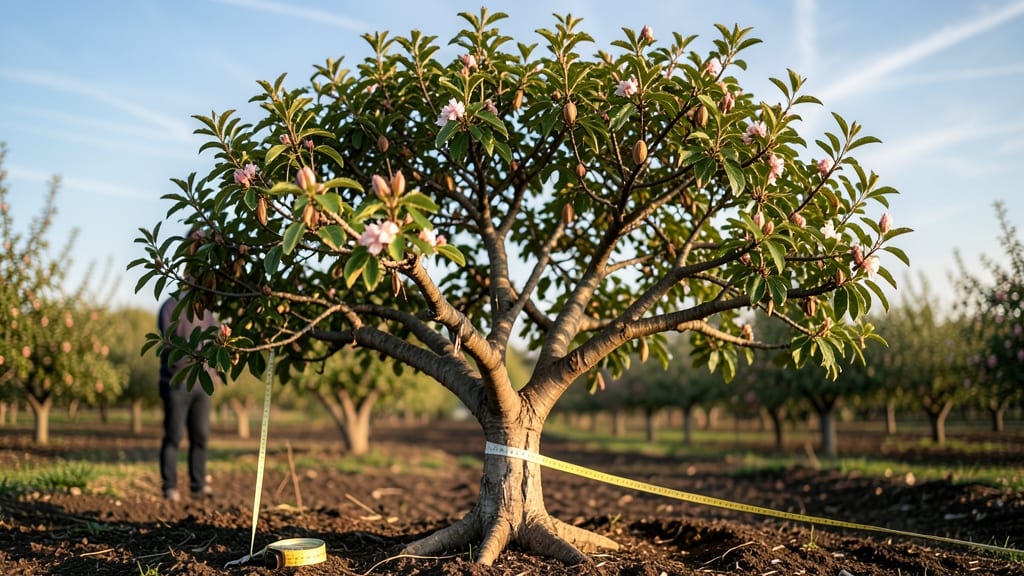
An almond tree grows to between 20 and 40 feet tall—that’s taller than most two-story homes—so knowing its mature size helps you plan your backyard or orchard before you plant.
Picture this: that tiny sapling you just bought could one day cast shade over your patio, block sunlight to neighboring plants, or even become a neighborhood landmark. The good news? Not all almond trees reach that height—some dwarf varieties stay under 15 feet, making them perfect for smaller spaces.
But here’s the catch: soil quality, pruning habits, and even your local climate can push a tree toward the high end of that range.
In this guide, I’ll break down how variety, growing conditions, and smart pruning can keep your almond tree 🌰 at your ideal height—whether you’ve got acres or just a backyard.
You’ll learn which varieties stay compact, how to read your tree’s growth signals, and the 3 pruning mistakes that turn a manageable tree into a monster. Let’s get started.
Mature almond tree heights by variety: small vs. large-growing types
If you've ever planted a tiny almond tree sapling, you might be surprised by how dramatically its size can change over time. Most almond trees grow between 20-40 feet tall at maturity, but some varieties stay as short as 12-18 feet when properly managed.
The key factor? Rootstock selection and variety choice determine whether your tree becomes a backyard giant or a manageable small-space plant.
Standard almond trees like 'Nonpareil' or 'Carmel' can reach 30-40 feet tall, while dwarf varieties like 'Butte' or 'Price' often max out around 15-20 feet. Even semi-dwarf types like 'Sonora' typically stay between 18-25 feet. Understanding these differences helps you plan your orchard or backyard planting with confidence.
The rootstock you choose plays a massive role in final size—dwarfing rootstocks like 'Nemaguard' or 'GxN-15' can reduce a tree's height by 50% or more. This means a tree that would normally reach 35 feet might stay under 18 feet with the right rootstock.
Always check the rootstock details when selecting your almond tree!
For visual reference, imagine a 25-foot almond tree—that's roughly the height of a two-story house or slightly taller than a standard basketball hoop system. A 15-foot dwarf variety, on the other hand, would be about the height of a small SUV or a large garden trellis.
These comparisons help gauge whether your space can accommodate a mature tree.
🌰
| Variety | Mature Height | Canopy Width | Rootstock Type | Size Comparison |
|---|---|---|---|---|
| Nonpareil | 30-40 ft | 25-35 ft | Standard | Taller than a house |
| Butte | 15-20 ft | 12-18 ft | Dwarfing | Height of a small SUV |
| Price | 18-22 ft | 15-20 ft | Semi-dwarf | Taller than a basketball hoop |
| Sonora | 20-25 ft | 18-22 ft | Semi-dwarf | Height of a two-story building |
| Carmel | 30-35 ft | 25-30 ft | Standard | Taller than a standard car |
| Fritz | 12-16 ft | 10-14 ft | Dwarfing | Height of a garden trellis |
When selecting an almond tree, consider both its mature height and canopy spread. A tree that's 20 feet tall might still have a 15-foot-wide canopy, meaning it needs significant space for airflow and sunlight penetration.
Always leave at least 15-20 feet of clearance between trees to prevent overcrowding and disease issues.
For small gardens or urban settings, dwarf varieties on dwarfing rootstock are your best bet. These trees produce high-quality nuts while staying compact enough for patios or large containers. Just ensure your container is at least 24 inches wide and has good drainage—almond trees hate soggy roots!
If you're planting multiple trees, mix varieties to ensure cross-pollination for better yields. Even dwarf trees need proper spacing—plant them 12-15 feet apart to allow airflow and reduce pest problems. Proper spacing also makes harvesting easier, especially when dealing with 30+ foot trees!
🌳
Remember that pruning plays a crucial role in managing size. Regular pruning in late winter or early spring can keep even standard varieties more manageable. Just avoid heavy pruning during the growing season, as this can stress the tree and reduce nut production.
With the right variety and care, you can enjoy homegrown almonds without sacrificing your backyard space!
How growing conditions affect almond tree size: space, pruning, and climate factors
Your almond tree's eventual size isn't set in stone—it's shaped by the environment you provide. Soil quality, water availability, and pruning habits can transform a 30-foot giant into a manageable 15-foot beauty. Even the USDA hardiness zone where you live plays a role in controlling growth patterns.
In USDA zones 7-10, almond trees thrive, but their growth rates differ dramatically. A tree in zone 9 with well-draining soil and regular pruning may stay compact, while one in zone 10 with excessive water could shoot up uncontrollably.
Understanding these factors helps you shape your tree's future size before it becomes a backyard problem.
🌱 Key Factors Controlling Almond Tree Size
- Soil Type: Sandy loam promotes controlled growth; clay soils can stunt or encourage aggressive sprawl.
- Watering: Deep but infrequent watering = slower growth; shallow daily watering = rapid, unchecked expansion.
- Pruning: Annual winter pruning keeps trees 30-50% smaller than unpruned counterparts.
- Climate: Cooler zones (7-8) slow growth; warmer zones (9-10) accelerate it.
💡 Pro Tip: Dwarf varieties on peach rootstock stay 12-18 ft tall—ideal for small yards!
Let's start with soil conditions. Almond trees despise soggy roots, so well-draining soil is non-negotiable. Amend heavy clay with compost and sand to prevent waterlogging, which can cause root rot and stunted growth.
On the flip side, sandy soil drains too quickly, forcing the tree to grow faster to access nutrients—resulting in a taller, less manageable specimen.
Your watering routine directly impacts height. Overwatering triggers rapid vertical growth as the tree stretches toward sunlight. Instead, water deeply every 7-10 days to encourage root depth over top growth. In USDA zone 10, where evaporation is high, mulch heavily to retain moisture and slow the tree's ascent.
Pruning is where you take control. Annual winter pruning removes water sprouts and crossing branches, redirecting energy toward fruit production instead of height. Use the open-center method: keep the center open to allow sunlight penetration, which naturally limits upward growth.
Avoid topping (cutting the main trunk)—this creates weak, overgrown suckers that make the tree even larger.
Don't overlook climate zone differences. In USDA zone 7, almond trees grow 20-25% slower due to cooler temperatures, staying more compact. But in zone 10, the extended growing season fuels aggressive growth.
If you're in a warmer zone, prune more aggressively and space trees farther apart (20-25 feet) to prevent overcrowding and disease.
Common mistakes lead to oversized trees. Skipping pruning for 3+ years can double a tree's height. Planting too close to structures or other trees forces competitive growth, resulting in leaning, weak trunks. Always leave 10-12 feet of clearance around the base for proper air circulation and root expansion.