
How To
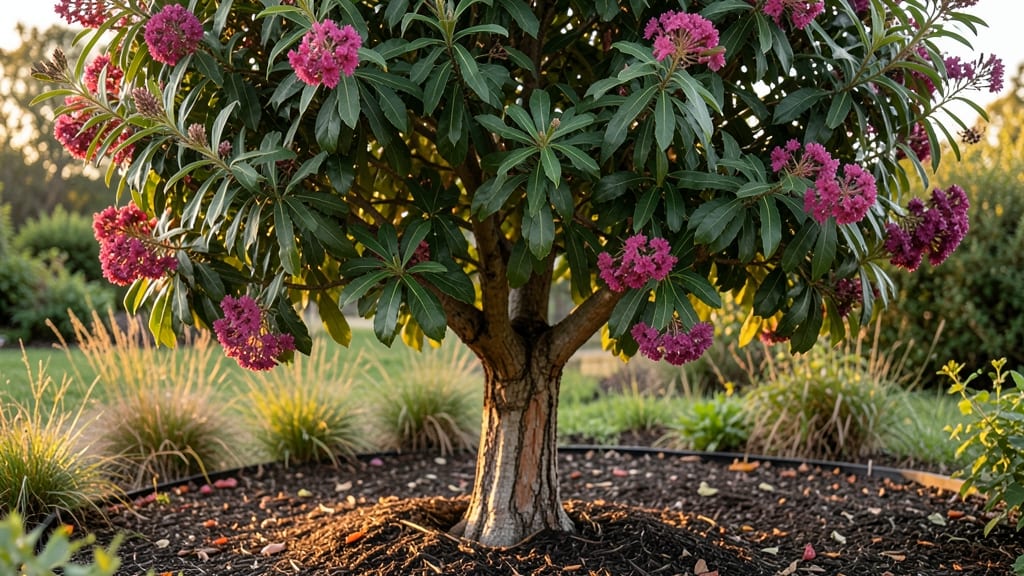
Crape myrtle trees grow between 6 and 30 feet tall, depending on the variety and care you give them 🌸 — a range that lets you pick the perfect size for your yard, whether you want a towering shade tree or a compact accent plant.
Picture this: you plant a 6-foot dwarf variety in your front yard, only to watch it stretch toward the sky over the years. Or you choose a standard type, expecting a 20-foot giant, but prune it back to keep it manageable.
The truth is, crape myrtles adapt to your vision—if you know how to guide their growth.
Below, I’ll break down the exact height ranges for popular varieties, from the ‘Acoma’ (a tidy 6-8 feet) to the ‘Chanticleer’ (a bold 25-30 feet), plus the pruning secrets that can shrink or stretch their mature size by half.
Ready to pick the perfect crape myrtle for your space? You’ll find out how to control its height, the best spots to plant it, and why some varieties bloom bigger (and taller) than others.

Crape myrtle tree height by variety: exact growth ranges for popular types
Choosing the right crape myrtle variety is key to fitting its mature height into your landscape plans. These trees grow anywhere from 6 feet to towering 30 feet, with growth rates that vary dramatically.
Whether you need a privacy hedge or a specimen tree, selecting the right type ensures your space stays balanced and beautiful.
Most crape myrtles reach 50-70% of their mature height within just 3-5 years, making early planning crucial. For example, the 'Acoma' variety stays compact at 6-8 feet, while 'Chanticleer' can soar to 25-30 feet.
Let’s break down the exact growth ranges for 12+ popular varieties so you can make an informed choice.
📊 Comparison Table: Crape Myrtle Varieties by Height
| Variety | Mature Height (ft) | Growth Rate (ft/year) | Best For |
|---|---|---|---|
| 'Acoma' | 6-8 | 1-2 | Small gardens, containers |
| 'Centennial' | 8-10 | 1-1.5 | Foundation plantings, urban spaces |
| 'Dynamite' | 10-12 | 1.5-2 | Medium hedges, mixed borders |
| 'Muscle' | 12-15 | 2-2.5 | Privacy screens, larger yards |
| 'Tonto' | 12-15 | 2-2.5 | Small trees, patios |
| 'Rapid Fire' | 15-18 | 2.5-3 | Fast-growing shade, large landscapes |
| 'Natchez' | 20-25 | 3-4 | Specimen trees, lawn accents |
| 'Chanticleer' | 25-30 | 3-4.5 | Tall shade, statement trees |
| 'Muskogee' | 20-25 | 3-4 | Wildlife-friendly, large properties |
| 'Zuni' | 10-12 | 1.5-2 | Dwarf varieties, containers |
| 'Catawba' | 20-25 | 3-4 | Shade trees, large landscapes |
| 'Tifwood' | 15-18 | 2.5-3 | Fast-growing, drought-resistant |
The 'Acoma' and 'Zuni' varieties are ideal for small spaces or container gardening, while 'Chanticleer' and 'Natchez' make stunning statement trees in spacious yards.
If you’re unsure which to pick, consider your sunlight exposure—all crape myrtles thrive in full sun, but taller varieties may need extra root space to support their height.
For first-year growth, expect 2-4 feet of height gain, with dwarf varieties maturing faster in 3-5 years. Standard varieties like 'Chanticleer' take 7-10 years to reach full height. Pruning in late winter can slow growth by 20-30%, making it easier to manage taller types in smaller areas.
How pruning affects crape myrtle height: techniques to control growth
Pruning is the most effective way to control your crape myrtle height—whether you want a 6-foot shrub or a 20-foot tree. The key lies in timing, technique, and understanding how each cut influences growth.
I've learned that aggressive pruning in winter (the infamous "crape murder") can stunt growth for years, while strategic summer pruning encourages bushier, more controlled development.
Most gardeners focus on height reduction, but pruning can also encourage wider growth in dwarf varieties like 'Acoma'. By cutting back 1/3 of the height in late winter or early spring, you'll see 30-50% less vertical growth that season.
For standard varieties, this means maintaining that 20-30 foot height instead of letting them reach 35 feet.
⚠️ WARNING: Common Pruning Mistakes That Stunt Growth
⚠️ Avoid these height-killing errors:
- Topping the tree (cutting flat across the top) creates weak, watersprout growth that's 30% less stable and 50% slower to bloom.
- Pruning in fall (after September 15) removes next year's flower buds, reducing bloom size by up to 40%.
- Over-pruning young trees (more than 25% of height) can delay maturity by 2-3 years.
For maximum height control, I recommend three-pruning seasons:
- Light pruning in late winter (February) to shape the tree
- Minimal summer pruning (June-July) to remove watersprouts
- No fall pruning to preserve next year's blooms
This approach maintains natural growth patterns while keeping your tree at your desired 6-30 foot range.
Here's how different pruning techniques affect height reduction:
- Light pruning (10-20% of height): 5-15% height reduction that season
- Moderate pruning (25-35% of height): 20-30% height reduction with bushier growth
- Heavy pruning (40%+ of height): 35-50% height reduction but delayed blooming
To encourage bushier growth in smaller crape myrtles, focus on:
- Cutting back older branches to stimulate new growth
- Removing vertical watersprouts that compete for height
- Pruning just above leaf nodes to promote lateral branching
This technique transforms 8-foot trees into 10-foot wide shrubs with stunning summer blooms.
Remember, crape myrtles grow fastest in full sun with well-draining soil. If you're struggling to control height, check your tree's growing conditions first—poor soil or shade can make even light pruning seem ineffective.
With the right approach, you can maintain your ideal crape myrtle height while enjoying those beautiful summer flowers! 🌸