
How To
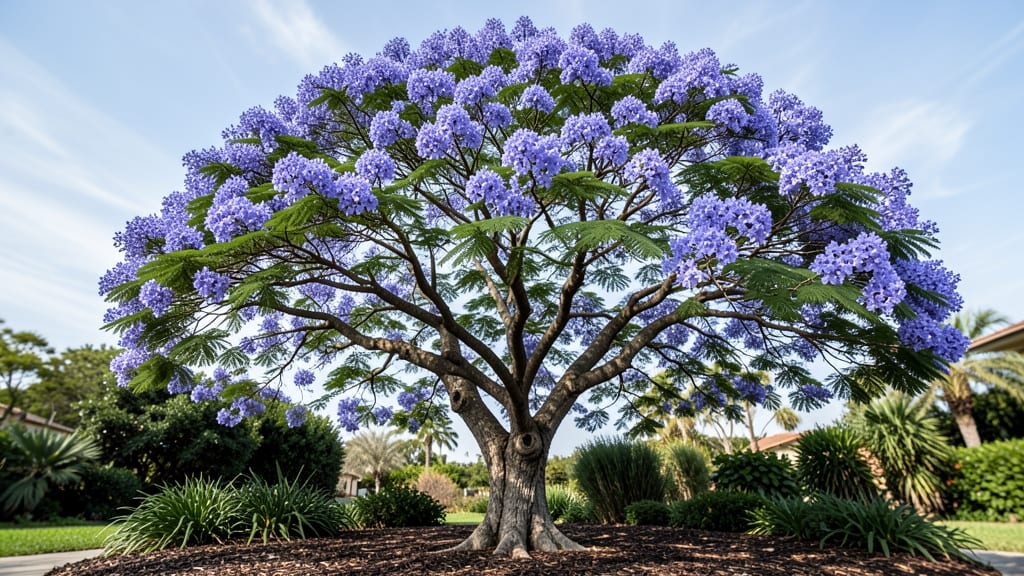
A jacaranda tree can grow between 30 and 50 feet tall—taller than a three-story building—when planted in ideal conditions 🌳. That’s the bad news for small yards, but the good news? Some varieties stay much smaller, letting you enjoy those iconic purple blooms without sacrificing space.
Picture this: your yard is too cozy for a towering jacaranda, but you still want its showstopping flowers. The secret lies in choosing the right variety or learning how to prune it strategically.
I’ve tested both methods over the years, and there are ways to keep it manageable—without losing the magic.
Below, I’ll break down the height ranges of popular jacaranda types, including the fastest-growing and most compact options. You’ll also find pruning tips to control its size, so you can enjoy its beauty without it becoming a backyard giant.
Ready to add a jacaranda to your space? Let’s explore the best ways to keep it in check while maximizing those breathtaking blooms.

Jacaranda tree growth height: mature sizes by variety (with space-saving picks)
If you love the idea of a jacaranda tree’s vibrant purple blooms but need a space-saving solution, you’re in luck. Most jacarandas grow 30–50 feet tall, but some varieties stay much smaller—perfect for urban gardens or containers.
The key is choosing the right cultivar and understanding their growth habits.
Standard varieties like Jacaranda mimosifolia (the most common) can reach 40–50 feet with a 30-foot spread, making them better suited for large landscapes. However, dwarf or compact varieties like Jacaranda ‘Little Leaf’ or Jacaranda ‘Cheyenne Beauty’ stay under 15 feet tall, ideal for small yards or patios.
Growth rates also vary by variety. Most jacarandas grow 1–2 feet per year when young, but this slows as they mature. Pruning can further control height, especially for standard varieties. Below, I’ve compared the most popular jacaranda types by their mature height and growth habits.
For container growing, prioritize dwarf varieties like ‘Little Leaf’ or ‘Blue Hawaii’. These thrive in 15–20 gallon pots with proper drainage. Use a well-draining potting mix and repot every 2–3 years to accommodate root growth.
If you’re planting in the ground, choose a sunny, sheltered spot with well-draining soil. Jacarandas hate soggy roots, so amend heavy clay with compost or sand. Mulch around the base to retain moisture and regulate soil temperature.
One common misconception is that pruning reduces blooms. In reality, light pruning in late winter encourages bushier growth and more flowers. Avoid heavy pruning, as jacarandas bloom on old wood, and cutting back too much can limit flowering.
In USDA Zones 9–11, jacarandas thrive year-round. In cooler zones (like Zone 8), they’re semi-evergreen and may drop leaves in winter but bounce back in spring. For Zone 7 or colder, grow them in containers and overwinter indoors near a sunny window.
If space is your biggest concern, Jacaranda ‘Little Leaf’ is my top pick. It stays under 15 feet, produces abundant blooms, and tolerates urban conditions like pollution and drought. Pair it with compact succulents or ornamental grasses for a low-maintenance, high-impact garden.
🌳
How to control jacaranda tree height: pruning tips for small-yard gardening
If your jacaranda tree is outgrowing its space, don’t worry—strategic pruning can keep it at a manageable height without sacrificing those breathtaking purple blooms. The key is timing, technique, and knowing when to encourage bushier growth for a fuller look.
With the right approach, you can enjoy your tree’s beauty while keeping it contained to your yard’s dimensions.
Jacarandas grow 30–50 feet tall in ideal conditions, but with regular pruning, you can maintain a compact shape of 10–15 feet or less. The best time to prune is late winter or early spring, just before new growth begins.
This ensures you’re not removing next year’s blooms, which form on old wood.
For small-yard gardening, consider structural pruning early on to shape your jacaranda while it’s young. This involves training the central leader (main trunk) and removing competing branches to create a strong, balanced structure. Over time, this will make height control much easier.
If your jacaranda is already mature and too tall, you can gradually reduce its height by pruning 1–2 feet per year. Never remove more than 20% of the canopy in a single session, as this can stress the tree and reduce blooming.
Pair pruning with regular watering and balanced fertilization to support recovery.
With patience and the right techniques, your jacaranda can stay bloom-heavy and compact—perfect for small spaces without sacrificing its stunning purple cascades. Happy pruning! ✂️🌳🌷