
How To
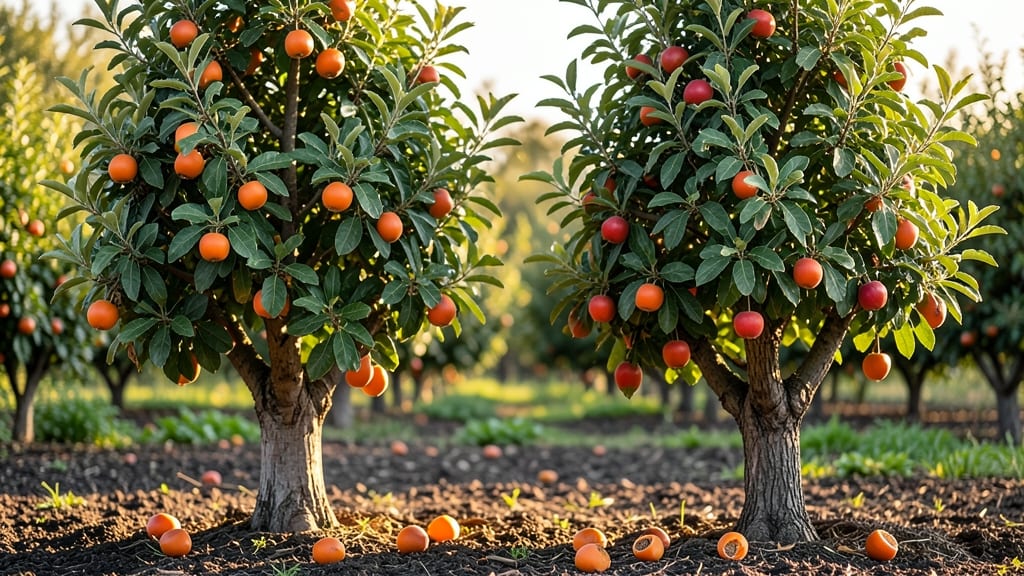
A persimmon tree’s height can vary dramatically—how tall does a persimmon tree grow?—from a modest 10 feet for dwarf varieties to a towering 50 feet for full-sized giants, so your backyard space (or lack of it) will decide which one you can grow.
Picture this: a dwarf persimmon tucked into a corner of your patio, its branches laden with sweet fruit, while a standard variety stretches toward the sky like a golden sentinel.
The difference isn’t just in aesthetics—it’s about long-term planning for pruning, spacing, and even how you’ll harvest those fall harvests without a ladder.
Most gardeners assume all persimmon trees grow into sprawling monsters, but dwarf varieties prove that’s not the case. With the right variety and care, you can enjoy homegrown persimmons without sacrificing your lawn—or your sanity trying to trim a 50-foot beast.
In this guide, I’ll break down the height differences between dwarf and standard trees, how to control growth with pruning, and the best spacing tricks to keep your yard (and your neighbors’ fences) intact.

Standard persimmon tree heights: how big can they really grow?
If you're dreaming of growing persimmons in your garden, you might be surprised by how tall these trees can become. Standard persimmon varieties can reach impressive heights of 30 to 50 feet, making them a long-term investment for your landscape.
The American persimmon (Diospyros virginiana) and Asian persimmons (Diospyros kaki) are the two main groups, each with distinct growth patterns and space requirements.
Under ideal conditions—full sun exposure, well-draining soil, and proper care—these trees can grow 3-6 feet per year in their early years. However, their growth rate slows as they mature, typically reaching their full height between 10-20 years.
Without proper pruning or space management, a standard persimmon tree can easily outgrow its welcome in smaller yards.
Here’s a quick look at how different persimmon varieties compare in terms of height and growth habits:
The American persimmon is the tallest of the bunch, often surpassing 50 feet in wild settings. In contrast, many Asian persimmon varieties, like 'Fuyu' and 'Hachiya,' top out around 25-40 feet when grown in cultivated conditions.
Hybrid varieties, such as 'Meader,' strike a balance with 20-30 feet of height, making them a popular choice for gardeners with limited space.
Climate plays a huge role in determining how tall your persimmon tree will grow. In warmer climates like USDA Zones 7-10, persimmons thrive and can reach their maximum height more quickly.
However, in cooler zones (Zones 5-6), growth may be slower, and trees might stay shorter unless you provide extra care, like winter protection and well-draining soil.
Soil quality is another critical factor. Persimmons prefer slightly acidic to neutral soil (pH 6.0-7.0) with good drainage. If your soil is clay-heavy or waterlogged, the tree’s roots may struggle, leading to stunted growth.
Amending the soil with compost or sand can help create the ideal growing conditions for a taller, healthier tree.
Pruning is essential for managing height, especially in smaller gardens. If left unchecked, a persimmon tree can become unwieldy and difficult to maintain. I recommend pruning in late winter or early spring before new growth begins.
This helps control height and encourages a stronger structure. Always use sterilized tools to avoid spreading disease.
For those with limited space, consider planting your persimmon tree near a fence or wall to guide its growth upward rather than outward. This technique, called espalier training, can help keep the tree more manageable while still allowing it to reach its full height potential.
Just ensure the tree has enough vertical space to avoid future pruning headaches.
If you’re planning to grow a persimmon tree, always check local regulations about tree height restrictions in your area. Some neighborhoods have height limits for trees to protect power lines or maintain neighborhood aesthetics.
Planting a dwarf variety might be the best solution if you’re in a tight space or have height restrictions.
🌳
Dwarf persimmon trees: compact options for small gardens
If you love the idea of growing persimmons but lack space for a towering tree, dwarf varieties are your perfect solution. These compact trees typically reach 6–12 feet at maturity—ideal for small backyards, urban patios, or even large containers.
Varieties like 'Fuyu' and 'Hachiya' are popular choices, offering sweet fruit without the sprawling canopy of standard trees.
One of the biggest advantages of dwarf persimmons is their adaptability. They thrive in USDA Zones 6–9 and can be grown in containers, making them perfect for balconies or rooftop gardens. However, their smaller size comes with specific care needs, like regular pruning to maintain shape and prevent overcrowding.
Dwarf Persimmon Varieties: Height & Care
For container gardening, choose a pot at least 18 inches wide with drainage holes. Use a well-draining potting mix and repot every 2–3 years to refresh nutrients. Place your container in full sun (6+ hours daily) for optimal fruit production, but avoid harsh afternoon heat in hot climates.
When selecting a dwarf persimmon, consider the variety’s fruit type. 'Fuyu' is non-astringent and ready to eat when firm, while 'Hachiya' must soften before ripening. Both are well-suited for small spaces but require consistent moisture—especially during flowering and fruiting seasons.
Prune your dwarf persimmon in late winter or early spring to remove dead wood and shape the tree. Avoid heavy pruning, as it can reduce fruit yield. For container-grown trees, trim roots annually to prevent circling and encourage outward growth.
With the right care, your dwarf persimmon will reward you with abundant harvests while staying perfectly proportioned to your space. Whether planted in the ground or a container, these trees prove that great fruit doesn’t require a giant garden! 🌱🍑