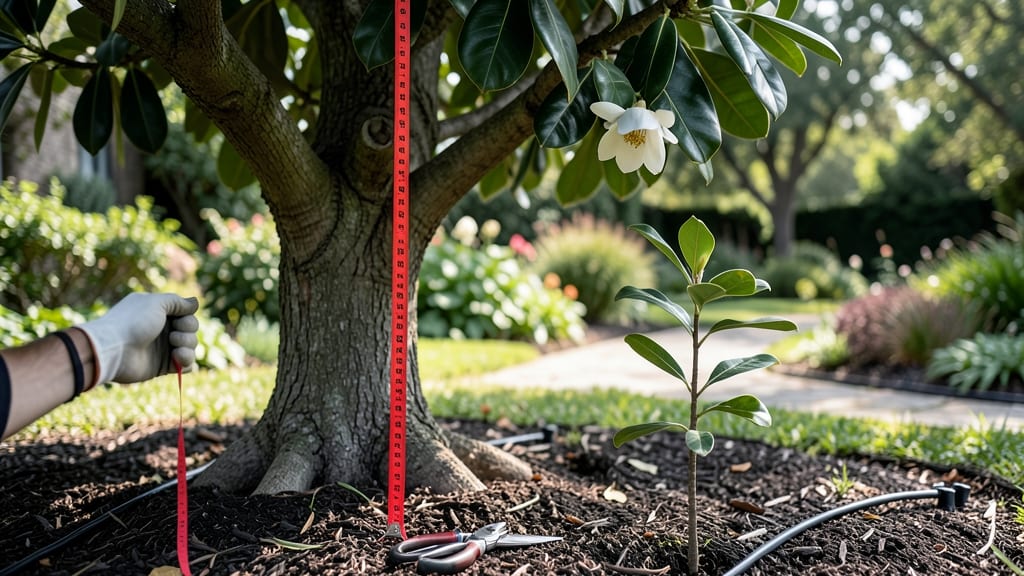
How tall magnolia trees grow depends entirely on the species and your care routine, with heights ranging from compact 10 feet to towering 80 feet. Picture this: a Southern Magnolia 🌳 soaring above your roof, its glossy leaves rustling in the breeze, or a dainty 'Little Gem' fitting neatly into a small courtyard. The difference isn’t just in their size—it’s in how they shape your outdoor space.
Some varieties stretch toward the sky at 3 feet per year in ideal conditions, while others grow just 6 inches annually. The right spot, soil, and pruning can even nudge a giant toward a more manageable height—or let a dwarf spread its wings.
Below, I break down the exact heights by popular magnolia types, how to control their growth, and which varieties suit your yard’s size—so you can plan for a tree that thrives without taking over.
Magnolia Tree Height Range
10 ftto80 ft
0 ft
3 ft
6 ft
9 ft
12 ft
🌱
Very Very Tall Tree
Magnolia tree height by variety: from dwarf to giant species
Choosing the right magnolia variety means understanding how tall it will grow—some varieties reach 80 feet while others stay under 15 feet. The height difference isn’t just about space; it affects flowering, care needs, and even your yard’s aesthetic.
For example, a Southern Magnolia 🌳 can tower over your home, while a 'Little Gem' fits neatly in a courtyard. Let’s explore the exact mature heights for 12+ varieties, so you can pick the perfect fit for your landscape.
Magnolia heights vary wildly based on genetics, care, and growing conditions. Dwarf varieties like 'Black Tulip' max out at 10-15 feet, making them ideal for urban gardens, while giant species like 'Magnolia grandiflora' stretch 60-80 feet tall—think cathedral ceilings for your backyard.
Even within the same species, height can differ by 20-30 feet depending on pruning and soil quality. Below, I’ve organized the most popular (and some rare) magnolias by their mature height ranges.
| Variety |
Mature Height (ft) |
Growth Rate (in/yr) |
Best For |
Notes |
| Southern Magnolia (Magnolia grandiflora) |
60-80 ft |
12-24 in |
Large estates, focal points |
Slow to flower (10+ yrs); evergreen |
| Sweetbay Magnolia (Magnolia virginiana) |
40-60 ft |
10-18 in |
Swamps, coastal areas |
Fragrant flowers; semi-evergreen |
| Star Magnolia (Magnolia stellata) |
15-25 ft |
6-12 in |
Small yards, containers |
Early bloomer (March); deciduous |
| Little Gem (Magnolia grandiflora 'Little Gem') |
10-15 ft |
4-8 in |
Urban gardens, patios |
Dwarf form of Southern Magnolia |
| Black Tulip (Magnolia 'Black Tulip') |
10-12 ft |
3-6 in |
Containers, small spaces |
Dark foliage; compact habit |
| Saucer Magnolia (Magnolia × soulangeana) |
20-30 ft |
8-12 in |
Medium yards, borders |
Early spring blooms; hybrid |
| Yellow Magnolia (Magnolia liliiflora) |
20-25 ft |
6-10 in |
Asian gardens, specimen |
Fragrant yellow flowers |
| Loebner Magnolia (Magnolia 'Loebneri') |
15-20 ft |
5-8 in |
Small landscapes, hedges |
Hybrid; disease-resistant |
| Cucumbertree Magnolia (Magnolia acuminata) |
40-60 ft |
12-20 in |
Woodlands, large properties |
Fast-growing; conical shape |
| Jane (Magnolia 'Jane') |
12-15 ft |
4-6 in |
Containers, patios |
Dwarf hybrid; pink flowers |
| Bigleaf Magnolia (Magnolia macrophylla) |
60-80 ft |
<
How to control magnolia tree height through pruning and care
Magnolia trees grow at different rates depending on the variety, but even the most majestic species can become unruly without proper care. If your magnolia is outgrowing its space, don't despair—pruning and strategic care can keep it in check.
The key is understanding when and how to intervene without harming the tree's health or flowering potential.
Young magnolias respond best to formative pruning in their first few years, while mature trees need corrective pruning to manage height and shape. Always use sharp, sterilized tools to prevent disease, and never remove more than 25% of the canopy in a single session.
This approach keeps your tree thriving while controlling its vertical growth.
Step-by-Step Guide to Controlling Magnolia Height
-
1
Assess the Variety: Identify your magnolia type (e.g., Southern Magnolia grows 60-80 ft, while Little Gem stays at 15-25 ft). Dwarf varieties need minimal pruning, while giants require regular height control.
-
2
Prune in Late Winter: Cut back 1/3 of last year's growth in February-March, before buds swell. Focus on removing upward-growing branches to redirect energy to lateral branches.
-
3
Use Root Restriction: For young trees, plant in a narrow, deep hole (2-3x wider than the root ball) to limit root spread, which naturally slows top growth. Add a root barrier if needed.
-
4
Fertilize Strategically: Apply a low-nitrogen fertilizer (e.g., 5-10-10) in early spring to encourage bushier growth. Avoid high-nitrogen feeds, which promote rapid vertical growth.
-
5
Thin the Canopy: Remove competing branches (those growing toward the center or crossing others) to improve airflow and reduce height. Use hand pruners for branches under 1 inch thick.
-
6
Monitor Growth Annually: Measure height and canopy spread each year. If growth exceeds 12 inches annually, adjust pruning or care methods to slow it down.
For mature magnolias, topping (cutting the main stem) is a last resort—it can stress the tree and reduce flowering. Instead, focus on selective branch removal to shape the tree gradually. Always prune just above a bud or lateral branch to encourage new growth in the right direction.
If your magnolia is still growing too tall after pruning, consider light root pruning in early spring. Gently trim the outer 1/3 of the root ball to limit nutrient uptake, which naturally slows top growth. Pair this with consistent watering to avoid shocking the tree.
Remember, magnolias are slow growers compared to many trees, so patience is key. With the right care, you can enjoy a well-proportioned, flowering magnolia that fits your space perfectly—whether it’s a compact dwarf or a managed giant. 🌳
★★★★★4.9(12 reviews)