
How To
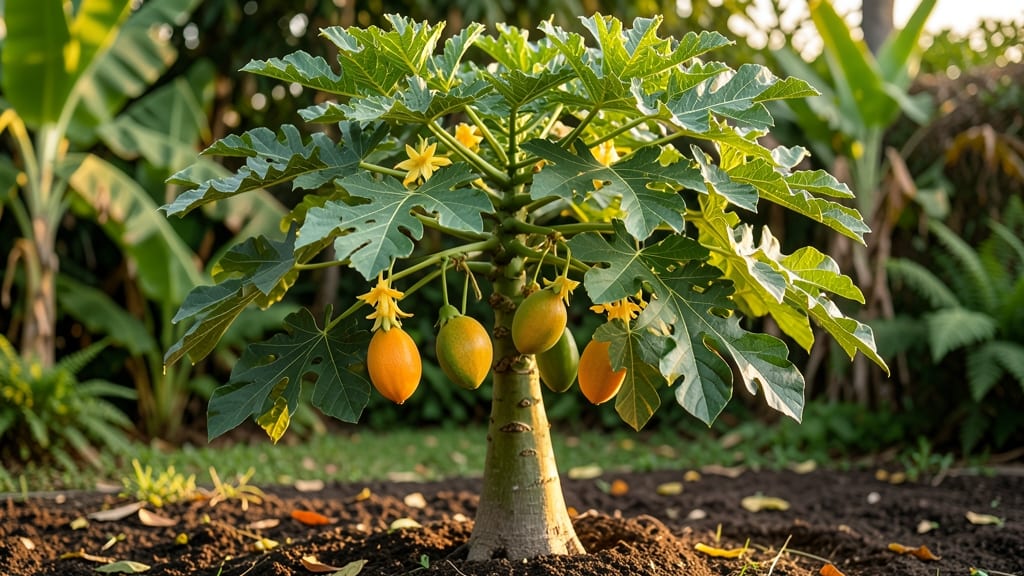
A papaya tree can grow 15 to 30 feet tall—taller than most two-story houses—depending on the variety and growing conditions 🍈. That’s a lot of space for a fruit tree, but the right variety (or pruning) can keep it manageable while still delivering fast harvests.
If you’re dreaming of tropical fruit without the travel, papaya trees could be your perfect garden addition—but first, you need to know how much space they’ll demand. These fast-growing giants can reach surprising heights, and choosing the right variety (or pruning strategy) makes all the difference.
Some varieties, like the compact Solo or SunUp, max out around 10 to 15 feet, while others, such as Red Maradol, stretch toward 25 feet if left unchecked. The good news? With the right care, you can control their height without sacrificing fruit production.
In this guide, I’ll break down the fastest-growing varieties, how to prune for smaller spaces, and the spacing rules to avoid overcrowding—so you can enjoy homegrown papayas without sacrificing your yard (or sanity).

Papaya tree height by variety: fastest-growing types & their maximum heights
Papaya trees (Carica papaya) are tropical powerhouses that can grow up to 25 feet tall, but their final height depends entirely on the variety you choose. If you're working with limited space, some types like Solo stay compact, while others like Red Maradol reach towering dimensions.
Understanding these differences helps you plan your garden layout and avoid overcrowding issues.
The fastest-growing papaya varieties can add 6–12 inches per month during their first year, making them one of the quickest tropical trees to mature. However, their growth rate slows after reaching 10–15 feet.
Climate also plays a role—warmer, frost-free zones (USDA 10–12) allow papayas to reach their full potential, while cooler regions may stunt their height.
Here’s a quick breakdown of the top 5 fastest-growing papaya varieties and their mature heights, so you can pick the perfect fit for your garden:
The Solo and Kapoho Solo varieties are your best bets for smaller spaces, as they rarely exceed 15 feet. These are ideal for containers or balconies if you provide enough sunlight and support.
Meanwhile, Red Maradol and Tainung No. 2 are better suited for large gardens or farms, where their towering heights won’t cause overcrowding issues.
If you’re growing papayas in cooler climates (USDA 9b), expect slightly slower growth and reduced mature height. Use black plastic mulch or row covers to protect young trees from unexpected chills.
In frost-free zones, these trees can grow year-round, but their first year is critical for establishing a strong root system.
Pruning plays a huge role in managing height. For varieties like Red Maradol, you can top the tree at 10 feet to encourage bushier growth and more fruit production. Just be sure to prune in late winter or early spring before new growth begins.
Avoid heavy pruning during the harvest season, as it can stress the tree and reduce fruit yield.
For container-growing, choose Solo or SunUp varieties—they adapt better to 5-gallon pots or larger. Use a well-draining potting mix with added perlite to prevent root rot, and repot every 2–3 years to accommodate root growth.
Remember, papayas need plenty of sunlight, so place containers in full sun (6+ hours daily) for optimal growth.
One common mistake is assuming all papaya trees grow
How to control papaya tree height: pruning tips for small spaces & heavy fruit
Papaya trees grow fast—up to 10 feet in their first year—but their mature height can reach 20-30 feet if unchecked. For small spaces or balconies, pruning is your secret weapon to manage height while maximizing fruit production.
The key is timing and technique, especially since aggressive pruning can delay fruiting. Let’s break down how to keep your papaya tree fruit-bearing and compact.
First, understand that papaya trees grow in two distinct phases: vegetative (leafy growth) and reproductive (flowering/fruiting). Pruning during the vegetative phase (early growth) encourages bushier growth, while pruning during the reproductive phase can reduce fruit yield.
For container-grown trees, pruning is even more critical to prevent root-bound stress and ensure stability.
- Step 1: Choose the Right Time Prune in late winter or early spring before new growth begins. Avoid pruning during flowering or fruiting to protect yield.
- Step 2: Gather Your Tools Use sterilized pruning shears, sharp loppers, and rubbing alcohol to clean cuts. Disinfect tools between cuts to prevent disease.
- Step 3: Top the Main Stem Cut the central leader (main stem) at 3-4 feet tall to encourage lateral branches. This reduces height by 50-70% while promoting bushier growth.
- Step 4: Thin Lateral Branches Remove 2-3 of the strongest lateral branches, leaving 2-3 inches of stem above the node. This redirects energy to fruit production rather than vertical growth.
- Step 5: Prune for Container Growth If growing in pots, prune roots every 6 months by trimming outer root tips to encourage a denser root ball. Reduce height by pruning 1/3 of the canopy annually.
- Step 6: Post-Pruning Care Apply a balanced fertilizer (10-10-10) and deep water to help the tree recover. Mulch around the base to retain moisture and protect roots.
For container-grown papayas, height control is even more critical. Since pots limit root spread, pruning helps prevent top-heavy instability. After pruning, consider staking the tree to support new growth.
In small spaces, you can also train the tree to grow against a trellis, which reduces height while improving air circulation and fruit accessibility.
One common mistake is pruning too late in the season, which can delay fruiting by 3-6 months. Always prune before the monsoon season in tropical climates to allow time for recovery.
If your tree is already flowering, limit pruning to removing only dead or diseased branches to avoid reducing fruit production.
With the right pruning strategy, your papaya tree can stay under 6 feet tall while still producing 50-100 fruits per year. The key is consistency—prune annually in early spring and monitor growth closely.
For heavy fruit loads, avoid over-pruning; instead, focus on balancing height and branch density to support the weight.
Remember, papaya trees are sensitive to cold, so if you’re in a cooler climate, prune after the last frost date to avoid stress. With these tips, you’ll enjoy tropical fruit without the tropical space! 🌱