
Propagation
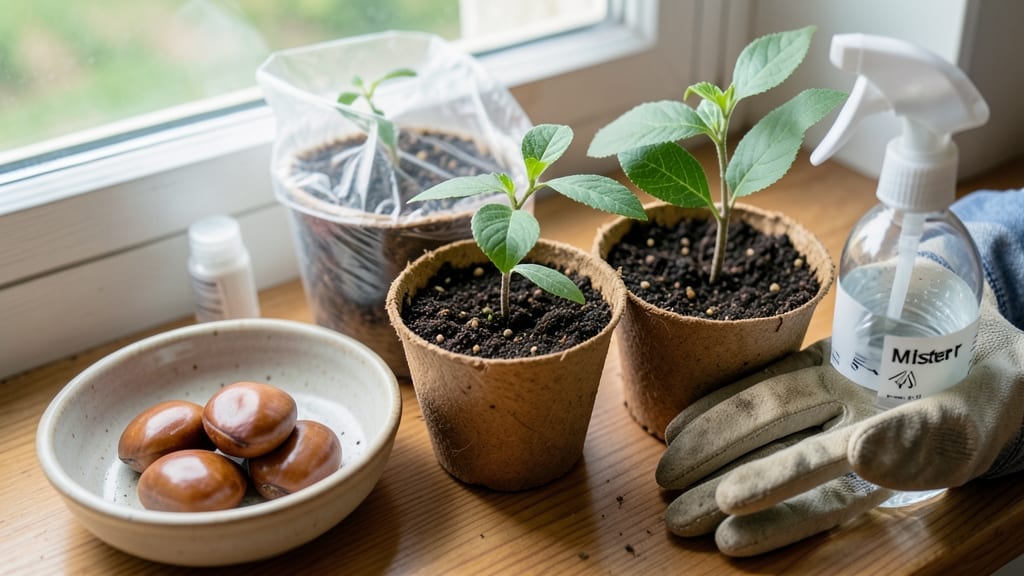
Starting a persimmon tree from seed is one of those gardening adventures that rewards patience with a tree that could outlive you. 🌱 The process begins with a ripe fruit—either the astringent Asian variety or the sweet American type—and a few weeks of careful preparation before you even see a sprout.
First, you’ll need to crack open the seed, which is the hard part—persimmon pits are tough as nails. After scarifying the seed (scratching the shell lightly to help water penetrate), you’ll soak it for 24 hours.
Then comes the waiting game: germination can take anywhere from 3 to 6 months, with some seeds stubbornly refusing to budge until spring. That’s why I recommend planting them in a pot first—easier to monitor and protect than burying them in the ground.
Once sprouted, your little seedling will need bright light (at least 6 hours of sun daily) and well-draining soil to avoid rot. Keep the soil lightly moist but never soggy, and don’t rush transplanting—wait until it’s at least 12 inches tall and has a sturdy stem.
The first few years are all about building roots and structure, not fruit. By year 5 or 6, you might finally get flowers, but if you’re after a specific variety, be warned: seed-grown trees rarely match the parent.
Here’s the thing—this isn’t a fast-track project. But there’s something deeply satisfying about watching a tree you nurtured from a single seed grow into a towering shade provider or future fruit bearer.
The real magic happens years down the road, when you’re the only one in the neighborhood with a persimmon tree that started as a seed in your kitchen.
Germination Challenges Explained
Understanding why persimmon seeds struggle to sprout is half the battle in successfully growing your tree. Persimmon seeds are notoriously finicky, and several biological and environmental factors can hold them back. Let’s break down the science behind these hurdles—so you can troubleshoot like a pro.
Persimmon seeds often enter a state called dormancy, a survival mechanism that delays germination until conditions are ideal. This happens for two key reasons:
- Hard Seed Coat (Physical Dormancy) - Persimmon seeds have a thick, woody outer layer that blocks water and oxygen from reaching the embryo inside.
Without scarification (breaking or softening the coat), the seed stays dormant. - Why it matters: Even if moisture and warmth are perfect, the seed won’t wake up without this barrier being compromised.
- Chemical Inhibitors (Physiological Dormancy)
- Some persimmon seeds produce natural compounds (like tannins) that suppress germination until the seed undergoes stratification (a cold period) or aging.
- Why it matters: These chemicals act like a "pause" signal, ensuring the seed doesn’t sprout too soon in harsh conditions.
Actionable fix: Mimic nature’s cues with scarification (nick the seed coat) or stratification (cold-moist treatment) to trick the seed into thinking winter has passed.
Many gardeners skip the cold stratification step, assuming warmth alone will do the trick—but persimmon seeds often require a chilling period (4–8 weeks in moist, cold conditions) to break dormancy.
- What happens without it?
- The seed may absorb too much water too quickly, causing the embryo to rot before it can grow.
- Or, it might linger in a semi-dormant state, never fully activating.
Actionable fix: Place seeds in a moist paper towel in a sealed bag and refrigerate for 6–8 weeks before planting. Think of it as giving the seed a "winter nap" to reset its internal clock.
Persimmon seeds are temperature-sensitive, and getting the balance wrong can stall germination.
| Problem | Cause | Effect on Seed |
|---|---|---|
| Too Cold (<50°F/10°C) | Seedling zone too chilly | Growth halts; seed may rot if soggy |
| Too Hot (>85°F/29°C) | Overheating (e.g., direct sunlight) | Seed desiccates or metabolizes too fast |
| Fluctuating Temps | Inconsistent heat sources | Confuses the seed; weak or no sprouting |
Actionable fix:
- Ideal range: 65–75°F (18–24°C) for consistent warmth.
- Use a seedling heat mat or place pots in a warm, shaded spot (like near a south-facing window but not in direct sun).
Water is the seed’s lifeline—but too little or too much can be fatal.
- Underwatering
- Seeds dry out, losing viability before germination.
- Sign: Seed shrinks or becomes hard again.
- Overwatering
- Oxygen deprivation causes the seed to suffocate.
- Sign: Fungal growth (mold) or a foul smell.
Actionable fix:
- Keep the growing medium consistently moist (like a damp sponge), not soggy.
- Use a spray bottle for gentle watering to avoid displacing seeds.
- Drainage is key: Use a pot with holes or a mix of 50% potting soil + 50% perlite/sand.
Persimmon seeds hate dense, compacted soil and need aeration to breathe.
- Common soil mistakes:
- Clay-heavy soil (traps water, suffocates roots).
- Sterile potting mix (lacks microbes to break down seed coatings).
- No organic matter (seeds starve for nutrients).
Actionable fix:
- Use a light, airy mix like:
- 50% coco coir or peat moss
- 30% perlite or vermiculite
- 20% compost or worm castings
- Avoid garden soil—it’s too heavy and may harbor pathogens.
Pro Tip: 💡 If your seeds still refuse to sprout after 4–6 weeks, they may be non-viable. Test a few by cutting one open—if the inside is dark, mushy, or empty, it’s time to try fresh seeds!
Quick Fixes for Seedling Struggles
Growing a persimmon tree from seed can feel like a high-stakes gardening challenge—especially when your little saplings seem determined to underperform. But don’t worry! Most common issues have simple, practical solutions.
Below, we’ve mapped out the top problems (and their fixes) to help your persimmon seeds sprout strong, healthy trees. 🌱✨
Cause: Persimmon seeds need stratification (a cold treatment) to break dormancy. Without it, they may sit dormant for months—or never sprout.
Fix:
- Cold Stratification (The Key Step!)
- Place seeds in a moist paper towel inside a sealed plastic bag.
- Store in the fridge (33–41°F) for 4–6 weeks.
- Pro Tip: 💡 Check moisture weekly—seeds should stay damp but not soggy.
- Warmth After Stratification
- After cold treatment, plant seeds ½-inch deep in a warm (70–75°F) seed-starting mix.
- Keep soil consistently moist (not waterlogged).
- Germination time: 4–12 weeks—patience is key!
Prevention: ✅ Test seeds first—soak a few in water for 24 hours. If they sink, they’re viable! ✅ Use a heat mat under seed trays to speed up germination.
Cause: Overwatering, poor light, or nutrient deficiency weakens seedlings, causing yellowing leaves (chlorosis) or stretched, weak stems.
Fix:
- Light Check
- Move seedlings to a sunny windowsill or grow light (12+ hours/day).
- Sign of progress: 🌞 Leaves should darken and grow sturdier within 1–2 weeks.
- Watering Wisdom
- Let the top inch of soil dry before watering again.
- Use a well-draining mix (50% potting soil, 30% perlite, 20% compost).
- Fertilizer Boost (Gently!)
- Wait 4–6 weeks after germination, then use a diluted seaweed fertilizer (½ strength).
- Avoid high-nitrogen fertilizers—they promote leafy growth over roots.
Prevention: 🌡️ Monitor humidity—use a humidity dome (remove once sprouts appear). 🔥 Rotate trays weekly for even light exposure.
Cause: Fungal diseases (like damping off) or pests (aphids, spider mites) can wipe out seedlings if ignored.
Fix:
- Fungal Problems (Mushy Stems, Mold)
- Remove infected seedlings immediately to prevent spread.
- Repot healthy ones in sterilized soil with 1 tbsp cinnamon or copper fungicide per gallon of mix.
- Prevention: 🧼 Use sterilized pots and tools.
- Pests (Aphids, Spider Mites)
- Spray with neem oil (1 tsp neem oil + 1 quart water + drop of dish soap).
- Blast off mites with a strong water spray (repeat every 3 days).
- Alternative: 🌿 Introduce ladybugs (natural predators) to your garden.
Prevention: ✨ Inspect seedlings weekly for early signs (sticky leaves = aphids; webbing = mites). 🚫 Avoid overhead watering—it encourages fungal growth.
Cause: Moving seedlings too soon or disturbing roots causes wilting, stunted growth, or leaf drop.
Fix:
- Timing is Everything
- Wait until seedlings have 4–6 true leaves and strong root systems (gently tug—resistance = ready).
- Hardening off: Acclimate to outdoor temps over 7–10 days (start with 1 hour/day in shade).
- Planting Like a Pro
- Dig a hole twice as wide as the root ball but no deeper.
- Water deeply before and after transplanting.
- Mulch lightly (1 inch) with straw to retain moisture.
Prevention: 🌡️ Choose the right time—transplant in spring or early fall (avoid heatwaves). 💧 Keep soil moist for 2 weeks post-transplant.
Final Pro Tip: 🎯 Label your seedlings! Persimmon trees take 3–5 years to bear fruit, so tracking varieties (like ‘Fuyu’ or ‘Hachiya’) saves future headaches.
With these fixes, your persimmon seedlings will go from struggling sprouts to thriving trees in no time. Happy growing! 🌳🍑
Frequently asked questions
How do I know if a persimmon seed is still viable?
Test viability by placing seeds in a glass of water for 24 hours. Viable seeds will sink to the bottom while non-viable ones float. For extra confirmation, cut open a seed—look for a firm, white embryo inside rather than a dark, mushy center.
Can I plant persimmon seeds directly in the ground?
While possible, it's riskier than starting indoors. Seeds planted directly may take longer to germinate and face more threats from pests or weather. For best results, start seeds in pots with a warm, moist mix and transplant when seedlings are 4-6 inches tall.
Why are my persimmon seedlings growing so slowly?
Slow growth is normal for persimmon trees—they prioritize root development over top growth. Ensure seedlings get bright indirect light (6+ hours daily) and consistent moisture without soggy soil. Avoid fertilizing until they have 4-6 true leaves.
Will my seed-grown persimmon tree produce the same fruit as the parent?
Almost certainly not! Trees grown from seed are unpredictable—they may produce smaller, different-tasting fruit or even wild-type persimmons. For consistent fruit, graft onto a known variety or buy a young tree. The seed method is more about growing a unique tree than reliable harvests.
How long should I wait before transplanting my persimmon seedling?
Wait until your seedling reaches 12-18 inches tall with a sturdy stem and 4-6 true leaves. Harden off for 7-10 days by gradually exposing to outdoor conditions before transplanting in spring or early fall.