
Pruning
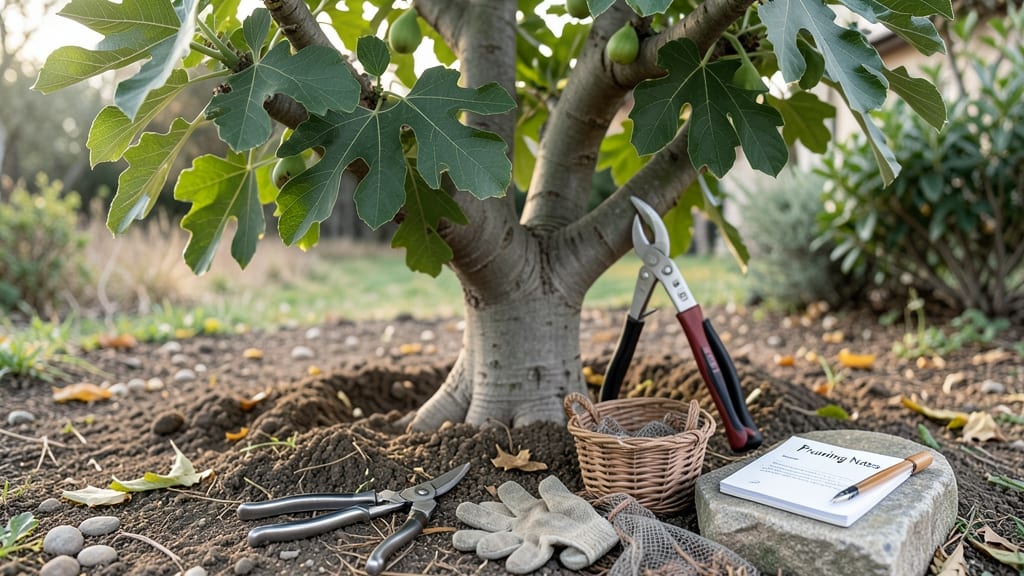
Fall fig tree trimming isn't just about cleaning up—it’s the secret to a healthier tree that bursts with fruit next spring. 🌿 I’ve learned the hard way that skipping this step means weaker branches, fewer figs, and a tree struggling to bounce back after winter.
The right cuts now prevent winter damage and encourage strong new growth in warmer climates.
You’ll need just three tools: sharp pruning shears, rubber gloves (fig sap stains!), and a bucket for clippings. Timing matters too—wait until the first frost in zones 7-9, but prune before hard freezes hit zones 3-6.
The goal? Remove dead wood, thin crowded branches, and shape the tree to let sunlight reach the center. No fancy techniques—just clean cuts at the branch collar.
After trimming, you’ll notice something magical: fresh green shoots pushing through in early spring, and a tree that looks stronger and more productive. The key is patience—fig trees recover fast, but avoid over-pruning. I’ve seen trees with 50% of their branches cut still thrive, while aggressive trimming can stress them.
Works for both container figs and in-ground trees, and the same principles apply to dwarf varieties. Here’s how to do it without mistakes—no guesswork, just results. Let’s get those shears ready!
📚 In This Guide
- What you need
- Instructions
- Tips and common mistakes
- Wrapping up and next steps
What you need
- ● Pruning shears or secateurs: A sharp, bypass-style pair (avoid anvil shears—they crush stems). Choose 5-inch blades for medium branches.
- ● Loppers: For thicker branches (½-inch to 2-inch diameter), opt for long-handled loppers (24–36 inches) for leverage.
- ● Pruning saw: A curved-tooth saw (8–10 inches) for branches over 2 inches thick.
- ● Disinfectant (70% isopropyl alcohol or bleach solution): Clean tools between cuts to prevent disease spread.
- ● Gloves: Garden gloves (nitrile-coated for grip) to protect against thorns and sap.
- ● Rag or paper towels: For wiping tools and hands clean.
- ○ Marking twine or tape: To flag branches for removal (optional but helpful for complex cuts).
- ● Pruning sealant: (e.g., Tree Seal) for large cuts over 1-inch diameter—only if your fig tree is prone to bleeding sap.
- ● Step stool or ladder: For reaching higher branches safely (ensure it’s sturdy and rated for your weight).
- ● Trash bags or bucket: For collecting pruned branches.
- ● Handheld leaf blower: To clear debris from the tree and workspace.
- ● Check the weather: Trim on a dry, overcast day (avoid windy or rainy conditions).
- ● Research your fig variety: Some (like Ficus carica) respond better to late fall pruning than others.
- ● Wear long sleeves and pants to protect against thorns and sap irritation.
Step-by-step guide to trimming a fig tree in fall
Here’s how I prepare my fig trees for winter—keeping them strong and productive for next season.
✂️ Step 1: Gather Tools and Assess the Tree
Start with a sharp bypass pruner and a clean pair of loppers—dull tools crush branches and invite disease. I also grab a ladder (if needed) and disposable gloves to protect my hands from sap and thorns. On a dry, sunny day, examine the tree for dead, diseased, or crossing branches. Look for brown, brittle wood or branches rubbing against each other—these are your first targets.
I like to sketch a rough outline of the tree’s shape before cutting. This helps me visualize the final form and avoid over-pruning. Focus on removing suckers (shoots at the base) and water sprouts (vertical shoots growing from the trunk or branches). These compete with fruit production and weaken the tree.
🌿 Step 2: Remove Dead, Diseased, and Weak Branches
Cut out any dead or diseased wood first—this prevents pathogens from spreading to healthy branches. Make your cuts just outside the branch collar (the swollen area where the branch meets the trunk). Avoid leaving stubs; a clean cut heals faster and reduces rot risk. If a branch is thicker than 2 inches, use your loppers and cut on the underside of the branch to avoid bark tears.
Next, thin out weak or crossing branches. If two branches rub together, one must go—remove the smaller or weaker one. This improves airflow and sunlight penetration, which is critical for winter resilience. I aim to keep the tree’s open vase shape, allowing light to reach the center where fruit develops.
✂️ Step 3: Prune for Shape and Airflow
Now, focus on structural pruning to encourage strong growth next spring. Start by shortening overlong branches by about one-third—this prevents them from becoming top-heavy with fruit. Cut back to an outward-facing bud or lateral branch to maintain an open canopy. Avoid cutting into the center of the tree; figs need light to reach the core for fruit production.
For horizontal branches, I trim the tips to encourage bushier growth. Vertical branches can be pruned to reduce height if they’re blocking sunlight or making the tree too tall for easy harvesting. Always step back occasionally to check your progress—this helps you see the tree’s balance and adjust cuts as needed.
🌱 Step 4: Clean Up and Apply Protective Measures
After pruning, sterilize your tools with rubbing alcohol or a 10% bleach solution to prevent spreading disease. Collect and dispose of all clippings—don’t leave them on the ground, as they can harbor pests or fungi. If your fig tree is in a colder climate (below Zone 8), consider wrapping the trunk with burlap or tree wrap to protect it from winter sunscald and temperature fluctuations.
Finally, water the tree deeply after pruning to help it recover. Avoid heavy fertilization now—figs go dormant in winter, and excess nutrients can encourage weak growth. Instead, focus on mulching the base with 2-3 inches of organic mulch (like shredded bark) to insulate roots and retain moisture.
⏰ Step 5: Monitor and Plan for Spring
In late winter, inspect your fig tree for new growth—this is your cue that it’s waking up from dormancy. If you notice buds swelling before the last frost, cover the tree with frost cloth to protect tender shoots. By early spring, you’ll start light pruning to shape the tree further and encourage fruit production.
Here’s the thing—I’ve learned that less is often more with figs. Over-pruning can stress the tree and reduce next year’s harvest. If you’re unsure, prune conservatively and adjust in future seasons. With time, you’ll develop an eye for what your tree needs to thrive.
Tips & tricks for healthy fall fig tree pruning
Lessons from years of pruning that'll help you avoid common mistakes and keep your fig tree thriving.
Tool Prep is Everything: I can't stress enough how important sharp tools are—dull blades tear bark and create wounds that invite disease. Before you start, sharpen your bypass pruner and loppers with a file or take them to a hardware store for professional sharpening. A clean cut heals faster and looks better too. I also like to wipe down tools with rubbing alcohol between cuts, especially when dealing with diseased branches.
Visualize First, Cut Later: That sketch I mentioned in Step 1 isn't just decoration—it's your pruning blueprint. Step back and look at your tree from all angles before making any cuts. Focus on creating an open center that lets sunlight reach all branches. I've made the mistake of cutting too aggressively from one side only to discover the tree looked lopsided from the other perspective. Take your time with this step, and you'll thank yourself come harvest season.
Bud Direction Matters: When you're shortening branches in Step 3, always cut back to an outward-facing bud. This encourages new growth to develop away from the center, creating that beautiful open vase shape we want. I learned this the hard way when I cut to an inward-facing bud—next year's growth shot straight into the center, blocking sunlight and creating a dense, unproductive center. Think of it like training vines on a trellis—you want growth to spread outward.
Mulch Like a Pro: That 2-3 inches of organic mulch in Step 4 isn't just decoration—it's winter insulation. I've found that shredded bark works best because it breaks down slowly while still providing excellent insulation. Apply it after pruning but before the first hard frost. The mulch helps regulate soil temperature, prevents moisture loss, and even deters weeds. Just make sure to keep it a few inches away from the trunk to prevent rot.
Pro Tips for Trim A Fig Tree In The Fall
- Lessons from years of pruning that'll help you avoid common mistakes and keep your fig tree thriving.
- Tool Prep is Everything: I can't stress enough how important sharp tools are—dull blades tear bark and create wounds ...
- Visualize First, Cut Later: That sketch I mentioned in Step 1 isn't just decoration—it's your pruning blueprint. Step...
Frequently asked questions
Got questions about trimming your fig tree in the fall? You’re not alone!
Here are some of the most common concerns—plus straightforward answers to keep your tree thriving.
When is the exact best time to trim a fig tree in the fall?
The ideal window is after the first hard frost (when leaves drop) but before winter dormancy sets in—typically late October to early November in most U.S. zones. This timing balances safety (avoiding late-season growth spurts) with preparation for winter. Pro tip: Check your local frost dates—trim too early, and you risk encouraging new, frost-sensitive shoots!
Do I need to trim fig trees every fall, or just when they look overgrown?
Annual fall trimming is highly recommended even for healthy trees—it’s not just about size! Regular pruning improves air circulation (reducing disease risk), shapes the tree for better fruit production, and removes dead/damaged wood. Skip it, and you might end up with a tangled mess or weaker growth. Think of it like a haircut for your tree—consistency keeps it looking (and performing) its best!
What should I do if I accidentally trim too much? Can I fix an over-pruned fig tree?
Don’t panic! Fig trees are resilient, but act fast: Stop pruning immediately and focus on recovery. Water deeply, apply a balanced fertilizer (low nitrogen), and protect cuts with pruning sealant if needed. In spring, new growth will emerge—just avoid heavy pruning again until the tree stabilizes. Over-pruned? Patience is key—your tree will bounce back!
Can I trim a fig tree in the fall if it’s in a pot or container?
Yes! Container-grown figs follow the same rules, but with a twist: Trim more aggressively (since roots are confined) to encourage bushier growth and prevent top-heavy plants. After pruning, repot if roots are circling, and reduce watering slightly to mimic winter dormancy. Bonus: Smaller pots = easier winter storage if you’re bringing it indoors!
Do I need to sterilize my pruning tools before and after trimming?
Absolutely!
Sterilizing tools (with rubbing alcohol or a 10% bleach solution) before and after prevents spreading fungal/bacterial diseases (like fig rust or canker). Figs are prone to infections, so this step is non-negotiable. Think of it like hand-washing for your tree’s health—simple, but critical!
What’s the deal with fig tree “suckers”? Should I remove them in the fall?
Suckers (fast-growing shoots at the tree’s base) are energy vampires—they drain nutrients from your main tree. Remove them in fall by cutting at the base with clean shears. If you miss them, they’ll compete with fruit production in spring. Pro move: Use the suckers for propagation—graft them onto new roots for free baby fig trees!
Wrapping up and next steps
Trimming your fig tree in the fall is a simple yet powerful way to ensure it thrives next season!
By removing dead or overgrown branches and shaping it properly, you’ll encourage stronger growth, better fruit production, and a healthier tree. Don’t let hesitation hold you back—grab those pruners and get to work!
Now that you’re armed with the know-how, take action! Schedule your trimming session on a dry, mild day, and watch your fig tree reward you with lush foliage and delicious fruit in spring. Happy pruning! 🌿✂️