
Pruning
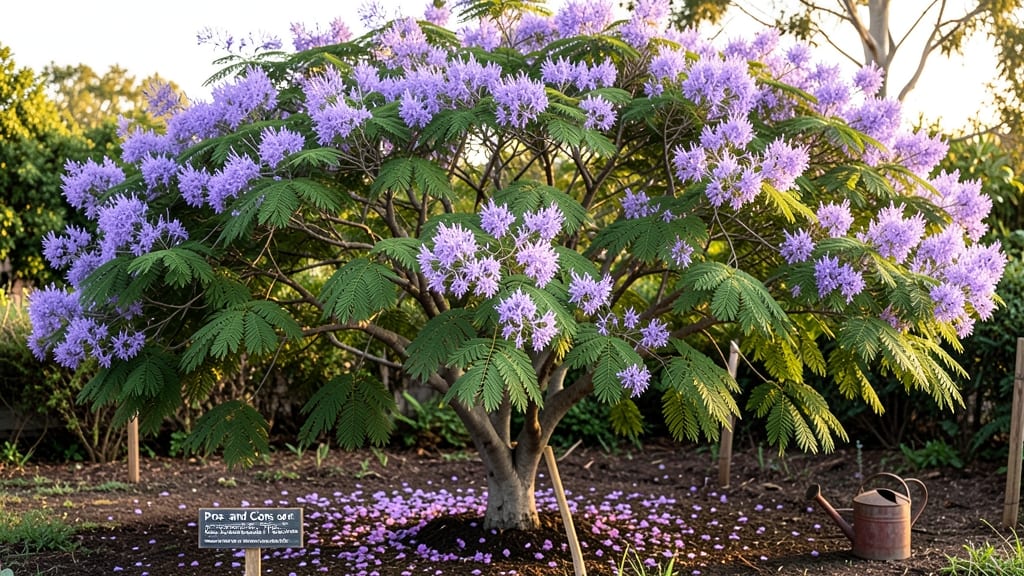
The jacaranda tree pros and cons include their breathtaking purple blooms and rapid growth, but they demand full sun exposure, well-draining soil, and consistent pruning to control their sprawling shape. While their drought resistance makes them low-maintenance in warm climates, their aggressive root systems can crack nearby sidewalks, requiring careful placement.
Jacarandas shine in USDA zones 9-11, where they can grow 3-5 feet per year and produce those iconic lavender cascades every spring. 🌿 Their shallow roots spread aggressively, which is why many cities restrict planting near driveways or foundations.
The trade-off? Once established, they thrive on neglect—drought-resistant but sensitive to heavy clay soil. I’ve seen them recover from near-death drought conditions only to burst back to life with proper watering during their first two years.
Pruning is where most owners stumble—cutting at the wrong time (like after blooms) can kill next year’s flowers.
The key is late winter/early spring trimming to shape the tree while preserving its natural canopy. Jacaranda scale is another common issue, so I recommend inspecting leaves regularly and treating early with horticultural oil.
With the right care, these trees become living works of art—but they’re not for the faint of heart.
💡 In This Article
- Jacaranda Tree Growth and Climate Requirements
- Pruning and Maintenance Tips for Healthy Jacaranda Trees
Jacaranda tree growth and climate requirements
The jacaranda’s rapid growth—3-5 feet per year when young—stems from its native tropical origins in South America, where it evolved to capitalize on warm, consistent temperatures. This species thrives in USDA zones 9-11, where average winter lows stay above 20°F.
Below that threshold, cold damage occurs, particularly to the bark and branches. The tree’s evergreen leaves (in warmer climates) or semi-deciduous habit (in cooler areas) reflect this adaptation to heat.
What makes jacarandas drought-tolerant is their deep taproot system that extends 6-10 feet downward, but their shallow lateral roots spread aggressively within 3-5 feet of the trunk—explaining why they’re notorious for lifting pavement.
This root behavior mirrors that of other fast-growing trees like willows, though jacarandas lack the same invasive potential. Their water needs are minimal once established, but young trees require deep watering every 2-3 weeks during dry spells to encourage root development.
The tree’s love for full sun—at least 6-8 hours daily—is non-negotiable. Partial shade reduces flowering by 30-50%, as the blooms rely on sunlight to trigger photosynthesis in the buds.
In urban settings, this means planting them 20-30 feet from buildings to avoid shading from walls or neighboring trees. Their sensitivity to cold also means they’re poor candidates for containers, as pots can’t insulate roots against temperature swings.
Soil composition matters just as much as climate. Jacarandas despise heavy clay, which compacts easily and suffocates roots, leading to root rot within 1-2 years. Instead, they prefer sandy or loamy soils with good drainage.
Amending clay soil with compost or coarse sand (mixed to 30% of the top 12 inches) can make a dramatic difference in survival rates. The tree’s native habitat in Argentina’s Gran Chaco region features nutrient-poor soils, so they’re not heavy feeders—over-fertilizing can actually reduce bloom quality.
Here’s what most people miss: Jacarandas transpire heavily (release water vapor) during hot days, which is why they wilt dramatically in 100°F+ temperatures if not watered deeply. This isn’t drought stress—it’s a survival mechanism to reduce water loss.
A mulch layer of 2-3 inches (using wood chips or bark) helps retain moisture while keeping roots cool. In coastal areas, salt spray can also damage leaves, so regular rinsing during dry seasons is wise.
For those in USDA zones 8 or cooler, growing jacarandas in containers with winter protection (like burlap wraps or greenhouse moves) is possible, but expect reduced blooming and slower growth.
The trade-off? Their adaptability to urban heat islands makes them ideal for cities like Los Angeles or Phoenix, where they outperform many native species during heatwaves.