
Watering
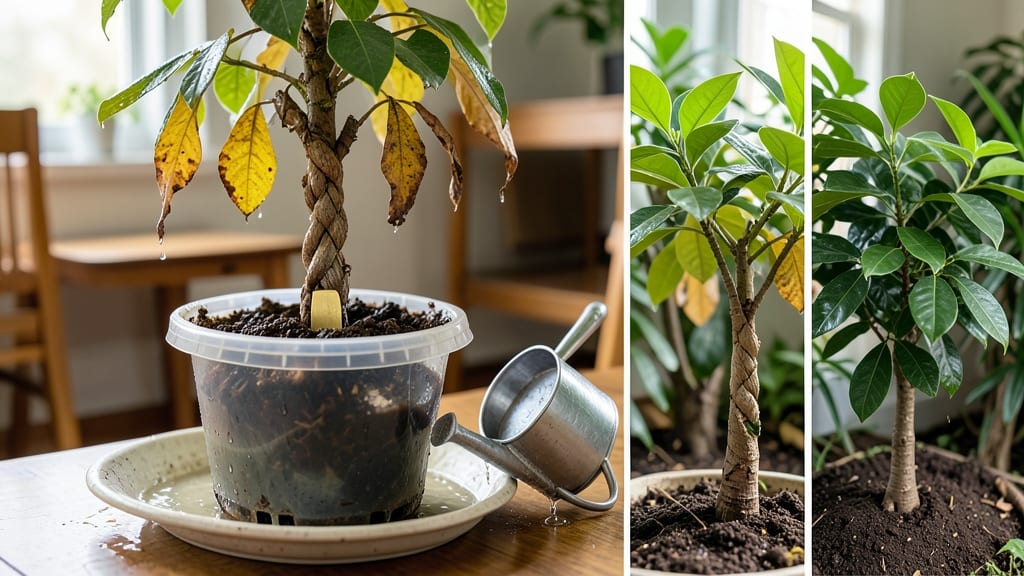
Your overwatered money tree plant’s drooping leaves aren’t a death sentence—just a cry for help. 🌱 I've nursed back more overwatered money trees than I can count, and the key is acting fast before root rot sets in.
The first 72 hours are critical for revival, and I'll show you exactly how to turn those sad, yellowing leaves around.
Overwatering happens when soggy soil blocks oxygen, suffocating roots and turning leaves yellow or mushy. My first mistake was ignoring the droop—until I realized the pot felt heavier than it should.
The fix starts with checking soil moisture (stick your finger in!) and adjusting your watering routine to match your plant's actual needs, not your schedule.
Within three days, you'll see new growth pushing through if you trim the damaged leaves, repot in fresh, well-draining soil, and let the roots breathe. The before-and-after transformation is shocking—what looked dead becomes vibrant again with the right care.
Long-term, this plant will teach you to water only when the top inch of soil is dry. Trust me, your money tree will thank you with glossy, happy leaves that stay that way for years. The secret? Less water, more patience—and a little finger-test before each pour.
Root Causes Of Overwatering
When your money tree plant (Pachira aquatica) starts looking sad with drooping leaves, yellowing foliage, or even root rot, the culprit is often too much water. But why does this happen?
Overwatering isn’t just about giving your plant a drink too often—it’s a mix of environmental, soil, and care-related factors that create the perfect storm for soggy roots. Let’s break down the science behind it so you can fix the problem for good.
Money trees thrive in well-draining soil, but when the mix is too dense or compacted, water lingers instead of draining away. Here’s why this causes trouble:
- Clay-heavy or peat-based soils hold onto moisture like a sponge, suffocating roots and cutting off oxygen. Without airflow, roots can’t respire properly, leading to rot.
- Lack of organic matter (like perlite, sand, or coconut coir) means water pools around roots instead of flowing through the pot.
- Compacted soil over time from repotting or heavy-handed watering compresses particles, reducing drainage efficiency.
💡 Pro Tip: If your soil feels like wet cement when squeezed, it’s time to repot with a chunky, airy mix (60% potting soil, 20% perlite, 20% orchid bark). A terracotta pot with drainage holes is a game-changer!
Even with good soil, human error is the #1 reason money trees drown. Here’s how it happens:
| Mistake | Why It’s Harmful |
|---|---|
| Watering on a strict schedule (e.g., every Tuesday) | Plants don’t follow calendars—water needs depend on humidity, light, and season. A rigid schedule ignores these variables. |
| Ignoring the topsoil’s moisture level | Sticking your finger 1–2 inches into the soil tells you if it’s dry (water) or damp (wait). Many overwaterers guess instead. |
| Using ice cubes or cold water | Cold water shocks roots, reducing their ability to absorb nutrients and increasing susceptibility to rot. |
| Letting the plant sit in saucers of water | Even with drainage holes, standing water at the bottom of the pot creates a breeding ground for fungal root diseases. |
🔥 Action Step: Before watering, lift the pot—if it feels light, it’s dry. If it’s heavy, wait. And always water until it drains from the bottom, then empty the saucer!
Your money tree doesn’t live in a vacuum—humidity, temperature, and airflow all play a role in how quickly soil dries. Here’s how they contribute to overwatering:
- High humidity (common in bathrooms or kitchens) slows evaporation, keeping soil damp longer. In these spots, water every 10–14 days instead of weekly.
- Low light conditions reduce a plant’s ability to transpire (release water vapor), so it stays soggy. Move it near a bright, indirect window to speed up drying.
- Poor airflow (like crowding plants together or blocking vents) traps moisture around leaves and soil. Space plants 2–3 inches apart and use a small fan on low for circulation.
- Seasonal changes: Winter slows growth, so water 30–50% less than in summer when the plant is actively pushing new leaves.
✨ Quick Fix: If your home is humid, skip the top layer of soil when watering—focus on the drier lower layers to avoid oversaturating the roots.
Not all pots are created equal—and some are downright deceptive when it comes to water needs. Here’s how container choice backfires:
- Glazed or plastic pots without drainage holes trap water, mimicking a swampy ecosystem. Roots suffocate, and fungal infections thrive.
- Too-large pots hold excess water for weeks, giving roots no chance to dry out. A pot should be only 1–2 inches wider than the root ball.
- Decorative cachepots without drainage (like those pretty outer pots) can create a false sense of security. Always use a nursery pot inside with holes.
🔧 Fix It Now: If your pot lacks drainage, drill holes in the bottom (use a ¼-inch bit) and line it with a cauldron liner or coffee filter to prevent soil from escaping.
Quick Fixes for a Soggy Money Tree
Reviving your overwatered money tree (Pachira aquatica) starts with cutting off the excess moisture and giving its roots a chance to breathe. The good news? With the right steps, you can nurse it back to health in just a few days.
Below are targeted solutions based on the most common causes of overwatering—plus prevention tips to keep your plant thriving long-term.
If your money tree’s roots are waterlogged and mushy (a classic sign of root rot), time is critical. Follow these steps to save it:
🍳 Step 1: Remove the Plant from Its Pot
Gently tip the pot and slide the plant out, supporting the base with your other hand. If the soil clumps tightly, don’t force it—let the roots loosen naturally to avoid further damage.
👨🍳 Step 2: Shake Off Excess Soil
Use your fingers or a soft brush to remove loose, saturated soil clinging to the roots. Focus on the outer layer—you’re not repotting yet, just exposing the roots to air.
🥘 Step 3: Trim the Damaged Roots
- Healthy roots are firm, white, or light tan.
- Rotten roots are black, brown, mushy, or smell foul.
Use sterilized scissors or pruning shears to snip away the bad sections, cutting 1/4-inch above the healthy tissue. 🔪
⏰ Step 4: Let It Air Dry (24–48 Hours)
Place the plant in a shady, well-ventilated spot (no direct sunlight yet!). Avoid placing it back in the pot—let the roots dry out completely to prevent further rot.
🌱 Step 5: Repot in Fresh, Dry Soil Once the roots are dry: 1.
Fill a clean pot with drainage holes (terracotta or ceramic works best) with a well-draining mix: - 50% cactus/succulent soil - 30% perlite or pumice (for aeration) - 20% orchid bark or coconut coir (for moisture control) 2. Plant the money tree at the same depth as before.
- Water lightly only after 3–5 days—just enough to moisten the soil, not drench it.
If your money tree has yellow leaves but no root rot, the issue is likely overwatering combined with poor drainage or low light. Here’s how to correct it:
🌡️ Step 1: Check the Soil Moisture Stick your finger 1–2 inches into the soil.
If it’s damp: - Wait to water until the top 1–2 inches are dry (usually every 7–10 days in warm weather, less in winter). - Use the "thumb test": If water drips out the drainage hole within 10 minutes of watering, you’re overdoing it.
🎯 Step 2: Improve Drainage
- Repot if needed: If the current soil retains too much moisture, switch to a chunkier mix (add perlite or orchid bark).
- Elevate the pot: Place it on feet or a saucer to prevent water from pooling at the bottom.
✨ Step 3: Optimize Light Conditions
Money trees thrive in bright, indirect light (east or north-facing windows are ideal).
- Signs of too little light: Leggy growth, pale leaves.
- Fix: Move it closer to a window (but avoid harsh afternoon sun).
- Signs of too much sun: Brown leaf tips.
- Fix: Use a sheer curtain to diffuse light.
Drooping often means the roots are stressed from excess water or compacted soil. Try these emergency fixes:
💧 Step 1: The "Soak & Dry" Method
- Submerge the pot in room-temperature water for 10–15 minutes (only if the soil is bone-dry).
- Remove immediately and let excess water drain completely.
- Wait 3–5 days before watering again.
🌿 Step 2: Prune Damaged Foliage
- Trim yellow, brown, or mushy leaves with clean scissors to redirect the plant’s energy to healthy growth.
- Pro tip: Wipe the leaves with a damp cloth to remove dust, helping them absorb light better.
🍃 Step 3: Boost Humidity (Temporarily)
Money trees love moderate humidity (40–60%). If your home is dry:
- Place the pot on a pebble tray with water (ensure the pot isn’t sitting in water).
- Mist the leaves lightly (but avoid soggy soil).
Once your plant is back on track, prevent future overwatering with these habits:
| Problem | Prevention Tip |
|---|---|
| Overwatering | Water only when the top 1–2 inches of soil are dry. Use a moisture meter if unsure. |
| Poor Drainage | Always use a pot with drainage holes and a well-draining soil mix. |
| Inconsistent Light | Place near a bright, indirect light source (rotate the pot weekly for even growth). |
| Seasonal Changes | Reduce watering in winter (growth slows, so less water is needed). |
| Root Rot Risk | Repot every 1–2 years to refresh the soil and check roots. |
After a few days of proper care, watch for these good signs: ✅ Leaves perk up (no longer drooping). ✅ New growth at the tips of branches. ✅ Healthy green leaves (no more yellowing).
If you follow these steps, your money tree should bounce back in 3–7 days—and with a little patience, it’ll reward you with lush, vibrant foliage for years! 🌿💚
Frequently asked questions
How can I tell if my money tree is overwatered vs. underwatered?
Check the leaves and soil: Overwatered money trees show yellowing leaves, drooping foliage, and soil that stays damp for days. Underwatered plants have crispy brown edges and soil that pulls away from the pot edges. Stick your finger 1-2 inches deep—if it's bone dry, it's thirsty; if damp, it's getting too much water.
Can I save my money tree if the roots are already rotting?
Yes, but act fast! Remove the plant, trim all mushy black/brown roots with sterilized scissors, then let the remaining roots dry for 24-48 hours before repotting in fresh, well-draining soil. Skip watering for 3-5 days to prevent further rot. With proper care, new roots will grow within weeks.
Why does my money tree droop even after I water it?
Drooping after watering usually means root stress from either overwatering or compacted soil. Try the "soak & dry" method: Submerge the pot in water for 10 minutes, then drain completely. Let the soil dry 50% between waterings and ensure your pot has drainage holes to prevent soggy roots.
How often should I water my money tree in winter?
Reduce watering to every 2-3 weeks in winter since growth slows. Test soil moisture by sticking your finger 2 inches deep—if it's dry, water lightly. Place the pot on feet or a saucer to prevent water pooling, and avoid cold drafts which can shock the roots.
Will pruning yellow leaves help my overwatered money tree?
Yes! Pruning removes stressed foliage that drains energy, helping the plant focus on new growth. Use clean scissors to trim yellow/brown leaves at the base. Wipe remaining leaves with a damp cloth to remove dust, which helps them absorb more light. You'll see fresh green leaves within 2-3 weeks with proper care.