
Container Gardens
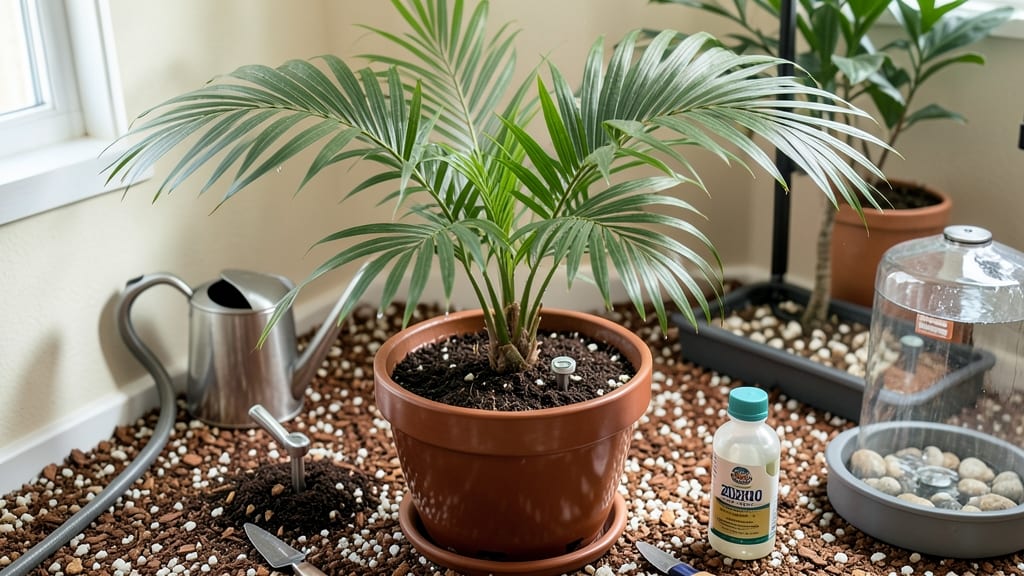
Caring for palm trees in pots means bringing tropical drama to patios and porches—without the root rot risks that scare off beginners. 🌴 I’ve nursed my own potted palms through winter brown tips and summer droughts, and the secret isn’t complicated: it’s all about drainage, soil science, and sunlight strategy.
Most people drown their palms thinking they need constant moisture, but the real enemy is soggy roots hiding in decorative pots.
You’ll need a container with drainage holes (yes, even if it’s ugly), a fast-draining potting mix (think chunky, sandy, and airy), and a spot that gets bright, indirect light for at least 6 hours a day.
My Meyer lemon palm thrives in a 15-gallon pot on my covered deck—it gets morning sun and afternoon shade, and I’ve never lost a leaf to overwatering since I switched to this setup. The key is mimicking their native conditions: warm, humid, and well-aerated roots.
By the end of summer, your palm will reward you with shiny new fronds and a taller, bushier silhouette—proof that container life works. You’ll also skip the costly nursery shock of transplanted palms, since you’re growing them slowly and steadily in their forever home.
The only trade-off? You’ll need to repot every 2-3 years to keep roots happy, but that’s a small price for a plant that looks like a vacation every day.
This method works for dwarf palms, bamboo palms, and even small Canary Island palms—just adjust pot size to match the plant’s mature height.
Here’s how to get started without killing yours in the first month: start with the right pot, then focus on watering only when the top 2 inches of soil are dry. Trust me, your palm will thank you.
📚 In This Guide
- What you need
- Instructions
- Tips and common mistakes
- Wrapping up and next steps
What you need
- ● Container: A pot with drainage holes (minimum 12-18 inches in diameter for dwarf palms, 20+ inches for larger varieties). Opt for terracotta or fiberglass to prevent root rot.
- ● Potting Mix: 2-3 gallons of a well-draining blend (e.g., 50% cactus/succulent mix + 50% perlite/pumice). Avoid garden soil—it’s too dense!
- ● Palm Tree: A container-friendly species like Dwarf Date Palm (Phoenix roebelenii) or Parlor Palm (Chamaedorea elegans).
- ● Drainage Layer: 1-2 inches of gravel, lava rock, or expanded clay pellets to prevent soggy roots.
- ● Trowel or Spade: For planting and mixing soil.
- ● Watering Can: With a narrow spout for precise hydration.
- ○ Mulch (Optional): 1 inch of orchid bark or coconut coir to retain moisture.
- ○ Support Stake (Optional): For young palms to prevent toppling.
- ● Fertilizer (Slow-Release): Balanced 6-6-6 or palm-specific formula (apply 2-3 times/year).
Step-by-Step guide to keeping potted palms lush and healthy
Here’s how I keep my potted palms thriving year-round—no root rot, no guesswork.
🪴 Step 1: Pick the Right Pot and Drainage
Start with a container at least 12 inches wide and deep for each palm, with multiple drainage holes. I use glazed ceramic or plastic pots because they’re lightweight and won’t crack in freezing temps. If your pot lacks drainage, drill 2-3 holes in the bottom—palms hate soggy roots.
Place a 2-inch layer of gravel or broken pottery at the bottom before adding soil. This creates an air pocket that prevents water from pooling at the roots. Skip the fancy drainage mats—just a simple layer does the job. I always check the pot’s stability too; a wobbly container can stress the plant.
🌱 Step 2: Use Fast-Draining Soil Mix
Palms need soil that drains like a desert—light and airy. Mix 50% potting soil, 30% perlite or pumice, and 20% coarse sand or orchid bark. This blend mimics their natural sandy, well-draining habitat. Avoid garden soil; it compacts and suffocates roots.
Fill the pot halfway, then tap it gently to settle the mix. Add more soil until you reach 1 inch below the rim. Press lightly to remove air pockets, but don’t compact it—roots need room to breathe. I like to add a handful of slow-release fertilizer granules here to give the palm a nutrient boost right away.
☀️ Step 3: Plant and Position for Light
Remove the palm from its nursery pot and loosen the roots if they’re circling. Place it in the center of your prepared pot, then fill in around the sides with soil. Press gently to secure it, but don’t bury the trunk—keep it at the same depth as in the nursery. Water lightly after planting to settle the soil.
Palms crave bright, indirect light. Place yours near a south- or west-facing window, but avoid harsh afternoon sun, which can scorch fronds. If indoors, rotate the pot a quarter turn weekly so the plant grows evenly. You’ll notice new fronds emerging on all sides—signs of happy growth.
💧 Step 4: Water Like a Pro
Water your potted palm only when the top 2-3 inches of soil feel dry. Stick your finger in—if it’s damp, wait. When you water, soak the soil until water runs out the drainage holes. Empty the saucer afterward to prevent root rot. I water mine every 7-10 days in summer, but less in winter when growth slows.
Overwatering is the #1 killer of potted palms. If the soil stays wet for more than a day, you’re overdoing it. Yellowing fronds or mushy stems? That’s your warning. Adjust your watering schedule based on the season and your home’s humidity—palms in dry air need more frequent watering than those in a humid bathroom.
✂️ Step 5: Feed and Prune for Long-Term Health
Feed your palm every 2-3 months during spring and summer with a balanced, water-soluble fertilizer diluted to half strength. I use a 10-10-10 mix and apply it after watering to avoid burning the roots. Skip fertilizer in fall and winter—palms rest during cooler months and don’t need extra nutrients.
Prune only dead or brown fronds with clean, sharp pruners. Cut them back to the trunk or the next healthy growth point. Never prune more than 25% of the fronds at once, or you’ll shock the plant. I also wipe the fronds occasionally with a damp cloth to remove dust—palms breathe through their leaves, and clean fronds mean better air exchange.
Tips & tricks for perfect potted palm care
Keeping your potted palm thriving isn't rocket science—just a few key tricks to avoid the most common pitfalls.
Drainage is Non-Negotiable: That 2-inch gravel layer in Step 1 isn't just decoration—it's your first line of defense against root rot. I've seen too many palms drown because people skipped this step. Use clean, coarse gravel (nothing smaller than pebbles) and make sure it covers the drainage holes completely. If you're using broken pottery shards, wash them first to remove any dust or debris that could clog drainage.
Soil Mix Matters More Than You Think: The 50-30-20 blend in Step 2 isn't arbitrary—it's designed to replicate the palm's natural sandy soil environment. When mixing, measure your perlite or pumice first, then add potting soil and sand. This prevents clumping and ensures proper aeration. Pro tip: Add a handful of orchid bark chunks (about 1-2 inches) to the mix for extra airflow around roots.
Light Positioning Secrets: That weekly quarter-turn rotation in Step 3 isn't just about even growth—it's how you spot problems early. If one side of your palm starts leaning toward the light, it's telling you to adjust the pot's position. For indoor palms, I recommend using a self-adjusting plant stand that rotates automatically every few days. This eliminates the guesswork and keeps your palm growing symmetrically.
Watering Wisdom: The finger test in Step 4 works, but here's how to read it right: Push your finger 2-3 inches into the soil. If it comes out clean (no moisture), it's time to water. If it's damp but not soggy, wait another day. In winter, I reduce watering to every 14-21 days because cooler temps slow the plant's metabolism. Always water until you see it running out the drainage holes—this ensures the entire root ball gets hydrated.
Pro Tips for Palm Tree Care In Pots
- Keeping your potted palm thriving isn't rocket science—just a few key tricks to avoid the most common pitfalls.
- Drainage is Non-Negotiable: That 2-inch gravel layer in Step 1 isn't just decoration—it's your first line of defense against root rot.
- Soil Mix Matters More Than You Think: The 50-30-20 blend in Step 2 isn't arbitrary—it's designed to replicate the palm's natural sandy soil environment.
Frequently asked questions
Got questions about keeping your potted palm thriving?
Here are the most common concerns—and expert answers to help you avoid root rot and keep your tropical beauty happy year-round.
How often should I water a palm tree in a pot?
Water your potted palm when the top 1-2 inches of soil feel dry. Overwatering is the #1 killer—stick your finger in the soil before reaching for the hose! In summer, this might mean weekly watering; in winter, every 2-3 weeks. Pro tip: Use well-draining soil and pots with drainage holes to prevent soggy roots.
Can palm trees survive winter in pots?
Yes, but they need protection! Most potted palms (like Areca or Kentia) thrive in USDA Zones 9-11. For colder climates, move them indoors near bright windows or wrap pots in bubble wrap. Avoid drafts—palms hate sudden temperature swings. Bonus: Group pots together to create a microclimate!
How do I repot a palm tree without hurting it?
Repot every 2-3 years or when roots circle the pot. Do this in spring:
- Water the palm 1-2 days before repotting to reduce stress.
- Gently remove it from the old pot, loosening roots if tangled.
- Add fresh, well-draining soil (mix potting soil with perlite or orchid bark).
- Place in a pot 2-3 inches wider—bigger isn’t always better!
Why are the leaves turning brown or yellow?
Brown tips? Underwatering or salt buildup from tap water. Yellow fronds? Overwatering or poor drainage. Check the soil moisture and roots—healthy roots should be white/firm, not mushy or black. Fix it: Adjust watering, flush soil with distilled water, and trim dead fronds with sterilized scissors.
What’s the best palm tree for beginners in pots?
Start with low-maintenance varieties like:
- Areca Palm (tolerates indoor conditions)
- Parlor Palm (shade-tolerant, slow-growing)
- Dwarf Date Palm (compact, great for small pots)
How do I prevent root rot in potted palms?
Root rot is sneaky but preventable! Follow these rules:
- Use pots with drainage holes (no exceptions!).
- Choose fast-draining soil (mix potting soil with perlite or sand).
- Avoid saucers without drainage—empty excess water after watering.
- Water deeply but infrequently—let soil dry between waterings.
Wrapping up and next steps
Caring for palm trees in pots is all about balance—giving them the right mix of sunlight, water, and nutrients while preventing root rot. With the right container, soil, and a little patience, your tropical beauty can thrive year-round, even in small spaces! 🌴✨
Ready to watch your palm flourish? Start by monitoring its progress—adjust care as needed—and soon, you’ll have a stunning, low-maintenance centerpiece for your patio or indoor oasis. Happy potting! 🌱