
Pruning
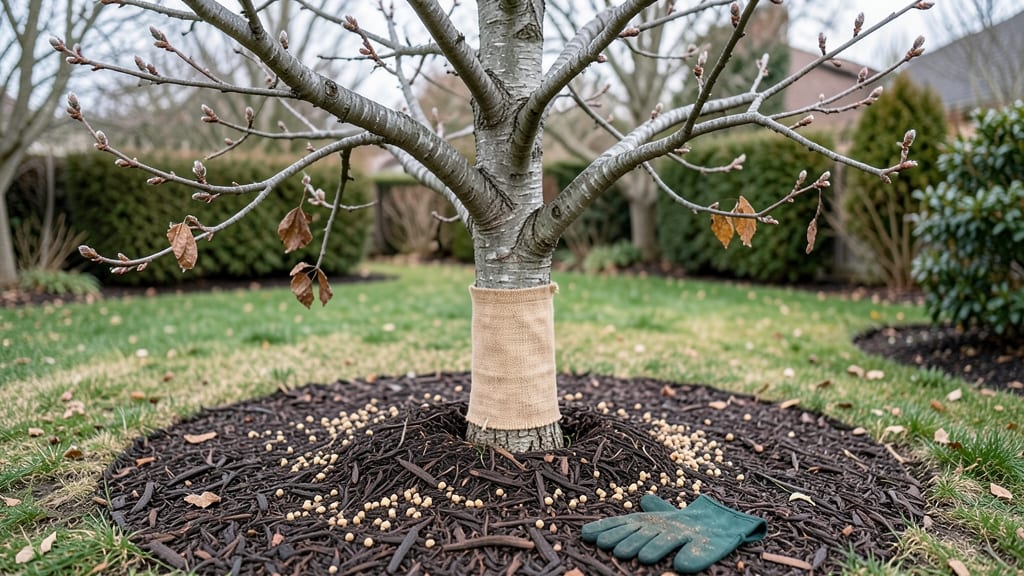
Your trees need winter tree care tips as much as they need summer sun. ✂️ Pruning in cold months isn’t just about shaping—it’s about preparing them to survive frost, ice, and winter stress while setting up next year’s growth.
I’ve learned the hard way that skipping this step means weaker branches, more disease, and less fruit come spring.
Start by pruning dormant trees between late fall and early spring, when they’re not actively growing. Remove dead, diseased, or crossing branches first—they’re the biggest threats to winter survival. For fruit trees, thin out crowded branches to improve airflow and reduce snow damage.
A sharp pair of pruners and a clean saw are all you need, but timing matters more than tools.
After pruning, protect the wounds with tree sealant (if needed) and apply 3-4 inches of mulch around the base to insulate roots. This keeps soil temps stable and prevents frost heave.
You’ll notice stronger regrowth in spring, fewer broken limbs after ice storms, and trees that bounce back faster from winter stress.
Works for temperate climates (zones 5-8), but adjust for your region—southern areas can prune slightly earlier, while northern zones should wait until late winter. The key is less is more: aggressive pruning stresses trees when they’re already struggling to survive cold snaps.
📚 In This Guide
- What you need
- Instructions
- Tips and common mistakes
- Wrapping up and next steps
What you need
- ● Pruning shears: Bypass pruners (for small branches, 1–2 pairs with sharp, bypass blades 🔪).
- ● Loppers: Long-handled (for medium branches, 24"–36" reach, ratcheting or bypass 🌳).
- ● Pruning saw: Curved-tooth (for thick branches, 18"–24" blade, foldable for storage ⏰).
- ● Gloves: Heavy-duty, cut-resistant (waterproof, gardening-grade 🤲).
- ● Disposable pruning bags: Heavy-duty, 3–5 gallon (for debris collection, biodegradable ♻️).
- ○ Tree wound sealant: Pruning paste (optional but helpful for large cuts, latex-based or beeswax-free 🌿).
- ● Ladder or step stool: Sturdy, non-slip (extendable for tall trees, weight-rated for user ⚖️).
- ● Safety gear: Safety glasses (ANSI-rated 👓).
- ● Long sleeves/pants (weather-resistant fabric 🧥).
- ● Tree banding tape: Plastic or fabric (to protect bark from sunscald, 1–2" width 🌞).
- ● Hose or spray bottle: For cleaning tools (to prevent disease spread 💦).
- ● Tree food/fertilizer: Slow-release, winter-safe (check NPK ratio for dormant season 🌱).
- ● Mulch: Organic (pine straw, shredded bark) (3–4" layer, keep 6" away from trunk 🍂).
- ● String or flagging tape: For marking cuts (bright color to spot-prune later 🎀).
Step-by-step guide for cold-resistant tree pruning
Here's how I protect trees through winter while setting them up for spring's best growth.
✂️ Step 1: Time Your Pruning for Dormancy
Wait until late winter when the tree is fully dormant but before new growth begins—typically February to early March in most climates. You'll know it's time when buds swell slightly but haven't yet burst open. Pruning too early risks exposing fresh cuts to harsh winter winds, while waiting too long invites pests to feast on new sap.
Use sharp, clean pruning shears to make cuts just outside the branch collar—the swollen area where the branch meets the trunk. This ensures proper healing. I always prune on dry days after a frost to minimize stress on the tree. The goal is to remove no more than 25% of the canopy in one season—this keeps the tree's energy balanced for winter survival.
🌿 Step 2: Identify and Remove Problem Branches
Look for dead, diseased, or crossing branches—these are your top priorities. Dead branches snap easily when bent; diseased ones often have discolored bark or oozing sap. Crossing branches rub against each other, creating wounds that invite pests. Remove these first, cutting back to the branch collar to prevent regrowth.
Next, target water sprouts—those fast-growing, vertical shoots that steal energy from the tree. They're easy to spot: thin, upright, and often clustered near the trunk. Snip them off at the base. I also remove any branches growing inward toward the center of the tree, as they block sunlight and air circulation. These cuts encourage a stronger, more open canopy for winter wind resistance.
☀️ Step 3: Thin the Canopy Strategically
Step back and visualize the tree's shape. Your goal is to create an open, airy structure that lets sunlight penetrate to the inner branches. Focus on thinning outer branches first—remove every other branch along a limb to improve airflow and reduce snow load. You'll see the difference immediately: sunlight will hit the trunk and lower branches, preventing mold and encouraging new growth in spring.
For larger branches over 2 inches thick, use a three-cut method to avoid tearing the bark. First, make an undercut about 12 inches out from the trunk, then a top cut slightly farther away. Finally, twist the branch away and make your final cut just outside the branch collar. This technique prevents bark from stripping, which can kill the tree.
🪴 Step 4: Protect Against Winter Damage
After pruning, wrap young or newly planted trees with tree guard or burlap to shield them from deer, rodents, and harsh winds. Focus on the trunk and lower branches, securing the wrap loosely so it doesn't constrict as the tree swells with moisture. I also apply a thin layer of anti-desiccant spray to evergreens to prevent needle browning from winter winds.
Mulch the base of the tree with 2-3 inches of organic mulch, keeping it 6 inches away from the trunk to prevent rot. This insulates roots from freezing temperatures while retaining moisture. Water the tree deeply before the ground freezes—once in late fall and again in early winter—to ensure roots stay hydrated through dormancy. A well-watered tree handles cold snaps far better than a thirsty one.
Tips & tricks for perfect cold-resistant tree pruning
A few simple tricks will help you prune like a pro and keep your trees thriving through winter's harshest conditions.
Timing is Everything: The late winter window between February and early March is your golden opportunity. I learned this the hard way—pruning too early can expose fresh cuts to brutal winter winds, while waiting too long risks inviting pests that love fresh sap. Look for those slightly swollen buds that haven't burst open yet; that's your perfect cue. And trust me, dry days after a frost are ideal—they minimize stress on the tree while giving you cleaner cuts.
Branch Collar Matters: Never cut flush with the trunk! The branch collar (that swollen area where the branch meets the trunk) is your tree's natural healing seal. Cutting too close removes this protective barrier and creates wounds that take forever to heal. Instead, make your cut just outside the collar—this simple technique prevents decay and helps the tree recover faster. I've seen trees with improper cuts develop cankers for years afterward.
Three-Cut Method for Large Branches: When dealing with branches over 2 inches thick, that three-cut method isn't just recommended—it's essential. First, make your undercut about 12 inches out from the trunk, then your top cut slightly farther away. Finally, twist the branch away before making that final cut just outside the collar. This prevents bark from stripping, which can be fatal to your tree. I've had to replace trees that were killed by improper large-branch removal—don't make my mistake!
Winter Protection Essentials: After pruning, don't forget the winter protection steps. Wrap young trees with tree guard or burlap to shield them from deer and rodents, but leave it loose—you don't want to constrict the trunk as it swells with moisture. For evergreens, that anti-desiccant spray is a game-changer—it prevents those unsightly brown needles from winter winds. And remember, mulch should be 2-3 inches deep but kept 6 inches away from the trunk to prevent rot.
Pro Tips for Winter Tree Care Tips
- A few simple tricks will help you prune like a pro and keep your trees thriving through winter's harshest conditions.
- Timing is Everything: The late winter window between February and early March is your golden opportunity.
- Branch Collar Matters: Never cut flush with the trunk!
Frequently asked questions
When is the best time to prune trees in winter?
Late winter (just before bud break, typically January–February) is ideal for pruning most trees. This timing minimizes stress, reduces disease risk, and lets you see the tree’s structure clearly without leaves. Evergreens can be pruned anytime in winter, but avoid heavy pruning in extreme cold (below 20°F/-7°C).
Can I prune trees in freezing temperatures?
Pruning in freezing temps (below 32°F/0°C) can harm the tree’s vascular system, making it harder to heal. Wait for a mild winter day (above 40°F/4°C) with calm winds. If you must prune in cold, do so early in the day when the wood is slightly flexible. Pro tip: Use sharp, sterilized tools to prevent damage.
What if my tree has dead branches now—should I wait?
Dead or diseased branches should be removed immediately, regardless of the season. These branches are entry points for pests and diseases. How to spot them: Snap a branch—if it’s brittle and dry inside, it’s dead. Note: Wear gloves and dispose of infected branches far from your yard to prevent spread.
Is winter mulching necessary, and how much should I use?
Yes! Mulch helps insulate roots and retain moisture. Apply 2–4 inches of organic mulch (like wood chips or straw) around the tree’s drip line (the area directly under the canopy), keeping it 3–6 inches away from the trunk. Avoid piling mulch against the trunk—this can cause rot. Bonus: Mulch also suppresses weeds and improves soil health.
What should I avoid doing to my trees in winter?
Steer clear of these common mistakes:
- Over-pruning: Remove only 10–20% of the canopy in winter to avoid stressing the tree.
- Using dull tools: Ragged cuts slow healing and invite disease.
- Fertilizing in winter: Trees are dormant—wait until spring to feed.
- Ignoring young trees: They’re more vulnerable to cold; wrap trunks with tree guards if needed.
How do I know if my tree is damaged after winter?
Watch for these red flags:
- Brown or wilting leaves (even in evergreens).
- Cracks in the bark or oozing sap.
- Dieback (dead branches at the tips of limbs).
- Unusual growths (like cankers or fungal spots).
Wrapping up and next steps
Winter is the perfect time to give your trees the care they deserve—pruning for strength and protecting them from cold sets the stage for a vibrant spring and summer.
By following these cold-resistant pruning tips, you’ll ensure your trees thrive year-round, whether they’re young saplings or mature giants. 🌳❄️
Ready to roll up your sleeves? Start small—pick one tree this week and observe the difference by next winter! For deeper guidance, explore seasonal pruning guides or consult a local arborist to tailor care to your climate. Your trees (and future shade!) will thank you. 💪