
Diseases
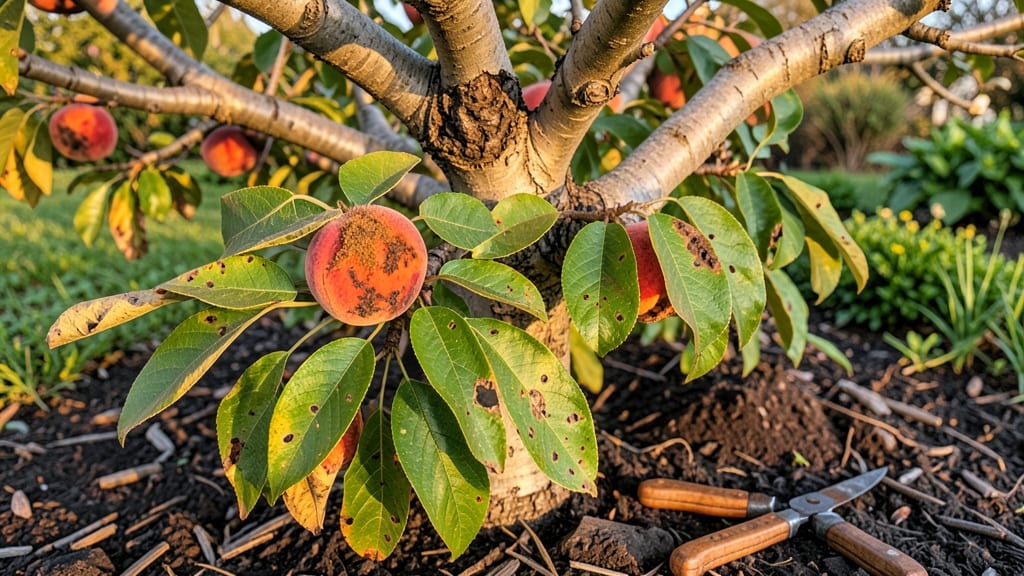
Spotting pictures of peach tree diseases early can save your harvest before the first fruit ripens. 🌿 I’ve seen healthy trees turn brown and crispy overnight—until I learned to recognize the warning signs hidden in leaves, bark, and blossoms.
This guide shows you exactly what to look for, with clear descriptions of 15 fungal issues that attack peach trees, so you can act fast before they spread.
Most diseases start with tiny dots or fuzzy coatings that grow worse with heat and humidity. The good news? Many can be stopped with simple fixes—like pruning infected branches, applying copper sprays, or improving airflow around the tree.
I’ll walk you through the most common problems, from bacterial spot (those nasty black spots) to leaf curl (twisted, puckered foliage), so you know exactly what’s wrong and how to fix it.
By the end, you’ll spot trouble before it ruins your tree—and keep your peaches thriving year after year. The key is acting early, and these pictures make it impossible to miss the signs. Let’s get your tree back to healthy, productive glory.
Whether you’re dealing with powdery mildew on young leaves or brown rot on fallen fruit, this guide covers the most critical diseases. Each one has a distinct look, and I’ll show you how to treat it without harsh chemicals. Your peach tree’s future starts with knowing what to watch for.
Root Causes Behind Tree Struggles
Peach trees are resilient, but when diseases strike, they often do so due to a mix of environmental, biological, and human-related factors. Understanding these triggers is the first step toward prevention and treatment.
Below, we break down the key reasons why peach trees develop fungal and bacterial issues—so you can address them before they spiral out of control.
---
Peach trees thrive in specific weather ranges, and when conditions stray too far from ideal, diseases take hold like unwelcome guests at a picnic.
- Excessive Moisture 💧 Fungal spores love damp environments. Heavy rain, poor drainage, or overhead irrigation keeps leaves and fruit wet for long periods, creating the perfect breeding ground for pathogens like brown rot (Monilinia fructicola) and leaf spot diseases (Cercospora).
Even morning dew can be problematic if airflow is restricted.
- High Humidity ☁️ Humidity levels above 80% for extended periods weaken the tree’s natural defenses. Fungi such as peach scab (Cladosporium carpophilum) spread rapidly in these conditions, forming dark, velvety spots on leaves and fruit.
- Temperature Swings ❄️🔥 Sudden shifts—like late spring frosts followed by warm spells—stress trees, making them more susceptible to infection. Bacterial leaf spot (Xanthomonas campestris) and powdery mildew (Podosphaera oxycanta) often exploit this weakened state.
Pro Tip: 💡 Use mulch (but keep it 2–3 inches away from the trunk) to regulate soil moisture and improve drainage. Prune for better airflow—open canopies reduce humidity buys within the tree.
---
A healthy peach tree is your best defense. When trees are malnourished, overworked, or injured, they become easy targets for pathogens.
- Nutrient Deficiencies 🍃 Lack of nitrogen, phosphorus, or potassium weakens cell walls, making them vulnerable to fungal attacks. For example, yellow leaf curl (often tied to zinc deficiency) can coincide with peach leaf curl (Taphrina deformans), a devastating fungal disease.
- Overwatering or Underwatering 💦🌵 Both extremes stress roots. Overwatering leads to root rot (often caused by Phytophthora species), while drought weakens the tree’s immune response, inviting silver leaf disease (Chondrostereum purpureum).
- Physical Damage ⚔️ Pruning wounds, hail scars, or insect bites (like from peach tree borers) create entry points for bacteria and fungi. Bacterial canker (Pseudomonas syringae) often invades through these openings, causing oozing cankers and dieback.
Action Step: 🌡️ Conduct a soil test annually to check pH (ideal: 6.0–6.5) and nutrient levels. Apply balanced fertilizer (e.g., 10-10-10) in early spring and avoid heavy pruning during wet seasons.
---
Pests don’t just damage fruit—they pave the way for diseases by creating wounds or leaving behind honeydew (a fungal buffet).
- Sap-Sucking Insects 🐜 Aphids, scale, and mites weaken trees by draining sap, reducing photosynthesis. Their sticky honeydew attracts sooty mold (Capnodium spp.), which coats leaves and blocks sunlight.
- Boring Insects 🪱 Peach tree borers (Synanthedon exitiosa) tunnel into bark, creating perfect entry points for bacterial canker or Nectria canker (Nectria galligena). The stress from borer damage also triggers gummosis (excessive sap flow).
- Fruit-Rotting Pests 🍑🐛 Stink bugs and fruit flies puncture peaches, allowing brown rot or rhizopus rot (Rhizopus stolonifer) to infect the fruit through these wounds.
Prevention Tip: ✨ Install pheromone traps for borers and use neem oil or horticultural oil to smother soft-bodied pests like aphids. Clean up fallen fruit promptly—it’s a hotspot for fungal spores!
--- Diseases don’t stay put—they hitchhike on tools, wind, and even birds. Ignoring this can turn your orchard into a Petri dish.
- Dirty Pruning Tools ⚔️💦 Fungal spores and bacteria linger on shears, saws, and loppers. Peach leaf curl and bacterial spot can spread from infected trees to healthy ones via contaminated blades.
- Windborne Spores 🌬️ Fungi like powdery mildew and leaf spot release spores that travel miles. Planting peach trees near plums or almonds (which share pathogens) increases cross-contamination risk.
- Birds and Wildlife 🦅 Birds spread brown rot spores by pecking at infected fruit and flying to new trees. Raccoons may drop contaminated fruit near healthy trees.
Safety Measure: 🔥 Sanitize tools between cuts with 70% rubbing alcohol or a 10% bleach solution. Remove mummified fruit (dried, infected peaches) from the orchard to starve fungal growth.
--- Even well-meaning gardeners can accidentally invite diseases with poor practices.
- Overhead Irrigation 💦🌧️ Watering from above keeps leaves wet, promoting leaf spot and powdery mildew. Drip irrigation or soaker hoses deliver water to roots without wetting foliage.
- Planting in Low Spots 🌊 Water pools around trees planted in depressions, encouraging root rot and collar rot (Phytophthora cinnamomi). Always plant on mounds for drainage.
- Ignoring Varietal Susceptibility 🍑🚫 Some peach cultivars (like Elberta) are prone to brown rot, while others (e.g., Redhaven) resist it better. Research disease-resistant varieties for your climate.
Quick Fix: 🎯 Raise tree beds by 6–12 inches and water early in the day so leaves dry by evening. Avoid nitrogen-heavy fertilizers late in the season—they encourage tender, disease-prone growth.
Fixing Fungal Foes on Peach Trees
Peach trees are a gardener’s pride—but fungal diseases can turn their lush leaves into a sad, spotted mess. 🍑😬 The good news? Most issues are treatable (and preventable!) with the right steps.
Below, we map the most common peach tree diseases to practical fixes, so you can restore your tree’s health without stress.
---
Cause: Monilinia fructicola thrives in warm, wet conditions, rotting fruit and leaves. Fix It: - 🔪 Prune aggressively – Remove all infected fruit, branches, and fallen leaves. Sterilize pruners with rubbing alcohol between cuts. - 🌡️ Spray copper fungicide (like Bordeaux mix) before blooms appear, then repeat every 10–14 days during wet spells. - 🌞 Improve airflow – Thin dense branches to reduce humidity trapped in the canopy. - 🗑️ Clean up debris – Rake and dispose of fallen fruit/leaves immediately (don’t compost them!).
💡 Pro Tip: Apply a post-harvest spray of potassium phosphate to strengthen the tree’s resistance for next season.
---
Causes: Cercospora, Alternaria, or Cladosporium fungi create dark spots with yellow halos. Fix It: - 👨🍳 Fungicide rotation – Alternate between neem oil (for prevention) and chlorothalonil (for active outbreaks). Spray undersides of leaves where spores hide. - 💦 Water wisely – Irrigate at the base (not overhead) to keep leaves dry. Early morning watering helps leaves dry faster. - 🌱 Soil care – Add compost to improve drainage and reduce fungal spores in the soil.
✨ Prevention Hack: Mulch with straw or wood chips (not leaves) to block spore splash-up during rain.
---
Cause: Podosphaera or Sphaerotheca fungi coat leaves in a chalky white film, stunting growth. Fix It: - 🍳 Baking soda spray – Mix 1 tbsp baking soda + 1 tsp soap + 1 gallon water. Spray both sides of leaves weekly until mildew fades. - 🌿 Boost immunity – Feed trees with fish emulsion or compost tea for phosphorus (strengthens cell walls). - 🌳 Prune for sunlight – Thin branches to ensure 6+ hours of direct sun daily (powdery mildew loves shade).
🎯 Quick Fix: Wipe leaves with a damp cloth to physically remove mildew (works for mild cases).
---
Cause: Taphrina deformans infects buds in winter, causing thick, curled leaves by spring. Fix It: - 🔥 Dormant season spray – Apply lime sulfur or copper fungicide in late fall or early spring (before buds swell). - 🧹 Remove infected leaves – Burn or trash curled leaves immediately to stop spore spread. - 🌱 Plant resistant varieties – ‘Reliance’ or ‘Redhaven’ peaches tolerate leaf curl better than others.
💡 Winter Prep: After harvest, prune out all curled leaves—even if they’re high up!
--- No matter the disease, these baseline steps work for most issues: 1. 🌱 Soil health – Test pH (ideal: 6.0–6.5) and amend with compost or sulfur if needed. 2. 💦 Smart watering – Deep and infrequent (1–2 inches per week) > shallow daily sprinkles.
3. 🍂 Cleanup crew – Rake and remove all fallen leaves/fruit twice a year (fall + spring). 4. 🛡️ Fungicide schedule – Apply preventative sprays (like neem oil or copper) every 2–3 weeks during rainy seasons.
--- If your tree shows: - Wilted branches (possible bacterial infection) - Oozing cankers (advanced fungal/bacterial rot) - No improvement after 4 weeks of treatment
…it’s time to consult a local arborist or cooperative extension service for targeted help.
--- 🌟 Remember: Early action is key! Most fungal diseases are easier to prevent than cure. With these fixes, your peach tree will be back to blooming (and fruiting!) like a champ in no time. 🍑💪
Frequently asked questions
How can I tell if my peach tree has a fungal disease just by looking at the leaves?
Look for distinct patterns: powdery mildew appears as white, chalky coatings on leaf surfaces, while leaf spot diseases show up as dark brown or black spots with yellow halos. Peach leaf curl causes thick, puckered leaves in spring, and brown rot creates sunken, dark patches on fruit and leaves. Compare your symptoms to the labeled pictures in our guide for quick identification.
When is the best time of year to treat peach tree diseases?
Preventative sprays work best in late winter/early spring (before buds swell) and post-harvest (after fruit drops). For active infections, treat immediately when you spot symptoms—especially during wet seasons or after temperature swings. Copper fungicides and neem oil are safest for early applications, while baking soda sprays work well during growing season.
Can I use home remedies like vinegar or hydrogen peroxide to treat peach tree diseases?
While vinegar (1 tbsp per gallon) can help with powdery mildew in mild cases, it’s not a reliable treatment for most fungal diseases. Hydrogen peroxide (1 tsp per quart of water) may sanitize tools but won’t cure infections. For serious issues, stick to copper fungicides or baking soda sprays—they’re safer and more effective. Always test remedies on a small leaf area first!
Why do some peach trees get diseases while others in the same area stay healthy?
Healthy trees resist diseases better due to factors like proper spacing (better airflow), balanced soil pH (6.0–6.5), and resistant varieties. Trees with nutrient deficiencies, poor drainage, or physical damage (from pests or pruning wounds) are more vulnerable. Even small differences in care—like watering methods or cleanup habits—can make a big difference.
How do I know if my peach tree’s problems are from disease or pests?
Diseases typically show as spots, discoloration, or unusual growth (like curled leaves), while pests leave holes, chewed edges, or sticky residue (honeydew). Check the undersides of leaves for mites or aphids, and look for borer holes in bark. If you see both symptoms, treat pests first—they often invite diseases by creating entry points.