
Pruning
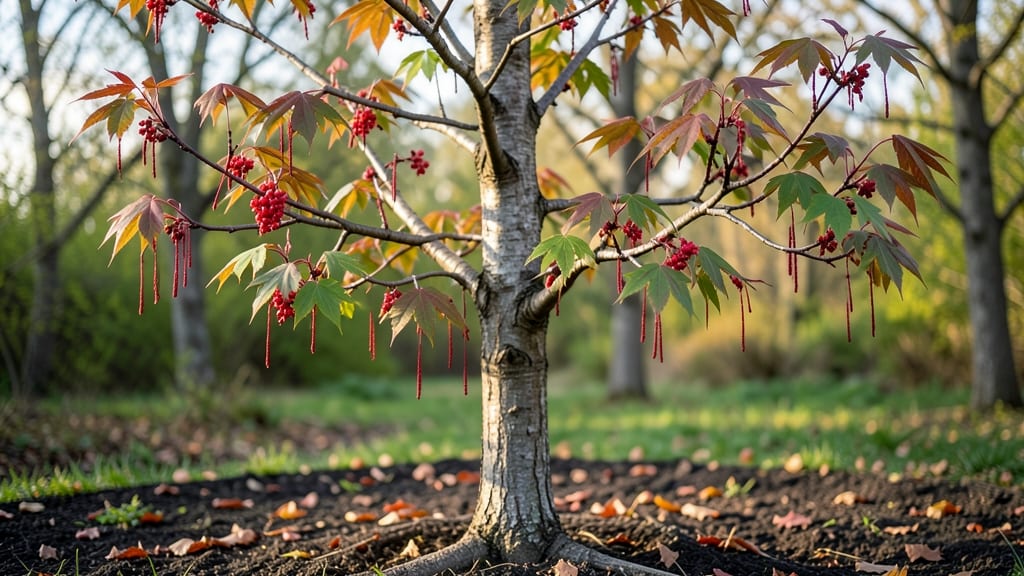
Pruning red maple trees in early spring reveals their hidden structure when buds swell but leaves haven't emerged yet. ✂️ This dormant-season timing lets you see the tree's framework clearly—no guesswork about where branches cross or dieback hides.
I've learned that early spring cuts promote stronger growth and reduce stress on the tree when summer heat arrives. The right tools make all the difference: sharp bypass pruners for clean cuts, a sturdy ladder for higher branches, and rubbing alcohol to sterilize tools between cuts.
Red maples bleed sap heavily when pruned now, but sealing cuts isn't necessary—it's a natural process that stops once leaves appear. You'll end up with a tree that looks balanced from all sides, with sunlight reaching the lower branches.
The fresh cuts encourage vigorous new growth, and you'll notice fewer pests taking advantage of weak, overcrowded branches. This is the time to remove dead wood completely and thin out competing branches. Works for both young trees establishing their shape and mature trees needing structural adjustments.
Here's how to do it right—without over-pruning or creating entry points for disease.
📚 In This Guide
- What you need
- Instructions
- Tips and common mistakes
- Wrapping up and next steps
What you need
- ● Pruning shears – Bypass pruners (sharp, 6–8" blades) for small branches (1"–2" diameter).
- ● Loppers – Bypass or anvil type (8–12" blades) for medium branches (2"–4" diameter).
- ● Pruning saw – Curved-tooth or folding saw for thick branches (4"+ diameter).
- ● Disposable gloves – Heavy-duty, cut-resistant (e.g., leather or synthetic blend).
- ○ Tree wound dressing – Optional but helpful (pruning sealant for cuts >1" diameter).
- ● Ladder or step stool – Sturdy, extendable (if tree is >6 ft tall).
- ● Bucket or tarp – For collecting debris (5–10 gallon capacity).
- ● Disinfectant (70% isopropyl alcohol or bleach solution) – To clean tools between cuts.
- ● Pole pruner – For high branches (10–20 ft reach).
- ● Safety glasses – To protect from debris.
- ● Work apron – With pockets for tools and trash bags.
- ● Marking spray – Non-toxic (to tag branches for removal).
- ● Tree growth regulator – Post-pruning (e.g., seaweed extract for faster healing).
Step-by-step guide to pruning your red maple in early spring
Early spring is the perfect time to shape your red maple—here’s how to do it right for vibrant growth.
✂️ Step 1: Inspect and Plan Your Cuts
Start by examining your red maple’s structure while it’s still dormant. Look for dead, diseased, or crossing branches—these are your top priorities. I like to sketch a rough map of the tree’s shape, marking branches to remove and keep. This prevents over-pruning and ensures balance. Focus on branches that are thinner than a pencil or show signs of decay like hollow centers or blackened bark.
Check for water sprouts (fast-growing vertical shoots) and suckers (shoots at the base)—these compete for nutrients and should be pruned back to the ground. Use a sharp pruning saw for branches thicker than ½ inch, and bypass pruners for smaller cuts. Avoid cutting into the collar region (the swollen area where branches meet the trunk)—this can invite disease.
🌿 Step 2: Remove Dead and Weak Branches First
Begin with dead or diseased branches—these are easy to spot as they’re brittle, brown, or lack leaves. Cut these back to the branch collar, making a clean slice just outside the branch bark ridge. This prevents tears and promotes faster healing. For weak, thin branches, remove them entirely to redirect energy to stronger growth.
If a branch is partially dead, cut it back to the last healthy bud or branch junction. Never leave stubs—they invite rot and pests. I always work from the bottom up, starting at the base and moving upward. This keeps me organized and ensures I don’t miss any hidden issues. After removing deadwood, step back and assess the tree’s overall shape—you want an open canopy that allows sunlight to reach the lower branches.
☀️ Step 3: Thin the Canopy for Better Airflow
Thinning the canopy improves airflow and reduces disease risk. Aim to remove no more than 25% of the tree’s foliage in one season—red maples are resilient, but over-pruning stresses them. Focus on branches that cross or rub against others, as these create wounds and weak points. Cut these back to a healthy lateral branch or the collar.
Look for water sprouts (shoots growing straight up from the trunk or limbs) and suckers (shoots emerging from the base). These saplings drain energy from the tree. Use hand pruners to snip them at the base, or loppers for thicker stems. After thinning, the tree should have a balanced, pyramid-like shape with sunlight reaching the lower branches. This encourages even growth and vibrant fall foliage.
⏰ Step 4: Shape and Clean Up
Now’s the time to refine the tree’s shape. Red maples respond well to open-center pruning, which keeps the center clear and encourages outward growth. Trim back any branches that grow inward to maintain an upright, vase-like form. Avoid topping (cutting the main stem flat)—this creates stubby growth and weakens the tree.
After pruning, clean up the area by raking up debris and disposing of diseased branches (don’t compost them). Sterilize your tools with rubbing alcohol to prevent spreading disease. Finish by applying a layer of mulch (2-3 inches deep) around the base, keeping it 6 inches away from the trunk to prevent rot. Water deeply if the spring has been dry—this helps the tree recover from pruning stress.
🌱 Step 5: Monitor and Maintain Through the Season
Keep an eye on your red maple over the next few weeks. New growth should appear within 4-6 weeks, signaling the tree is healing well. If you notice yellowing leaves or oozing sap at pruning cuts, the tree may be stressed—reduce watering slightly and avoid further pruning until fall.
Plan to lightly prune again in late summer (after the tree has finished growing for the year) to remove any sucker growth or weak shoots. This two-step approach keeps your red maple healthy and vibrant. With proper care, your tree will reward you with brilliant red fall foliage and strong, disease-resistant growth for years to come.
Tips & tricks for pruning red maple trees in early spring
Here's what nobody tells you about pruning red maples—these tricks save time and prevent costly mistakes.
Tool Sharpness is Non-Negotiable: A dull pruning saw or bypass pruners will tear branches instead of making clean cuts. I learned this the hard way after ruining three cuts trying to force a blunt saw through a branch thicker than my thumb. Always sharpen your tools before starting—clean cuts heal faster and look professional. For branches over ½ inch thick, a sharp pruning saw will make the job 10 times easier than struggling with dull tools.
The 25% Rule is Your Safety Net: Remember the instructions' warning about removing no more than 25% of the foliage? This isn't arbitrary—it's based on how red maples recover. I've seen people over-prune in one session, only to watch their tree struggle through summer with weak growth. If you're unsure whether you've hit that limit, step back and compare your tree to photos of healthy red maples. You'll notice the difference immediately.
Collar Zone Awareness Prevents Disease: The branch collar—the swollen area where branches meet the trunk—isn't just a detail, it's your tree's natural defense system. Cutting into it creates wounds that invite fungal infections and pests. I always mark the collar with a piece of tape before making cuts to avoid accidentally damaging this critical area. This one habit has saved me from dealing with infected branches for years.
Seasonal Follow-Up is Key: The instructions mention lightly pruning again in late summer, but here's the secret: timing matters more than you think. After your early spring pruning, watch for new sucker growth—these are your tree's way of compensating for energy loss. Remove them when they're still small (3-4 inches tall) to prevent them from draining your tree's resources. This two-step approach creates a stronger tree for next year's growth.
Pro Tips for Red Maple Tree In Early Spring
- Here's what nobody tells you about pruning red maples—these tricks save time and prevent costly mistakes.
- Tool Sharpness is Non-Negotiable: A dull pruning saw or bypass pruners will tear branches instead of making clean cuts.
- The 25% Rule is Your Safety Net: Remember the instructions' warning about removing no more than 25% of the foliage?
Frequently asked questions
Got questions about pruning your red maple tree in early spring?
You’re not alone! Here are some of the most common queries—and their answers—to help you prune like a pro.
When is the exact best time to prune a red maple in early spring?
The ideal window is late winter to early spring, before buds swell (typically February–March in most zones). This timing minimizes stress on the tree and reduces disease risk. Avoid pruning during frost or extreme cold—wait for temperatures above 40°F (4°C).
Can I prune a red maple tree if it’s already showing signs of new growth?
If buds have already opened or leaves are emerging, delay pruning until dormancy again. Pruning during active growth can stress the tree, increase sap flow, and attract pests. If you must trim, focus on minor shape adjustments—not heavy cuts.
What if my red maple has dead or diseased branches? Should I wait for spring?
Remove dead, broken, or diseased branches anytime—even in winter—to prevent spread. However, save major structural pruning for early spring. Pro tip: Sterilize tools with rubbing alcohol to avoid cross-contamination.
Will pruning my red maple in early spring affect its fall color?
Not significantly! Red maples are hardy pruners—light to moderate cuts won’t dull fall foliage. However, avoid over-pruning (removing >25% of foliage) in one season, as this can reduce vigor. Think of it as a haircut, not a buzz cut!
Are there alternatives if I miss the early spring pruning window?
Yes! The second-best time is late fall (after leaf drop but before hard frost). Summer pruning is possible but riskier—stick to removing water sprouts or safety hazards only. Never prune in late winter if buds are swollen!
Wrapping up and next steps
Watching your red maple tree burst into vibrant life in early spring is a rewarding experience—and proper dormant-season pruning is the secret to its success! 🌿 By following the right techniques, you’ll encourage healthier growth, stunning foliage, and even longer-lasting blooms.
Now that you’re armed with the knowledge, grab those pruners and get started!
For even more confidence, consider documenting your progress with photos or marking your pruning schedule in a garden journal. Happy pruning—your tree (and future spring views!) will thank you! 🌳✨