
Container Gardens
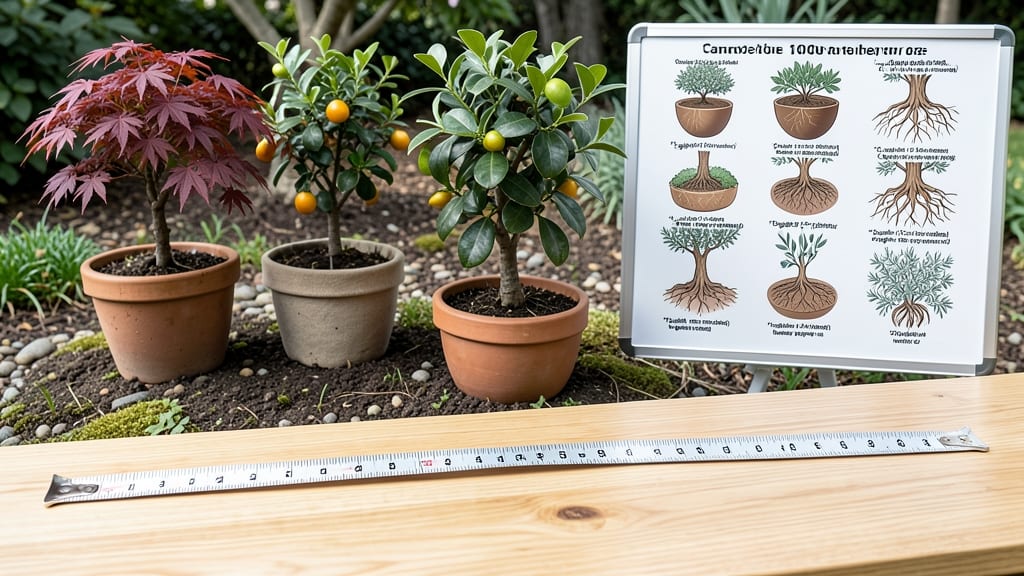
A tree container size chart helps you select the right pot dimensions by matching root ball size to container depth and width, with 5–10 gallon containers ideal for young trees and 25+ gallon pots needed for mature specimens. Always provide 12–18 inches of root space per foot of tree height to support healthy growth.
A tree container size chart isn't just about picking a bigger pot—it's about creating the right environment for roots to expand freely. 🌱 The soil volume directly impacts nutrient absorption and water retention, which means your tree's growth rate depends on these dimensions.
For example, a 6-foot shade tree needs a container with at least 72–108 inches of root space, while dwarf varieties can thrive in smaller 3–5 gallon containers. The key is balancing container size with the tree's mature height while accounting for its specific species needs.
Container materials also play a role in sizing decisions. Fabric grow bags, for instance, allow roots to breathe differently than rigid plastic or ceramic pots, which can affect how quickly a tree outgrows its container.
I always recommend adding 2–3 inches of extra depth for drainage layers, especially in heavier clay or wood containers where water pooling can become an issue. This small adjustment prevents root rot while maintaining the proper root-to-container ratio.
💡 In This Article
- How Root Ball Size Determines Container Dimensions
- Best Container Materials and Sizing for Different Tree Types
How root ball size determines container dimensions
The relationship between a tree's root ball and container size follows a precise ratio that balances growth potential with environmental stress.
Roots need space to branch out—typically, a container should provide 3–5 times the root ball diameter in width and at least 12 inches more depth than the root ball's height.
For example, a 3-gallon container (about 12" diameter x 12" deep) works for a 2-foot-tall sapling, while a 15-gallon pot (roughly 18" diameter x 20" deep) accommodates a 5-foot tree. This ratio prevents root binding, where roots spiral tightly and suffocate.
Soil volume directly impacts nutrient absorption through a process called rhizosphere activity. The rhizosphere—the zone where roots interact with soil microbes—requires ample oxygen and moisture.
A 5-gallon container holds about 18 liters of soil, while a 25-gallon container holds 95 liters, meaning larger pots retain moisture longer and support microbial diversity. However, too much soil can lead to compaction, so lightweight, well-draining mixes (like 60% potting soil, 20% perlite, 20% compost) are essential.
Depth matters most for young trees because shallow containers restrict vertical root growth, limiting stability.
Calculating ideal container size starts with your tree's mature height. Use this formula: Container depth (inches) = Tree height (feet) × 1.5. For a 10-foot Japanese maple, that’s 15 inches minimum, but I always round up to 18 inches for safety.
Width follows the 1:3 root ball-to-container ratio: if your tree’s root ball is 6 inches wide, the container should be 18–24 inches in diameter. Overestimating size is better than underestimating—roots grow faster than shoots, and a cramped pot stresses the tree, reducing flowering or fruiting.
Container materials also influence sizing. Fabric grow bags, for instance, allow roots to expand beyond the pot’s edges, effectively increasing usable space. A 10-gallon fabric bag might function like a 15-gallon rigid pot due to its flexibility.
Conversely, ceramic or wood containers limit root spread but provide better insulation in cold climates. For heavy trees like oaks, prioritize thick-walled, sturdy containers—a 30-gallon plastic pot may crack under a 200-pound mature tree’s weight, while a reinforced wood barrel handles the load.
Seasonal adjustments are critical. In winter, roots slow their growth, so a container that’s perfect in summer might feel too large in winter due to reduced water uptake. I recommend downsizing containers by 1–2 sizes in colder months to prevent waterlogging.
For example, a 20-gallon pot in summer might shrink to 15 gallons in winter by adding a 3-inch drainage layer of gravel or expanded clay. This tweak maintains aeration while reducing moisture retention.
Watch for these signs your container is too small: Roots circling the pot’s bottom, yellowing leaves, or frequent wilting despite regular watering. These indicate root binding, where the tree has exhausted the soil’s nutrients.
Upgrading to a 2–3 size larger container (e.g., from 10 to 15 gallons) often revives growth within 4–6 weeks. The key is patience—transplant shock from upsizing can take 2–3 months to resolve, but the long-term benefits outweigh the temporary setback.
For precision, use a root flare calculator to measure your tree’s root spread. Place the root ball in the center of the container, ensuring the top of the root flare sits 1–2 inches below the rim.
This positioning prevents soil from smothering the trunk’s base, a common cause of rot. 🌿