
Pruning
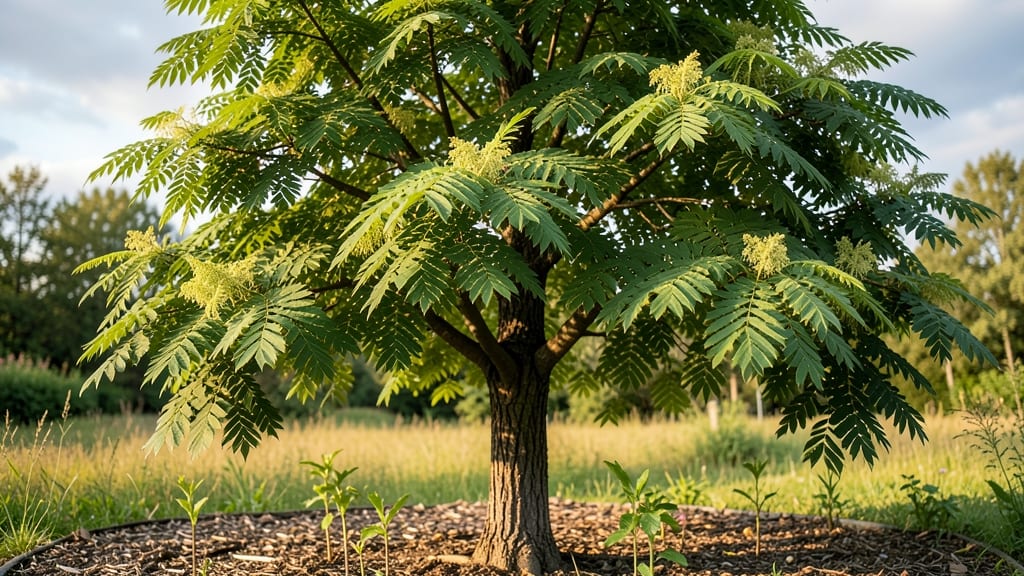
Winter pruning your Tree of Heaven (Ailanthus altissima) is the secret weapon against its invasive spread. ✂️ I’ve learned the hard way that letting this tree go dormant without control means waking up to it taking over your yard—and your neighbors’ too.
The key is timing: prune when the tree is fully dormant but before new growth starts in spring.
You’ll need sharp pruning shears, gloves (those sap blisters are no joke), and a clear day for visibility. The goal is to remove suckers—those aggressive shoots that pop up everywhere—and cut back any branches that died back in winter.
Think of it like trimming weeds before they get a foothold, but for a tree that’s basically a gardening villain.
What you’ll end up with is a tree that’s less likely to spread its seeds everywhere and more likely to stay contained. Plus, you’ll avoid the heartache of finding Tree of Heaven seedlings popping up in your flower beds next spring.
The pruning itself takes about 30-60 minutes, depending on the tree’s size.
Pro tip: Bag and dispose of all cuttings—don’t compost them. Those seeds can lie dormant for years, waiting to sprout. If you’re in a colder climate, wait until late winter when temps stay above freezing but before buds swell.
This is your chance to reclaim control before the growing season begins.
📚 In This Guide
- What you need
- Instructions
- Tips and common mistakes
- Wrapping up and next steps
What you need
- ● Pruning saw: A bow saw or pruning saw with a 7- to 10-inch blade (for thick branches). Opt for a hardened steel blade to cut through woody stems cleanly.
- ● Loppers: Bypass loppers with a 20- to 24-inch handle for medium-sized branches (2–4 inches in diameter). Choose ratcheting loppers for extra leverage if needed.
- ● Hand pruners: Bypass pruners with 5-inch blades for smaller branches and twigs (under 1 inch). Sharpness is key!
- ● Work gloves: Heavy-duty gardening gloves with cut-resistant palms (e.g., mechanized or Kevlar-reinforced) to protect against splinters and sap.
- ● Safety gear: Safety goggles (to shield eyes from debris).
- ● Long-sleeve shirt and pants (preferably rip-resistant).
- ○ Closed-toe boots or shoes (steel-toe optional but helpful).
- ● Disposable bags or tarp: 10–20 heavy-duty trash bags (or a 10x12 ft. tarp) to collect and dispose of cuttings. Seal bags tightly to prevent seed dispersal!
- ● Rake or broom: For clearing debris and loose bark after pruning.
- ● Dormant season: Prune on a dry, frost-free day between late fall and early spring (November–March). Avoid pruning during active sap flow (late winter/early spring) to reduce stress on the tree.
- ● Temperature: Ideal range is 40–60°F (4–15°C). Cold snaps (<32°F/0°C) can make branches brittle—wait until temps stabilize.
- ● Wind conditions: Choose a calm day (wind speeds <10 mph/16 km/h) to avoid spreading seeds unintentionally.
- ● Tree wrap: Plastic tree wrap or burlap to protect freshly cut stumps from pests or rot (especially for larger cuts).
- ● Stump treatment: Horticultural vinegar or copper sulfate to apply to fresh cuts and stumps (helps deter regrowth).
- ● Marking spray: Non-toxic paint (e.g., white or pink) to mark branches for removal (useful for large trees).
- ● Extension pole: A 3–6 ft. pole saw for high branches (if you’re not using a ladder).
- ● Disinfectant: 70% isopropyl alcohol or bleach solution (1 part bleach to 9 parts water) to clean tools between cuts (prevents disease spread).
How to prune tree of Heaven in winter
Here’s how I tackle winter pruning—when this aggressive invader is dormant but still vulnerable.
✂️ Step 1: Identify and Mark Target Branches
Start by examining the tree from multiple angles. Look for suckers—those fast-growing, pencil-thin shoots sprouting from the base or along the trunk. These are your top priority. Also mark any branches growing toward your property, driveway, or structures. I use a bright flagging tape to loop around them so I don’t accidentally cut the wrong branches.
Tree of Heaven sends up new shoots from its roots and even along its trunk. If you miss these, they’ll pop up again next spring with a vengeance. I make a habit of checking the base with my hands—you’ll feel those tiny, aggressive shoots pushing through the soil or bark crevices.
🌿 Step 2: Cut at the Right Time and Angle
Winter is the best time to prune because the tree is dormant, so it won’t bleed sap or send out new growth. Wait until late winter or early spring, just before buds begin to swell. Use clean, sharp pruners or a handsaw for thicker branches. Cut at a 45-degree angle, about ¼ inch above a bud or lateral branch. This prevents water from pooling and rotting the wound.
For large branches, I make two cuts: the first 2-3 feet out from the trunk, then a second cut just outside the branch collar. Never leave stubs—they invite disease and regrowth. If you’re removing a branch thicker than your wrist, consider hiring a professional to avoid damaging the tree’s structure.
🪴 Step 3: Remove Suckers and Root Sprouts
Dig around the base of the tree to expose any root suckers. These look like tiny, green shoots emerging from the soil or the tree’s roots. Snip them off at the base with pruners or pull them out by hand. If you leave even a small piece of root, it’ll send up another sprout. I like to wear gloves for this—Tree of Heaven sap can irritate skin.
For larger root sprouts, I use a small shovel to dig down and cut the root with pruners. Seal the cut with a thin layer of horticultural sealant to prevent rot. If the tree is in your yard, consider installing a barrier root pruner around the perimeter to block new shoots from emerging.
⏰ Step 4: Monitor and Follow Up
After pruning, keep an eye on the tree for new growth. Tree of Heaven is relentless, so check the base and branches every 2-4 weeks during the growing season. If you see any new suckers, remove them immediately—they’ll grow fast and spread quickly. I set a reminder on my phone to inspect the tree after rain, when new shoots are most likely to appear.
If the tree is in your landscape, consider mulching the base with 3-4 inches of wood chips to suppress new shoots. Just avoid piling mulch directly against the trunk, as this can cause rot. Over time, consistent pruning weakens the tree, making it easier to manage or even remove entirely.
☀️ Step 5: Dispose of Cuttings Properly
Never leave pruned branches or root cuttings on the ground. Tree of Heaven can regrow from even small pieces, so bag them up and dispose of them in the trash—not your compost pile. If you’re dealing with a large tree, consider chipping the wood and using it for mulch in other areas of your yard, far from where you want to prevent regrowth.
I also recommend notching the trunk of the tree with a chainsaw in a 1-inch-deep, 2-inch-wide "V" shape to kill it over time. This method works best for smaller trees and can take a few years, but it’s effective for eliminating the root system without a full removal.
Tips & tricks for effective tree of Heaven winter pruning
These are the hard-won lessons I’ve learned after years of battling this relentless invader—don’t skip these if you want lasting results.
Timing is Everything: Late winter or early spring is your golden window—just before buds begin to swell. I’ve made the mistake of pruning too early when temperatures still dip below freezing, and the tree’s wounds heal poorly. If you’re unsure about the exact timing, look for those tiny bud swellings as your cue. This dormant period is when the tree is most vulnerable, so take advantage of it while you can.
Precision Cutting Technique: When you’re making those 45-degree cuts in Step 2, think of it like surgery—clean and precise. I’ve seen people leave stubs or cut too close to the trunk, which leads to disease and regrowth. For branches thicker than your wrist, the two-cut method is non-negotiable. Start your first cut 2-3 feet out from the trunk, then make your final cut just outside the branch collar. This technique prevents tearing and promotes faster healing.
Root System Vigilance: The real battle happens underground. In Step 3, when you’re dealing with root suckers, I can’t stress enough how important it is to remove every last piece. Even a tiny root fragment left in the soil will send up new shoots. I’ve had to dig up entire sections of my yard because I missed some roots initially. If you’re dealing with a large infestation, consider installing a barrier root pruner around the perimeter—it’s a game-changer for preventing new growth.
Monitoring Strategy: After all that hard work, don’t just walk away. The 2-4 week monitoring schedule in Step 4 is crucial—Tree of Heaven doesn’t take breaks. I’ve set recurring phone reminders for myself to check after rain, when new shoots are most likely to appear. This consistent vigilance is what separates temporary setbacks from long-term success. And that mulch? Keep it 3-4 inches thick but maintain that 2-inch gap from the trunk to prevent rot.
Pro Tips for Tree Of Heaven Winter
- These are the hard-won lessons I’ve learned after years of battling this relentless invader—don’t skip these if you want lasting results.
- Timing is Everything: Late winter or early spring is your golden window—just before buds begin to swell.
- Precision Cutting Technique: When you’re making those 45-degree cuts in Step 2, think of it like surgery—clean and precise.
Frequently asked questions
about Tree of Heaven (Ailanthus altissima) winter pruning—because even invasive trees need a little TLC! Here are answers to your top concerns:When is the best time to prune Tree of Heaven in winter?
The ideal window is late winter (February–March), just before new growth begins. Pruning then reduces sap flow and minimizes stress on the tree. Avoid extreme cold snaps—wait until temps stabilize above freezing. Pro tip: If you missed late winter, early spring is the next best time, but act quickly to curb aggressive regrowth.
Will pruning Tree of Heaven in winter slow its invasive spread?
Yes! Winter pruning weakens the tree’s energy reserves and limits its ability to spread via root suckers or seed pods. Focus on removing sprouts, seed clusters, and aggressive lateral branches—these are the tree’s primary tools for invasion. Combine pruning with soil treatment for best results.
Can I prune Tree of Heaven in winter if it’s already dead or dying?
Dead or dying Tree of Heaven should be pruned aggressively in winter to remove hazardous branches and prevent disease spread. Cut back to healthy wood (look for green bark under the outer layer). If the entire tree is beyond saving, remove the stump to prevent regrowth. Wear gloves—sap can irritate skin!
Are there safer alternatives to pruning Tree of Heaven in winter?
If pruning feels overwhelming, consider these non-pruning strategies:
- Solarization: Cover the soil with clear plastic in summer to kill roots (requires patience!).
- Herbicide (targeted): Use glyphosate on cut stumps or foliar spray (follow label instructions carefully).
- Competitive planting: Shade out the tree with fast-growing natives like sumac or black walnut.
Note: Pruning is still the most immediate way to control spread.
How do I avoid over-pruning Tree of Heaven in winter?
Over-pruning can stress the tree and trigger even more aggressive regrowth. Stick to these rules:
- Remove no more than 25–30% of the canopy in one season.
- Prioritize sprouts, seed pods, and water sprouts over large branches.
- Use clean, sharp tools to make precise cuts (dull tools crush wood, inviting disease).
If the tree is large, hire an arborist with experience in invasive species.
Wrapping up and next steps
The Tree of Heaven may seem resilient, but with the right knowledge and proactive winter pruning, you can keep its spread in check—protecting your garden’s balance and beauty. Remember, consistency is key: prune early, monitor growth, and stay vigilant to prevent this invasive species from taking over.
Ready to take action? Start by scheduling your next pruning session—whether it’s this winter or planning ahead for next season. Your garden will thank you! 🌿✨