
Pruning
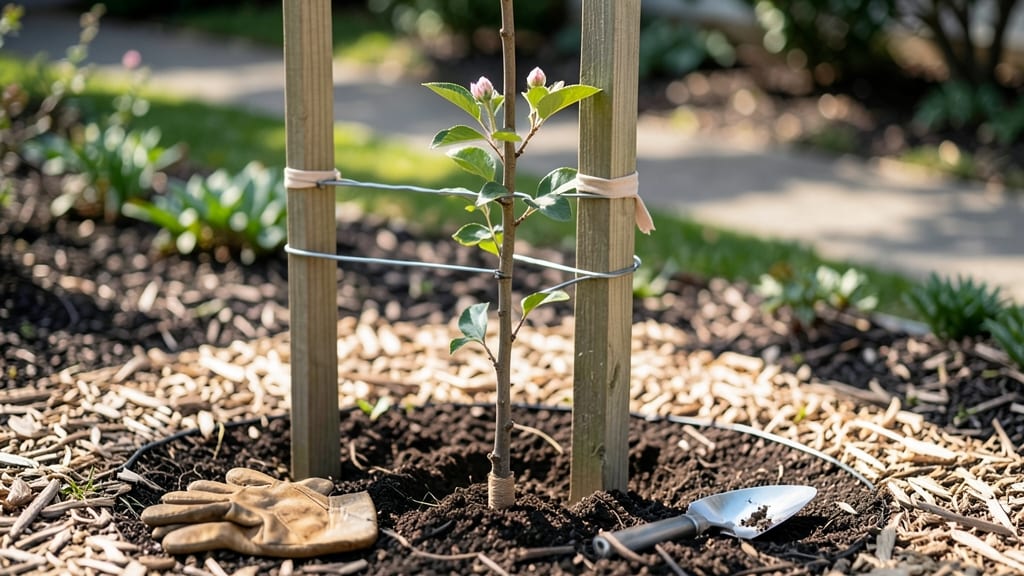
Tree stake wire prevents young trees from flopping like a toddler learning to stand—it’s the bendable secret to straight, sturdy growth. 🌳 I’ve used it to save wind-whipped saplings and give leggy plants the support they need without strangling their trunks.
The right wire keeps trees upright while letting them grow naturally, unlike stiff wooden stakes that can damage bark over time.
You’ll need 1/8-inch galvanized wire (the kind that bends easily), a few T-posts or stakes, and some soft tree wrap to protect tender bark. The key is flexibility—wire that’s too stiff can cut into the trunk, while soft wire won’t hold the tree upright.
Install it at a 45-degree angle from the stake to the trunk, looping gently to avoid pressure points.
When done right, your tree will grow straight and strong, with no scarring or stress marks. The wire stays in place for 1-2 seasons as the tree establishes its root system, then comes out before it outgrows its support.
Think of it as training wheels for your trees—temporary but essential for long-term health.
For windy areas, add a second wire at the base for extra stability, and always check the wrap monthly to ensure no rubbing. Over-tightening is the #1 mistake—your goal is support, not a straightjacket. With this method, even the wobbliest young tree will stand tall.
📚 In This Guide
- What you need
- Instructions
- Tips and common mistakes
- Wrapping up and next steps
What you need
- ● Tree stake wire – 10-15 feet per tree (choose galvanized or coated wire for durability, ~1/8-inch to 3/16-inch diameter).
- ● Tree stakes – 2 per tree (4-6 feet tall, 2x2-inch or 2x3-inch pressure-treated wood or sturdy plastic).
- ● Soft tree ties – 2-4 per tree (wide, stretchy fabric or rubber ties to protect bark).
- ● Mallet or hammer – For driving stakes into the ground.
- ● Measuring tape – To ensure proper spacing and height.
- ● Gloves – Protect your hands from wire and rough bark.
- ● Wire cutters – For clean, precise cuts.
- ● Pliers – To bend or twist wire without fraying.
- ● Staple gun – To secure wire loops at the top (if not using ties).
- ● Ground anchor stakes – For extra stability in windy areas.
- ● Spray paint – To mark stake placement for alignment.
How to use tree stake wire for strong, straight tree growth
Here's the simple method I use to support young trees without damaging their trunks.
🪴 Step 1: Choose the Right Wire and Stakes
Select tree stake wire that's 18-22 gauge—thin enough to bend but strong enough to hold. I prefer galvanized steel because it won't rust quickly, even in wet soil. For each tree, you'll need two 6-foot wooden stakes (or metal ones if your soil is very soft) and about 10 feet of wire per stake.
Drive the stakes 6-12 inches into the soil on opposite sides of the tree trunk, about 1/3 of the way up the tree's height. The stakes should form a V-shape, with the wider end at the base. This creates a stable triangle that won't topple in wind. If your tree is already leaning, position the stakes so the tree grows upright over time.
🌿 Step 2: Attach the Wire Without Damaging the Trunk
Wrap the wire once around each stake at the top, leaving about 2 feet of slack between the stakes. The slack allows the tree to sway slightly—this builds strength naturally. Never wrap the wire directly around the trunk; instead, create a loop that cradles the trunk gently. I like to fold the wire into a figure-eight shape to prevent rubbing.
Here's the thing—too-tight wire can girdle the trunk as it grows. Test the fit by trying to slide your finger between the wire and the trunk. If it's snug but not tight, you're good. Adjust the wire so it holds the tree straight without constricting. For larger trees, use two wires per stake to distribute pressure evenly.
✂️ Step 3: Secure and Monitor Growth Weekly
Tuck the loose ends of the wire under the loops and twist them together to lock the tree in place. Don't pull it too tight—just enough to keep the tree upright. Check the wire every 2-3 weeks as the tree grows. If the wire starts digging into the bark, loosen it immediately. You'll see new growth rings forming where the wire was too tight, and that's a sign you need to adjust.
Remove the wire after 1-2 growing seasons, or when the tree is sturdy enough to stand alone. I know it's tempting to leave it longer, but wire left on too long can scar the trunk and weaken the tree. Look for thickened stems and deep root systems—these are signs your tree is ready for independence. Cut the wire with pliers and pull the stakes out carefully to avoid disturbing roots.
☀️ Step 4: Adjust as the Tree Grows
Young trees grow fast, so check the wire monthly during the first year. If the tree outgrows the stakes, add a third stake in the center to create a tripod shape. This gives even more support without restricting movement. Avoid tying the tree too tightly to the stakes—some sway is good—it helps the roots anchor deeper into the soil.
Watch for wind patterns in your area. If your yard gets strong gusts, bury the stakes deeper (12 inches) and use heavier-duty wire. You'll notice the tree leaning into the wind at first, but with consistent support, it'll grow straight and strong. Remove any wire that starts to rust or kink—corroded metal can weaken over time and fail when you need it most.
Tips & tricks for perfect tree stake wire support
Real talk: Even the best-laid plans can go sideways if you don't nail the basics. Here's what I've learned from years of supporting young trees without damaging their trunks.
Wire Gauge Wisdom: The 18-22 gauge range is your sweet spot—thin enough to bend but strong enough to hold. I've seen people use heavier wire (like 14 gauge) thinking it's better, but it's actually too rigid. It can snap under pressure or cut into the bark if the tree sways too much. For windy areas, opt for galvanized steel wire—it won't rust quickly, even in wet soil, and lasts through multiple growing seasons.
Stake Placement Strategy: When positioning those two 6-foot stakes, think about the tree's natural lean. If it's already leaning, place the stakes so they gently guide it upright over time. The V-shape with wider base creates stability, but here's the thing: don't bury them too shallow (less than 6 inches). I've seen stakes pop right out during storms when buried only 3-4 inches. For soft soil, metal stakes work better—they don't rot like wood and give you more anchoring power.
The Finger Test: This is non-negotiable. After you've created that figure-eight loop around the trunk, slide your finger between the wire and the bark. If it fits snugly but you can still move it slightly, you're golden. Too tight? The wire will girdle the trunk as it grows, creating those ugly growth rings we all want to avoid. For larger trees, I double up with two wires per stake—this distributes pressure evenly and prevents any single point from digging in.
Seasonal Checklist: Your monthly and every-2-3-weeks checks are crucial, but here's what I watch for beyond just tightness. Look at the tree's growth pattern—if new leaves are smaller on one side, that's a sign the wire's restricting circulation. Also, check for rust spots on the wire. Corrosion weakens the metal, and a sudden wind gust could snap it. I keep a small file in my gardening toolkit to smooth out any rough edges that might chafe the bark over time.
Pro Tips for Tree Stake Wire
- Real talk: Even the best-laid plans can go sideways if you don't nail the basics. Here's what I've learned from years...
- Wire Gauge Wisdom: The 18-22 gauge range is your sweet spot—thin enough to bend but strong enough to hold. I've seen ...
- Stake Placement Strategy: When positioning those two 6-foot stakes, think about the tree's natural lean. If it's alre...
Frequently asked questions
Got questions about using tree stake wire to keep your young trees standing tall? You’re not alone! Here are some of the most common concerns—and their straightforward solutions.
What’s the best time of year to install tree stake wire?
The ideal window is late fall or early spring, when trees are dormant but soil is workable. Avoid extreme heat or frost—both can stress roots. If staking a newly planted tree in summer, water deeply first to reduce shock. Pro tip: Wait until the tree is firmly rooted (usually 1–2 years) before removing stakes to avoid scarring the trunk.
Can I reuse tree stake wire from last year?
Reusing wire is fine if it’s still flexible and rust-free. However, check for fraying or kinks that could weaken support. If the wire’s lost its bendability, replace it—old, brittle wire can snap under pressure. Clean it with a wire brush and light oil to extend its lifespan for next season.
What’s a good alternative to tree stake wire?
If wire isn’t your style, try tree ties (fabric or rubber) or soft plastic spiral stakes for gentle support. For heavy trees, burlap-wrapped stakes or tree straps (like those from T-bar systems) work well. Just avoid anything that can girdle the trunk as it grows!
Why is my tree leaning even after staking?
Leaning could mean the stake isn’t deep enough (bury it 1/3 of the tree’s height) or the wire is too loose. Double-check that the wire forms a gentle “V” above the stake (not a tight noose). If the tree’s still wobbly, add a second stake on the opposite side for balance. Windy conditions? Secure the wire to the stake with a few extra twists.
How do I remove tree stake wire without damaging the tree?
Start by loosening the wire gradually over 2–3 weeks to let the tree adjust. Use pruning shears to cut the wire below the stake, then peel it away carefully. If the wire’s embedded in the bark, don’t force it—trim it flush with the trunk instead. Remove stakes entirely once the tree can stand on its own (usually 2–3 years for young trees).
Wrapping up and next steps
Using tree stake wire is a game-changer for supporting young trees, ensuring they grow straight and strong without damage. Whether you're a seasoned gardener or just starting, this bendable reinforcement method is simple, effective, and kind to your plants.
With the right tools and techniques, you’ll give your trees the best chance to thrive.
Ready to take action? Start by gathering your supplies—then roll up your sleeves and help your trees stand tall! 🌱 Your future garden will thank you.