
Flowers
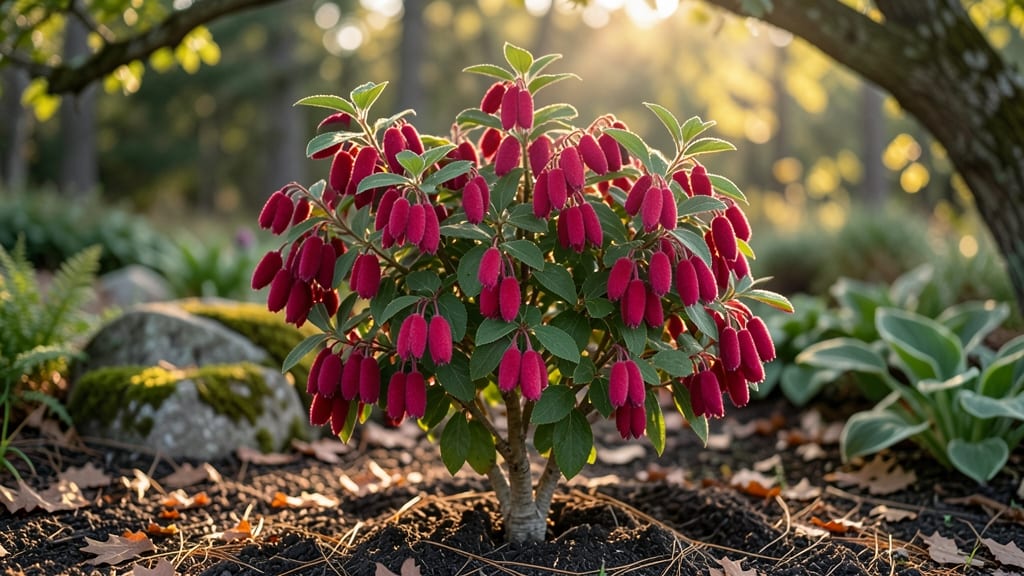
That tree with red fuzzy flowers in spring is the kind of showstopper that makes neighbors pause mid-walk. 🌸 Fothergilla and Washington hawthorn aren't just pretty—they're pollinator magnets that bring bees, butterflies, and hummingbirds to your yard from March through May, then reward you with brilliant fall foliage and sculptural winter branches.
I planted mine as a solitary statement near my front walk, where the flowers catch every passerby's eye. But they also work as natural borders or in small gardens where their 8-12 foot height adds vertical drama without overwhelming the space.
The fuzzy texture creates a soft contrast against the bold red, making them stand out even more.
What makes them special is the year-round interest: spring blooms, summer greenery, fiery fall colors, and winter structure.
Pair them with blue or silver foliage (like lamb's ear or Russian sage) to make the red pop even harder, or let them shine alone as a low-maintenance focal point that thrives in full sun to partial shade.
They're tougher than they look too—drought-tolerant once established, deer-resistant, and happy in most soils. For a garden that looks stunning with almost no effort, these are the trees that deliver season after season.
Nature’s Blooming Mysteries Explained
If you’ve ever marveled at a tree with red fuzzy flowers—like the stunning Cornus florida (flowering dogwood) or Viburnum dentatum—you might wonder why these vibrant blooms appear when they do.
The answer lies in a mix of evolutionary biology, environmental cues, and the tree’s survival strategies. Let’s break down the science behind why these fuzzy, fiery flowers burst onto the scene.
The first reason these trees produce red fuzzy flowers is genetic programming. Most flowering trees follow an internal biological clock tied to daylight and temperature shifts.
In temperate climates, trees like dogwoods and viburnums are deciduous, meaning they’ve evolved to bloom in early spring—just as pollinators (like bees and hummingbirds) re-emerge from hibernation.
Key triggers include:
- Photoperiodism: Shorter winter days and longer spring daylight signal trees to stop dormancy and produce flowers. Scientists call this vernalization—a process where cold exposure (chilling hours) primes the tree to bloom.
- Florigen hormones: Once chilling requirements are met, the tree’s meristem (growth tissue) releases florigen, a protein that kickstarts flower development. Think of it as the tree’s internal “bloom switch.”
- Species-specific rhythms: Some trees, like the Viburnum bodnantense (with its winter-blooming fuzzy red flowers), break the mold by flowering in late winter. Their genes are hardwired to respond to milder cold snaps rather than full spring warmth.
Actionable tip: 🌡️ If your tree isn’t blooming on schedule, check its chilling hours (typically 500–1,000 hours below 45°F). Urban heat islands or microclimates can disrupt this, so mulch heavily in fall to protect roots from temperature swings.
Those bright red, fuzzy petals aren’t just for show—they’re a pollinator magnet. Evolutionary biology tells us that flower color and texture serve critical functions:
| Trait | Why It Matters | Example |
|---|---|---|
| Red color | Bees and hummingbirds see red as a high-energy signal. Red wavelengths indicate nectar rewards, while UV patterns (invisible to us) guide pollinators to the center. | Cornus florida (dogwood) |
| Fuzzy texture | Tiny hairs (trichomes) protect buds from frost and trap heat to speed up nectar production. They also help pollen adhere to pollinators. | Viburnum plicatum (Japanese snowball bush) |
| Early blooming | Trees like these monopolize pollinators before competitors (like lilacs) emerge. It’s a race to secure reproduction! | Hamamelis virginiana (witch hazel, with fuzzy red flowers) |
Pro tip: ✨ To encourage more blooms, plant companion pollinator-friendly species nearby (e.g., heather or salvia). A thriving bee population = more successful pollination for your fuzzy-flowered tree!
While genetics set the stage, weather acts as the director. Three key environmental factors influence when—and if—your tree will flower:
- Temperature thresholds:
Most fuzzy-flowering trees need consistent warmth (above 50°F for several days) to break dormancy. A late frost can shock the buds, causing them to drop. Viburnums, for example, often bloom in waves if temperatures fluctuate.
- Rainfall and humidity:
Dry springs can stress trees, leading to smaller or fewer blooms. Fuzzy flowers rely on humidity to protect pollen—too little, and pollinators may avoid them.
- Sunlight exposure:
Partial shade (like understory light) is ideal for many of these trees. Too much sun can cause buds to desiccate, while too little may delay flowering. Aim for 4–6 hours of direct sun.
Quick fix: 💡 If your tree’s buds look dried out, mist them gently in early spring or use anti-desiccant sprays (like Wilt-Pruf) to retain moisture.
Understanding these triggers helps you nurture your tree’s blooming potential—whether you’re growing a dogwood, viburnum, or another fuzzy-flowered beauty. Next time you see those vibrant clusters, remember: it’s not just luck—it’s centuries of evolutionary fine-tuning!
Revive & Protect Your Blooming Beauty
Your tree with vibrant red fuzzy flowers is a magnet for pollinators, but when issues arise—like sparse blooms, wilting leaves, or unexpected pests—it’s time to take action. Below, we’ll tackle the most common problems with practical, step-by-step fixes and preventive tips to keep your tree thriving year-round. 🌸🐝
Signs: Yellowing leaves, soggy soil, or roots sitting in water.If your tree’s roots are drowning, it’s time to improve drainage and adjust your watering habits.
- 🔥 Stop Watering Immediately – Let the soil dry out for a few days to prevent root rot.
- 🍳 Amend the Soil – Mix in compost or perlite (1 part to 3 parts soil) to loosen heavy clay.
- 👨🍳 Raise the Planting Area – If possible, mound soil slightly around the base to encourage runoff.
- ⏰ Water Deeply but Less Often – Aim for 1-2 inches per week (check with your finger—top inch should be dry before watering).
💡 Pro Tip: If your tree is in a container, ensure it has drainage holes and use a well-draining potting mix.
Signs: Fewer flowers, leggy growth, or pale leaves.
Some fuzzy-flowered trees (like Cornus florida or Hamamelis) need full sun to partial shade, but too little light stunts their beauty.
- 🔥 Move It (If Possible) – Gradually shift the tree to a sunnier spot over a few weeks to avoid shock.
- 🌡️ Supplement with Grow Lights – If relocating isn’t an option, use a LED grow light (12-14 hours/day) in winter.
- 🎯 Prune Strategically – Thin out overcrowded branches to allow more light penetration.
✨ Bonus: Mulch with wood chips to retain soil warmth and encourage root growth.
Signs: Chewed leaves, sticky residue (sap), or black spots on foliage.
Common culprits include aphids, scale insects, or fungal infections—but don’t worry, these fixes work!
| Problem | Solution |
|---|---|
| Aphids/Scale | Spray with neem oil (mix 1 tbsp per quart of water) or introduce ladybugs. |
| Powdery Mildew | Apply baking soda spray (1 tsp baking soda + 1 quart water + drop of soap). |
| Borers | Prune infested branches and treat with beneficial nematodes. |
| Spider Mites | Blast off with water spray or use insecticidal soap. |
💡 Pro Tip: Prevent future infestations by:
- Keeping the area clean (remove fallen leaves).
- Watering at the base (not overhead) to reduce fungal spores.
- Inspecting new plants before bringing them home.
Signs: Tree blooms only once (usually spring) and then goes dormant.
Some fuzzy-flowered trees (like Viburnum or Weigela) can be coaxed into extended blooming with the right care.
- 🔪 Prune After Flowering – Cut back old wood in late winter to encourage new growth (and more blooms!).
- 🥗 Fertilize Lightly – Use a balanced, slow-release fertilizer (10-10-10) in early spring and midsummer.
- 🍎 Feed the Roots – Top-dress with compost or worm castings to boost nutrient uptake.
🎯 Golden Rule: Never prune in fall—this removes next year’s flower buds!
With these targeted fixes, your tree will bounce back stronger—and those irresistible red fuzzy blooms will return in full force. 🌟 Keep an eye out for early signs of stress, and your pollinator paradise will stay in bloom for seasons to come!
Frequently asked questions
What are the most common trees with red fuzzy flowers?
The standout varieties include Fothergilla (with its bottlebrush-like blooms), Washington Hawthorn (Crataegus phaenopyrum), and Hamamelis virginiana (witch hazel). These trees offer both striking visual appeal and excellent pollinator support, making them perfect for gardens seeking year-round interest.
How do I create a stunning visual contrast with red fuzzy flowers?
Pair them with silver or blue foliage plants like lamb's ear or Russian sage to make the red pop dramatically. For a bold statement, plant them near evergreens like boxwood or holly, which provide a dark backdrop that highlights the vibrant blooms throughout all seasons.
Are these trees good for small gardens?
Many varieties like Fothergilla and dwarf viburnums stay between 6-12 feet tall, making them ideal for compact spaces. They work beautifully as focal points, container plants, or even as natural borders along pathways.
Do I need to do anything special to maintain these trees?
These trees are generally low-maintenance, but they do appreciate well-draining soil and 4-6 hours of sunlight daily. Prune in late winter (after flowering) to shape the tree and remove dead branches. Mulch annually to retain moisture and suppress weeds.
Will these trees attract pollinators all season?
While the red fuzzy flowers primarily bloom in spring, many varieties provide seasonal interest beyond just flowers. They offer fall foliage colors, winter structure, and berries or seed heads that continue to support birds and beneficial insects throughout the year.