
Plants
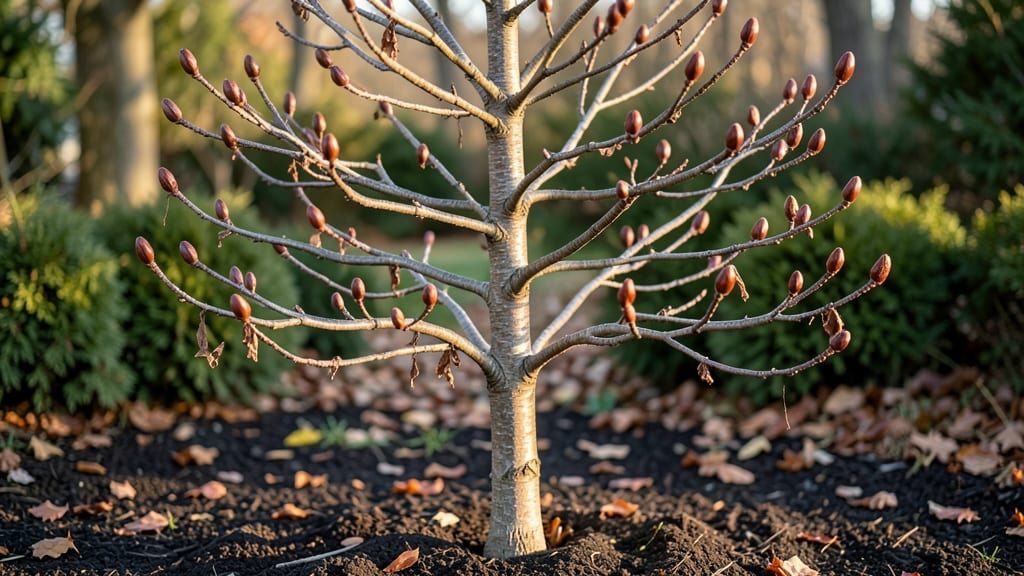
A dogwood tree in winter looks like a graceful skeleton with smooth, silvery-gray bark that develops diamond-shaped patterns as it ages, paired with delicate, zigzagging branches and tiny opposite buds. Its bare limbs form an intricate, layered silhouette that stands out against winter skies.
A dogwood tree's winter beauty lies in its textural contrast—the bark's diamond patterns (called lenticels) become more pronounced with age, turning darker gray as they mature. 🌳 These patterns help distinguish it from similar trees like serviceberry, which has smoother bark.
The branches' zigzag pattern and layered arrangement create a natural, almost artistic structure that gardeners love for winter interest.
The tree's opposite buds (two buds directly across from each other) are another key identifier, setting it apart from trees with alternate bud arrangements. This combination of bark, branches, and bud placement makes dogwoods instantly recognizable even when leafless.
Many landscape designers plant them specifically for their winter silhouette, which adds depth to gardens when other plants are dormant.
💡 In This Article
- Identifying Dogwood Bark Patterns in Winter
- Winter Branch and Silhouette Features for Dogwood Trees
Identifying dogwood bark patterns in winter
The diamond-shaped patterns on dogwood bark are actually specialized pores called lenticels, which allow gas exchange between the tree's inner tissues and the atmosphere.
These lenticels start as small, light-colored bumps when the tree is young but gradually darken to a deep gray as the bark thickens and matures. 🌿 In mature trees, these patterns become more pronounced and form a striking, almost geometric contrast against the smooth, silvery-gray bark.
What makes these patterns unique is their arrangement—typically forming irregular diamond or rectangular shapes that run horizontally along the trunk. Younger dogwood trees have smoother bark with fewer lenticels, while older specimens develop more complex, layered patterns.
This progression helps distinguish dogwoods from similar trees like serviceberry (which has smoother, less patterned bark) or hawthorn (which often features more pronounced ridges and thorns).
The darkening of the lenticels occurs due to a natural process called suberization, where the tree produces cork-like cells that thicken and darken over time.
This adaptation helps protect the tree from environmental stressors like cold and pests. 🔍 For accurate identification, examine the bark at a distance of about 3-5 feet—this perspective highlights the full pattern rather than individual lenticels.
Another distinguishing feature is how the bark peels slightly as the tree grows, creating a subtle layered effect that adds texture. This peeling is more noticeable in flowering dogwoods (Cornus florida) compared to their non-flowering relatives.
The combination of these lenticel patterns, bark color, and peeling creates a visual signature that's unmistakable once you know what to look for.
When comparing dogwood bark to other trees, pay attention to these key differences:
- Serviceberry: Smoother bark with fewer patterns, often developing horizontal lines but lacking the diamond shapes
- Hawthorn: More pronounced ridges and often thorny branches, with bark that appears more cracked
- Birch: Exfoliating bark that peels in horizontal strips rather than forming diamond patterns
The bark's winter appearance serves a functional purpose too—its smooth texture helps snow and ice slide off more easily, reducing branch damage during winter storms. This adaptation explains why dogwoods often retain their branches better than some other deciduous trees during harsh winters. 💫