
Plants
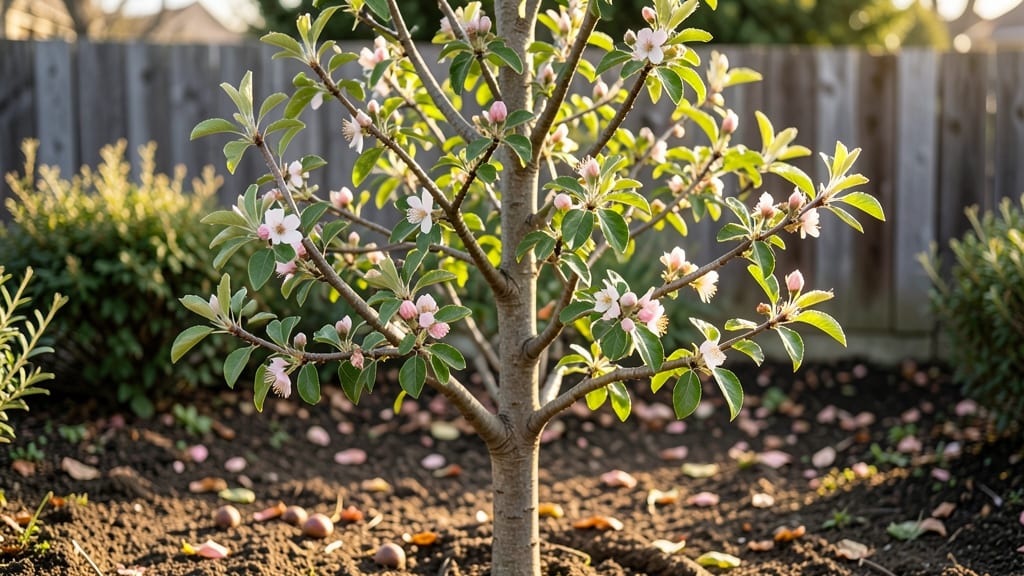
A nectarine tree looks like a peach tree with smooth, hairless skin and slightly smaller fruit. Its leaves are dark green, oval-shaped with serrated edges, while the bark is gray-brown with distinctive horizontal lines. Mature trees reach 15-25 feet tall with a rounded shape and produce white spring flowers similar to peach blossoms.
A nectarine tree's most striking feature is its smooth, velvety skin—unlike peaches, which have fuzzy peach fuzz. 🌳 The leaves are slightly smaller than peach tree leaves, with a glossier finish that reflects sunlight beautifully.
Young trees develop a more upright growth habit before maturing into their classic rounded shape, which makes them easier to spot in orchards or home gardens.
The bark's horizontal lenticels (those little raised lines) become more pronounced as the tree ages, giving it a textured appearance that's easy to identify at a glance.
What sets nectarine trees apart visually is their fruit development pattern. While peaches often grow in clusters, nectarines tend to have single or paired fruits along the branches, which can help distinguish them during the growing season.
The white spring blossoms appear identical to peach flowers, so you'll need to look closer at the leaves and fruit to confirm the variety.
💡 In This Article
- Nectarine Tree vs Peach Tree: Key Visual Differences
- Identifying Young vs Mature Nectarine Trees by Growth Stages
Nectarine tree vs peach tree: key visual differences
The most obvious distinction between nectarine and peach trees lies in their fruit's surface texture. Nectarines have completely smooth skin—no peach fuzz—because they lack the tiny hairs that cover peaches. This smoothness comes from a recessive genetic trait that prevents hair follicle development on the fruit's epidermis.
Under magnification, you'd see nectarine skin appears almost velvety to the touch, while peaches feel slightly rough due to those microscopic hairs.
Leaf shape provides another clue: nectarine leaves are typically 1-3 inches shorter than peach leaves, measuring about 2-4 inches long with a slightly more pointed tip. The serrated edges are finer and more regular, resembling a saw blade with 30-40 teeth per inch.
When crushed, nectarine leaves release a faint almond scent due to their higher cyanogenic glycoside content—a subtle difference from peach leaves, which have a milder aroma. The bark also differs: peach tree bark develops deeper furrows as it ages, while nectarine bark maintains smoother, more horizontal lenticel patterns.
Growth habit reveals the biggest structural difference. Nectarine trees often grow 10-20% more compactly than peach trees, reaching 15-20 feet at maturity compared to peaches' 20-25 feet. This compactness makes them ideal for smaller orchards.
The blossoms, however, are nearly identical—both produce 1-inch wide white flowers in spring, though nectarine blossoms tend to appear slightly earlier by 3-5 days, giving them a head start in the growing season. 🌸
Fruit arrangement offers another identification trick. Nectarines typically bear their fruit in single-stemmed clusters of 1-3 fruits, while peaches often grow in 2-5 fruit clusters. The stems themselves are thinner in nectarines, measuring about 1/8-inch diameter compared to peaches' 1/4-inch stems.
This difference becomes noticeable when harvesting—nectarine stems snap more easily when ripe, while peach stems require slightly more force.
Color differences appear during fruit development. Young nectarine fruit starts with a light green blush that intensifies to red or yellow as it ripens, while peaches develop a more uniform color change.
The key visual cue? Hold a fruit up to light—nectarine skin shows a semi-translucent quality due to thinner skin layers, while peaches appear slightly opaque from their fuzz.
One advanced trick: examine the fruit's pit shape. Nectarine pits are typically 10-15% smaller than peach pits and have smoother edges. When split open, nectarine pits reveal a shinier, more polished surface due to their different chemical composition.
This pit difference stems from the same genetic mutation that creates smooth skin—it affects the entire fruit's development from the inside out. 🌿