
How To
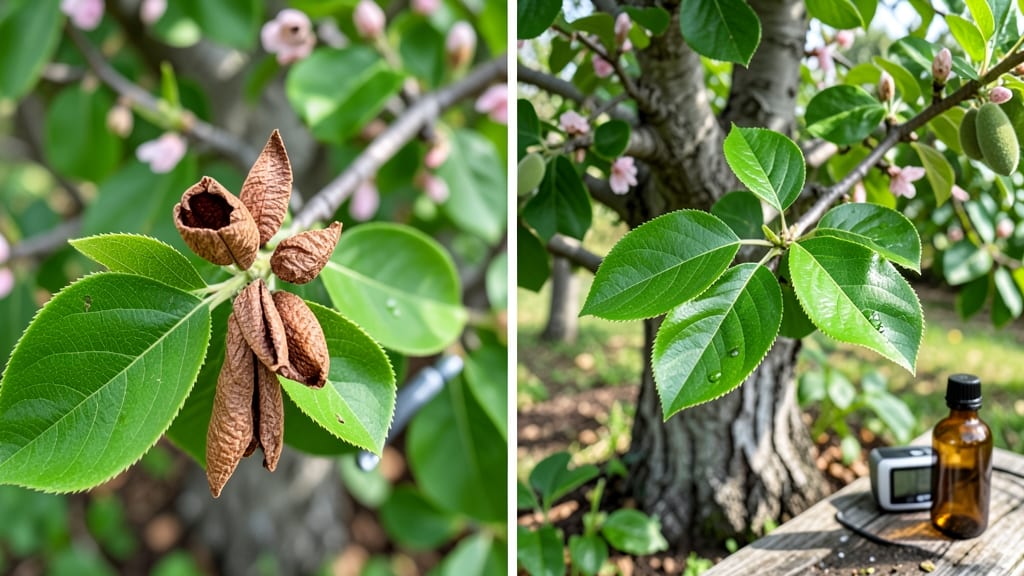
Brown tips on almond tree leaves don't mean your tree is doomed—just that it's sending an SOS. 🌿 I've nursed back more than a few trees with this exact problem, and the fix is simpler than you'd think.
The key is identifying whether it's thirst, salt buildup, pests, or something else before the damage spreads.
First, check the soil moisture—if it's bone dry, that's your culprit. But if the soil feels damp, look closer: salt buildup from overwatering or poor drainage often leaves those telltale brown edges.
Spider mites are another sneaky cause, hiding on leaf undersides like tiny spies. The good news? All of these have straightforward fixes.
You'll be pruning away damaged leaves, adjusting your watering schedule, and maybe adding a light mulch to protect roots. Within weeks, your tree will bounce back with fresh, vibrant growth. The secret is acting fast—before the problem turns into a full-blown crisis.
Works for both young trees and mature ones, whether you're dealing with a single branch or the whole canopy. Let's get your almond tree looking lush again—no guesswork, just results.
Root Causes Of Leaf Damage
When your almond tree’s leaves start showing brown tips, it’s often a cry for help—whether from environmental stress, nutritional gaps, or hidden threats. Understanding the why behind these symptoms is the first step to restoring your tree’s health.
Below, we break down the most common culprits, backed by science, so you can diagnose and act with confidence.
Almond trees are drought-tolerant, but too much water—especially in heavy or compacted soil—can suffocate roots, leading to oxygen deprivation and nutrient starvation. When roots struggle, leaves react first, developing brown, crispy edges as a sign of hydric stress.
Key signs:
- Yellowing between leaf veins (chlorosis) followed by browning
- Mushy or foul-smelling soil
- Slow growth or wilting despite moist soil
Why it happens:
Excess water displaces oxygen in soil pores, forcing roots to rely on anaerobic (oxygen-free) respiration. This process produces ethanol and toxic compounds, damaging root cells and disrupting water/nutrient uptake. Over time, the tree can’t sustain leaf health, causing tips to brown and curl.
Almond trees thrive in USDA Zones 5–9, but extreme conditions—like heatwaves, cold snaps, or salt buildup—can scorch leaves faster than the tree can recover.
Key triggers:
- Salt burn: Over-fertilizing with synthetic salts (e.g., high-nitrogen fertilizers) or irrigating with brackish water raises soil salinity. Roots absorb excess salts, which disrupt cellular osmosis, causing dehydration and browning.
- Cold damage: Sudden freezes (<32°F) rupture leaf cell membranes, leading to oxidative stress and necrotic (dead) tissue at leaf margins.
- Windburn: High winds dry out leaf edges, creating desiccation (like sunburn for foliage).
Why it happens:
Environmental stressors increase transpiration rates (water loss) while reducing the tree’s ability to absorb moisture. Cells at the leaf edges—being the thinnest and most exposed—suffer first due to plasmolysis (shrinking from water loss). Over time, these cells die, turning brown.
Brown tips often signal a micronutrient imbalance, particularly deficiencies in potassium, calcium, or magnesium. These minerals regulate osmotic pressure, enzyme activity, and cell wall integrity—when they’re missing, leaves lose their ability to retain moisture and nutrients.
Deficiency breakdown:
Nutrient
Symptoms
Why It Causes Browning
Potassium (K)
Brown, scorched tips; curling leaves
Potassium stabilizes cell membranes and regulates water movement. Without it, leaf edges lose turgor pressure, leading to dehydration and necrosis.
Calcium (Ca)
Brown tips with interveinal chlorosis; weak new growth
Calcium strengthens cell walls and aids in signaling pathways. Deficiency disrupts apoplastic transport (movement between cells), causing tips to weaken and brown.
Magnesium (Mg)
Yellowing between veins (chlorosis) progressing to brown
Magnesium is central to chlorophyll production and enzyme function. A deficiency stalls photosynthesis, starving leaves of energy and leading to oxidative damage (browning).
Pro tip: 💡 Test your soil’s pH—deficiencies worsen in alkaline soil (pH >7.5), as nutrients like iron and manganese become locked away.
While brown tips are rarely caused by pests alone, sap-sucking insects (like aphids or spider mites) and fungal infections (e.g., Botrytis or Phytophthora) can weaken leaves, making them more susceptible to browning.
Common culprits:
- Aphids: Inject toxins while feeding, causing leaf curl and stunted growth. Heavy infestations lead to honeydew buildup, which fosters sooty mold—a black fungal layer that blocks sunlight and accelerates browning.
- Spider mites: Their stylet mouthparts pierce cells, triggering oxidative stress and necrotic spots. Leaves may appear bronzed or dusty before browning.
- Fungal pathogens: Botrytis cinerea thrives in humid conditions, causing gray mold with brown, mushy leaf tips. Phytophthora root rot can also restrict water uptake, mimicking drought stress.
Why it happens:
Pests and pathogens disrupt the leaf’s stomatal function (pores that regulate gas/water exchange). This leads to:
- Reduced photosynthesis (less energy for repair)
- Increased transpiration (water loss without replacement)
- Toxin accumulation (from pest saliva or fungal metabolites)
Over time, leaf edges—being the most vulnerable—turn brown as cells collapse from osmotic imbalance.
Next steps: Now that you know the why, the fix depends on the root cause. Stay tuned for our 4-step recovery plan to revive your almond tree’s foliage—without chemicals or guesswork!
Fixing Brown Leaf Tips Fast
Brown tips on your almond tree’s leaves don’t have to mean the end of your tree’s health—with the right approach, you can nurse it back to vibrant green in no time.
Below are targeted solutions based on the most common causes, along with prevention tips to keep your tree thriving long-term. Let’s get your almond tree back to its best!
Cause: Overwatering or underwatering stresses roots, leading to brown, crispy leaf edges. Fix:
- 🔥 Check soil moisture before watering: Stick your finger 2–3 inches deep. If dry, water deeply until moisture reaches 6–8 inches down.
- 👨🍳 Use the “soak-and-dry” method: Water thoroughly 2–3 times per week (adjust for clay vs. sandy soil), then let the topsoil dry slightly between sessions.
- 🥘 Improve drainage: Amend heavy soil with compost or perlite to prevent waterlogging. If your tree is in a pot, ensure it has drainage holes.
💡 Pro Tip: Water early in the morning to reduce evaporation and fungal risks. Avoid wetting leaves to prevent disease.
Cause: Scorching from intense afternoon sun causes leaf edges to brown and crisp. Fix:
- 🌡️ Provide afternoon shade: Use shade cloth (30–50%) or plant sun-loving companions (like lavender or rosemary) nearby to break up harsh rays.
- ✨ Mulch like a pro: Apply 2–4 inches of organic mulch (wood chips, straw) around the base (keep it 6 inches away from the trunk). This keeps roots cool and retains moisture.
- 🎯 Gradual acclimation: If your tree is new to a sunny spot, harden it off over 2–3 weeks by slowly increasing sunlight exposure.
Cause: Spider mites, aphids, or scale insects suck sap, causing leaf tips to brown and curl. Fix:
- 🔪 Blast pests off: Spray leaves with a strong stream of water (early morning) to dislodge mites and aphids.
- 🍳 Natural pesticides:
- Neem oil spray: Mix 1 tbsp neem oil + 1 tsp mild soap + 1 quart water. Spray every 5–7 days until pests vanish.
- Insecticidal soap: Use a store-bought or homemade version (1 tsp castile soap per quart of water) for soft-bodied pests.
- 🌿 Introduce predators: Ladybugs and lacewings eat aphids naturally—buy them online or attract them with dill or fennel plants nearby.
💡 Pro Tip: Prune infested branches and dispose of them in a sealed bag (not your compost!). Avoid chemical pesticides—they can harm pollinators.
Cause: Lack of iron, zinc, or magnesium leads to brown, brittle leaf tips (often with yellowing between veins). Fix:
- 📊 Soil test first: Grab a DIY test kit (or send a sample to a local extension office) to confirm deficiencies.
- 💪 Quick fixes:
- Iron deficiency? Sprinkle iron sulfate or chelated iron around the base and water deeply.
- Zinc/magnesium? Use Epsom salt (1 tbsp per gallon of water) as a foliar spray once a month in growing season.
- General boost? Apply a balanced fertilizer (10-10-10) in early spring, then switch to a low-nitrogen, high-potassium (like 5-10-10) in summer to strengthen leaves.
✨ Prevention: Top-dress with compost every spring to prevent long-term deficiencies.
Cause: Wind, salt spray (near coasts), or extreme temps cause leaf edges to dry out. Fix:
- 🌿 Windbreaks: Plant fast-growing shrubs (like boxwood or privet) on the windward side or install a temporary fence.
- 🧂 Salt damage? If near the coast, flush the soil with fresh water monthly during dry spells. Use mulch to block salt spray.
- 🥶 Frost protection: In cold climates, cover young trees with frost cloth on nights below 28°F. Avoid overhead watering before freezing temps.
Once your almond tree is healthy, lock in its recovery with these habits:
- Water wisely: Deep, infrequent watering > daily light sprinkles.
- Monitor pests: Check undersides of leaves weekly for early signs of infestation.
- Prune properly: Remove only dead/diseased branches in late winter to avoid stress.
- Test soil yearly: Adjust pH (ideal: 6.0–7.5) and nutrients as needed.
- Mulch annually: Refresh mulch in early spring to protect roots.
Remember: Patience is key—some causes (like nutrient deficiencies) take 4–6 weeks to show improvement. Stick with your plan, and your almond tree will be lush and leafy in no time! 🌿💚
Frequently asked questions
Why do almond tree leaves turn brown at the tips first?
Leaf edges are the most vulnerable because they have thinner cell walls and fewer protective layers. When stressed from drought, salt buildup, or pests, these cells lose moisture fastest due to higher transpiration rates. Think of it like how paper burns at the edges first—it’s the weakest point.
Can I save my almond tree if half the leaves have brown tips?
Yes! Act fast by pruning the damaged leaves to redirect energy to healthy growth. Focus on fixing the root cause (watering, nutrients, or pests) within 2-3 weeks. Most trees recover fully if the roots and trunk remain strong. Just avoid pruning during extreme heat or drought.
How do I tell if brown tips are from overwatering vs. underwatering?
Check the soil: If it’s bone dry 2+ inches down, it’s underwatering. If soggy or smells foul, it’s overwatering. Another clue—underwatered leaves feel crispy, while overwatered leaves may also yellow or develop fungal spots. Stick your finger in to test!
Will Epsom salt help if my almond tree has brown tips?
Only if magnesium deficiency is the cause! Mix 1 tablespoon Epsom salt per gallon of water and spray leaves monthly during growing season. For iron deficiencies, use chelated iron instead. Always test soil first—Epsom salt won’t help with watering or pest issues.
Are brown tips contagious to other trees?
Not usually—unless the cause is fungal disease (like Botrytis) or spider mites, which can spread. If you suspect pests, quarantine affected branches immediately. For environmental causes (water, sun, nutrients), other trees won’t be at risk unless they share the same conditions.