
How To
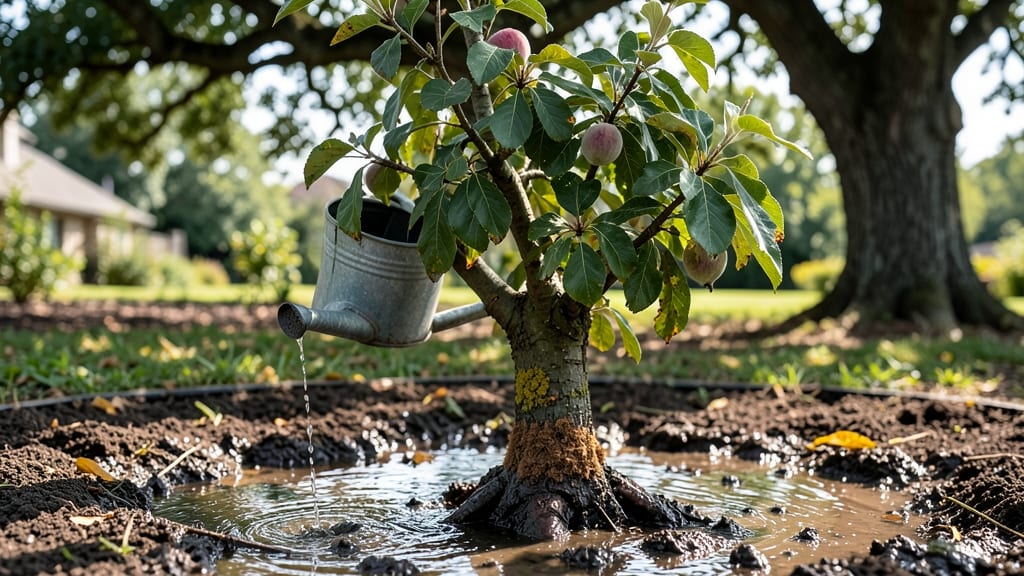
Your peach tree’s drooping branches and yellowing leaves scream one thing: too much water is suffocating the roots. 🌱 I’ve nursed back more than my share of waterlogged peach trees, and these three cuts—literally and figuratively—save them every time.
The fix starts with stopping the flood, then giving roots room to breathe.
First, check the soil: if it’s soggy two inches down, you’ve overdone it. Water only when the top inch feels dry, and space out soakings to every 7-10 days in summer.
Improve drainage by amending clay soil with 3 inches of compost or building a shallow berm around the trunk to redirect water. Mulch with 2-3 inches of wood chips to keep moisture even but not saturated.
Within 2-3 weeks, you’ll see new growth as roots recover. Prune back any dead branches now—they’re energy drains—and thin the canopy to let sunlight hit the center. A healthy peach tree drinks deeply but infrequently, so adjust your watering rhythm to match its needs, not your schedule.
Long-term, test your soil’s drainage annually. Peach trees hate wet feet but love well-draining soil. With these tweaks, your tree will bounce back stronger—and next summer’s harvest will be sweeter than ever. No more guesswork, just consistent care.
Root Struggles From Overwatering
When your peach tree gets too much water, it’s not just a minor inconvenience—it’s a recipe for root stress, disease, and even death. Understanding the science behind why this happens helps you fix the problem before it’s too late.
Here’s why your tree might be drowning in its own soil.
Peach trees thrive in well-draining soil, but compacted or clay-heavy soils act like a sponge, holding onto water instead of letting it escape. When you water too frequently or after heavy rain, the roots suffocate because:
- Oxygen depletion: Roots need oxygen to breathe—just like you! Water fills the soil pores, cutting off airflow, and starving roots of the essential gas they need to absorb nutrients.
- Fungal growth: Stagnant water creates the perfect breeding ground for Phytophthora and Pythium, fungi that rot roots and block water/nutrient uptake. Look for mushy, brown roots as a red flag.
- Salt buildup: Over time, excess water dissolves minerals in the soil, leaving behind a salty crust that burns root tips and disrupts cellular function.
💡 Pro Tip: Test your soil’s drainage by digging a 12-inch hole, filling it with water, and timing how long it takes to drain. If it’s slower than 4–6 hours, amend with compost or coarse sand to improve aeration.
Even the best-intentioned watering can backfire if you’re not mindful of frequency and method. Common irrigation errors include:
- Drip irrigation left running too long: A slow, steady drip is ideal, but if the system malfunctions or you forget to turn it off, roots can sit in water for days.
- Frequent light watering: Short, shallow waterings encourage roots to stay near the surface, where they’re more vulnerable to drying out and drowning during heavy rains.
- Watering at the wrong time: Early morning or late afternoon are best, but watering in the heat of the day causes rapid evaporation—leaving soil soggy longer than intended.
⏰ Actionable Fix: Water deeply but infrequently—aim for 1–1.5 inches per week (including rain) and let the top 2–3 inches of soil dry out between sessions. Use a moisture meter to avoid guesswork.
Peach trees can handle light rain, but when storms dump more than 1 inch in 24 hours, combined with improper soil prep, disaster strikes. Here’s how nature teams up with human error:
- No mulch or improper mulching: Mulch should be 2–3 inches thick and kept 6 inches away from the trunk to prevent water pooling. Too much mulch or piling it against the tree creates a moisture trap.
- Low-lying planting spots: If your tree sits in a natural depression, rainwater pools around the roots, mimicking a swamp. Even a slight slope (1–2%) helps water drain away.
- No rain barriers: In heavy-rain climates, install a swale (a shallow trench) around the tree’s drip line to redirect excess water away from the root zone.
🌡️ Climate Check: If you live in a region with frequent downpours (e.g., Pacific Northwest, Southeast), consider planting peach trees on raised beds or mounds to improve drainage.
Now that you know the root causes (pun intended), the next step is reviving your tree with targeted fixes. But first, check for these warning signs to confirm overwatering is the culprit.
Revive Your Tree With These Fixes
Now that you understand why your peach tree is drowning in too much water, let’s roll up our sleeves and turn things around! The good news? Overwatering is reversible with the right steps.
Below, we’ll map out practical solutions based on the most common causes—so you can act fast and keep your tree thriving.
If your peach tree’s roots are suffocating from soggy soil, drainage is your best friend. Here’s how to tackle it:
🌱 Step 1: Stop Watering Immediately - Why? More water = more rot.
Let the soil dry out before doing anything else. - How? Skip irrigation for 3–5 days (or until the top 2 inches of soil feel dry to the touch). - Pro Tip: 💡 If your tree is in a pot, move it to a shaded spot to slow evaporation and prevent further stress.
🏗️ Step 2: Improve Soil Drainage
Poor drainage is often the root (pun intended) of the problem. Fix it with these tweaks: - Raise the tree’s base: If planted in the ground, mound sand or gravel around the trunk to create a slight elevation (about 6 inches).
This helps water flow away. - Amend the soil: Mix in perlite, coarse sand, or compost to break up compacted clay soil.
Aim for a 50/50 blend of existing soil and amendments. - For potted trees: Repot into a container with drainage holes and a well-draining potting mix (avoid garden soil—it compacts).
🩺 Step 3: Prune Damaged Roots (If Necessary)
If root rot has set in, you may need to trim the affected areas: 1. Gently dig around the base (keep it shallow—peach trees have shallow roots).
- Look for black, mushy, or foul-smelling roots—these are rotten and must be cut away with sterilized pruners.
- Dust healthy roots with fungicide (like copper-based spray) to prevent further infection.
- Replant with fresh soil and water lightly only after a few days.
Overwatering often comes from misjudging frequency or depth. Reset your routine with these rules:
💧 Rule 1: Water Deeply, Less Often
- Goal: Encourage roots to grow deeper (where they’ll find moisture naturally).
- How? Water once a week (or every 10 days in cooler weather) with 1–2 inches of water per session.
Use a soaker hose or drip irrigation to deliver water slowly. - Test for readiness: Stick your finger 2–3 inches into the soil. If it’s dry, water; if damp, wait.
🌡️ Rule 2: Check the Weather
- Rainy days? Skip watering! Peach trees hate soggy feet.
- Hot/dry spells? Increase frequency slightly, but never water on a schedule—always check the soil first.
- Pro Tip: 🌡️ Use a moisture meter for accuracy, especially in clay-heavy soils.
⏰ Rule 3: Water in the Morning
- Why? Morning watering reduces evaporation and gives foliage time to dry before nightfall (preventing fungal issues).
- Avoid: Watering in the evening—wet leaves overnight = fungal party.
Once your tree is back on track, prevent future overwatering with these habits:
| Problem | Solution | Prevention Tip |
|---|---|---|
| Compacted soil | Add organic matter (compost, mulch) | Top-dress with 2–3 inches of mulch annually (keep it 6 inches away from the trunk). |
| Poor drainage | Elevate the base or use raised beds | Plant in mounds or slopes if your yard floods easily. |
| Ignoring soil moisture | Use a moisture meter | Check soil before watering—don’t guess! |
| Overly frequent watering | Stick to a deep-watering schedule | Water less, but deeper—this trains roots to seek water below the surface. |
You’re on the right track if you see:
- New growth (leaves or shoots) after a week or two.
- Firm, white roots when you check the soil (healthy roots stay crisp, not mushy).
- Darker, richer green leaves (a sign of improved hydration).
Remember: Peach trees are resilient! With better drainage, smarter watering, and a little TLC, your tree will bounce back stronger than ever. 🌿💪
Frequently asked questions
How do I tell if my peach tree has too much water?
Look for yellowing leaves that stay soft, drooping branches, or leaves that fall off easily. Check the soil: if it's soggy 2 inches down or has a foul odor, your tree is drowning. Mushy, brown roots are another red flag—these mean root rot has set in.
What should I do if my peach tree is already showing signs of overwatering?
Stop watering immediately and let the soil dry out for 3-5 days. Improve drainage by adding compost or perlite to heavy clay soil, or create a slight mound around the base to redirect water. Prune any dead branches now—they drain energy your tree can't spare.
Can I save a peach tree with root rot from overwatering?
Yes, but act fast! Gently dig around the roots and cut away any black, mushy sections with sterilized pruners. Dust healthy roots with copper fungicide and replant in fresh, well-draining soil. Water lightly only after 3-4 days to avoid reinfecting the roots.
How often should I water my peach tree after fixing overwatering?
Water deeply but infrequently—1-2 inches per week (including rain) is ideal. Let the top 2-3 inches of soil dry out between waterings. Use a moisture meter for accuracy, especially in clay-heavy soils. Morning watering prevents fungal growth from evening dampness.
Will mulch help prevent overwatering in my peach tree?
Yes, but use it correctly! Apply 2-3 inches of wood chips around the base, keeping it 6 inches away from the trunk. This helps regulate soil moisture without trapping excess water. Avoid piling mulch against the trunk—it creates a moisture trap that encourages rot.