
Companion Plants
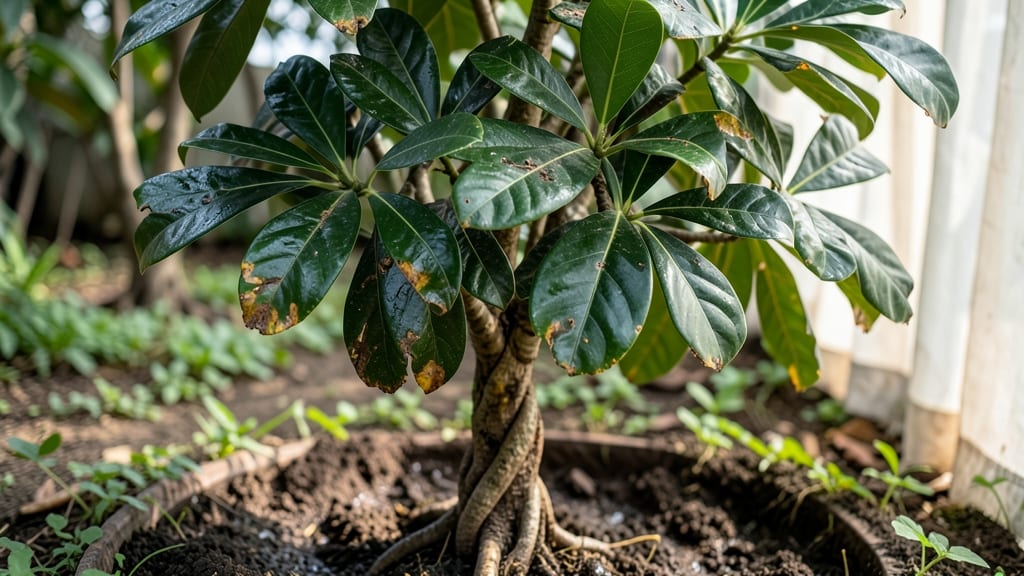
What does an overwatered money tree look like? That sad droop and yellowing leaves scream "too much love"—literally. 🌱 Overwatering turns those glossy green leaves into limp, splotchy messes while roots suffocate underground, and the difference from underwatering is critical if you want that plant to bounce back.
The first clue? Leaves start yellowing at the tips, then spread inward like a sad watercolor stain. Brown, mushy edges or blackened stems mean root rot has set in—your plant’s roots can’t breathe when soggy.
Compare that to underwatering, where leaves crisp up and curl like parchment, and you’ll see the stark difference. Here’s the fix: let the top inch of soil dry completely before watering again, and make sure your pot has drainage holes.
If you’re dealing with root rot, trim the blackened roots and repot in fresh, well-draining soil. Your money tree will thank you with fresh, vibrant growth in just a few weeks. This works for any Pachira aquatica, whether it’s a single-stemmed beauty or a lush, braided variety.
The key is consistency—don’t let the soil stay wet for more than a day or two, and you’ll avoid this heartbreak next time.
Root Causes of Overwatering
Your money tree (Pachira aquatica) might be drowning in affection—literally. Overwatering isn’t just about giving it too much H2O; it’s a cascade of environmental and care-related factors that disrupt its delicate balance.
Let’s break down the science behind why this happens, so you can fix it before your plant’s roots throw a protest.
Money trees thrive in well-draining soil, but if your pot lacks drainage holes or uses heavy, compacted soil (like clay or garden soil), water pools at the roots instead of draining away. Here’s why this is a problem:
- Oxygen starvation: Roots need aeration to respire—just like you need air to breathe. When soil stays soggy, oxygen levels plummet, suffocating roots and triggering anaerobic conditions (bacteria and fungi take over, releasing toxins).
- Root rot: Fungal pathogens like Phytophthora and Pythium flourish in waterlogged soil, breaking down root cell walls. Within days, healthy roots turn mushy and black.
- Nutrient lockout: Excess water dilutes nutrients and leaches them away, leaving your plant malnourished even if you’re fertilizing.
Actionable fix: Upgrade to a pot with drainage holes and mix in perlite, pumice, or orchid bark (20–30% of the soil) to create air pockets. Pro tip: 💡 Test drainage by filling the pot with water—if it doesn’t drain within 10–15 minutes, your setup is too restrictive.
Sticking to a rigid watering schedule (e.g., “every Tuesday”) is a fast track to overwatering. Money trees are drought-tolerant and signal distress before leaves yellow—if you’re not paying attention.
- Topsoil dryness ≠ root zone dryness: The surface may feel dry, but the lower roots could still be waterlogged. Stick your finger 2–3 inches deep; if it’s damp, wait.
- Seasonal needs shift: Winter slows metabolism—roots absorb water 50% slower than in summer. Yet many gardeners water just as heavily, drowning the plant.
- Humidity and temperature: High humidity (e.g., bathrooms, kitchens) or cold drafts reduce evaporation, keeping soil wet longer. A money tree in a steamy bathroom may need water half as often as one in a dry living room.
Actionable fix: Switch to the finger test (check moisture weekly) and adjust for your environment. 🌡️ Pro move: Use a moisture meter—it removes guesswork and saves your plant.
Not all pots are created equal. Terracotta breathes (evaporates moisture), while plastic or glazed ceramic act like a green sauna, trapping humidity and slowing drainage.
| Pot Material | Moisture Retention | Risk Level |
|---|---|---|
| Plastic | High (retains 90%+ humidity) | ⚠️⚠️⚠️ (Worst for overwatering) |
| Glazed Ceramic | Moderate-High (sealed surface) | ⚠️⚠️ (Use only with drainage holes) |
| Unglazed Terracotta | Low (porous, evaporates fast) | ✅ (Best for money trees) |
| Coconut Fiber Pots | Moderate (biodegradable, breathable) | ✅ (Great for humidity control) |
Actionable fix: If your money tree is in a plastic or glazed pot, repot it immediately into terracotta or a breathable fabric pot. 🔥 Bonus: Elevate the pot on a saucer with pebbles to improve airflow underneath.
Even with perfect watering habits, your money tree’s environment can sabotage its health by altering how it processes moisture.
- Low light + high humidity: In dim conditions, photosynthesis slows, so the plant holds onto water longer to survive. Combine this with humid air (e.g., near a shower), and the soil stays saturated for weeks.
- Cold temperatures: Below 60°F (15°C), root activity nearly halts. Yet many people water as usual, leading to chilled, waterlogged roots that rot faster.
- No airflow: Stagnant air (like in a closed terrarium or crowded shelf) traps moisture around leaves and soil, creating a microclimate that mimics a swamp.
Actionable fix: Move your money tree to bright, indirect light (e.g., near an east-facing window) and ensure air circulation with a small fan (set to low). ⏰ Winter hack: Reduce watering by 50% if temps drop below 65°F (18°C).
Overwatering is rarely just about “giving too much water”—it’s usually a mix of poor drainage, ignorance of plant signals, and environmental mismatches. Now that you know the science, you can diagnose and fix the real issues before your money tree stages an intervention.
How to Fix Your Money Tree’s Water Woes
Your money tree (Pachira aquatica) may be sending SOS signals, but don’t panic—overwatering is reversible with the right care. Below, we’ll break down the fixes by cause, so you can revive your plant and keep it thriving. Prevention tips included!
Signs: Yellowing leaves, mushy stems, foul-smelling soil, or roots that feel slimy or black.
Fix It:
- 🔥 Remove the Plant Gently Carefully take the money tree out of its pot and inspect the roots. Healthy roots are firm and white; rotten roots are brown, mushy, or smell bad.
- 🍳 Trim the Damaged Roots Use sterilized scissors or pruning shears to snip off any mushy or blackened roots. Cut back to clean, firm tissue—this helps prevent further rot.
- 👨🍳 Repot in Fresh, Well-Draining Soil Choose a pot with drainage holes (if not already present) and fill it with a cactus or succulent mix blended with perlite or orchid bark for aeration. Avoid heavy garden soil—it retains too much moisture.
- ⏰ Let It Dry Out Before Watering Again Wait 5–7 days before watering to ensure excess moisture evaporates. Stick your finger in the soil—if the top 2 inches are dry, it’s time to water lightly.
💡 Pro Tip: If repotting stresses the plant, mist the leaves lightly with water to reduce shock while it recovers.
Signs: Yellowing leaves (especially lower ones), but roots look healthy and firm.
Fix It:
- 🔪 Prune the Damaged Foliage Snip off yellow or brown leaves with clean scissors. This redirects energy to new growth.
- 🌡️ Adjust Your Watering Schedule Money trees prefer dry soil between waterings. Water only when the top 1–2 inches of soil are bone-dry (test with your finger!). Reduce frequency in winter—these plants slow down in cooler months.
- ✨ Improve Airflow Overwatering often pairs with poor airflow, which traps humidity. Move your plant to a bright, indirect spot (like an east or north-facing window) and avoid crowding with other plants.
💡 Pro Tip: Group plants together strategically—just ensure they’re not touching. This mimics their tropical habitat but prevents fungal issues from excess moisture.
Signs: Soil stays wet for days, leaves wilt despite watering, or new growth is stunted.
Fix It:
- 🍳 Fluff Up the Soil Gently loosen the top layer of soil with a chopstick or small fork to improve aeration. Avoid disturbing roots deeply.
- 🔥 Switch to a Lighter Potting Mix If your current soil is dense (like garden soil or peat-heavy mixes), amend it with perlite, pumice, or coconut coir (20–30% of the mix). This helps water drain faster.
- 👨🍳 Use a Self-Watering Hack (Optional) For forgetful plant parents, try a wicking system: Place a terracotta pot with drainage holes inside a saucer filled with water. The plant draws up moisture as needed—no soggy soil!
💡 Pro Tip: Terracotta pots dry out faster than plastic, but they can crack in freezing temps. If you live in a cold climate, use them indoors or bring them inside during winter.
If your money tree is drooping, losing leaves, or smells like rot, act fast: 1. 🍃 Propagate Healthy Cuttings Trim a 4–6 inch stem with at least 2–3 nodes (bumps where leaves grow).
Let it dry for 1–2 hours, then place it in water or moist perlite. Roots should sprout in 2–4 weeks.
- 🌱 Start Fresh with a New Pot While the cuttings root, repot the remaining healthy parts in fresh, dry soil. Keep the environment humid (use a plastic bag over the pot for a mini greenhouse) and avoid watering for 3 days.
- 💡 Pro Tip: Money trees are resilient! Even if you lose the main plant, propagations are easy—just keep the cuttings in bright, indirect light until they root.
🎯 Prevention Checklist for Future Growth:
- Water: Only when top 2 inches of soil are dry (less in winter).
- Soil: Use a fast-draining mix (cactus soil + perlite).
- Pot: Always choose one with drainage holes.
- Location: Bright, indirect light (no direct sun).
- Humidity: Mist occasionally or use a pebble tray (but avoid soggy trays).
With these steps, your money tree will bounce back—and you’ll avoid future watering mistakes. Happy planting! 🌱💚
Frequently asked questions
How can I tell if my money tree is overwatered vs. underwatered?
Overwatered money trees show yellowing leaves (starting at the tips), mushy stems, and a foul smell from the soil. Roots may appear black or slimy. Underwatered plants, however, have crispy, brown leaf edges and soil that pulls away from the pot edges. The key difference? Overwatered leaves feel soft and limp, while underwatered leaves feel dry and papery.
Why do my money tree’s leaves turn yellow after watering?
Yellowing leaves after watering usually mean root rot from overwatering. The excess moisture suffocates roots, preventing nutrient uptake. Check the soil: if it stays wet for more than 24 hours or smells sour, you’re overdoing it. Let the top 2 inches of soil dry completely before watering again, and ensure your pot has drainage holes.
Can I save a money tree with root rot?
Yes! First, remove the plant from its pot and trim away all black, mushy roots with sterilized scissors. Repot in fresh, well-draining soil (mix cactus soil with perlite) and avoid watering for 5–7 days. Keep the plant in bright, indirect light and maintain high humidity (like a plastic bag over the pot) while it recovers. Most money trees bounce back within 4–6 weeks.
How often should I water my money tree in winter?
Reduce watering to every 3–4 weeks in winter, as growth slows dramatically. Stick your finger 2–3 inches deep into the soil—if it’s damp, wait longer. Money trees are drought-tolerant, and overwatering in winter is a common mistake. Place the pot on a saucer with pebbles to improve drainage and prevent waterlogging.
Will my money tree recover if I stop overwatering?
Money trees are resilient. Once you adjust to watering only when the top 2 inches of soil are dry and improve drainage, new growth should appear within 2–4 weeks. Prune any yellow or damaged leaves to redirect energy. With proper care, your plant can fully recover—just be patient and consistent.