
Trees
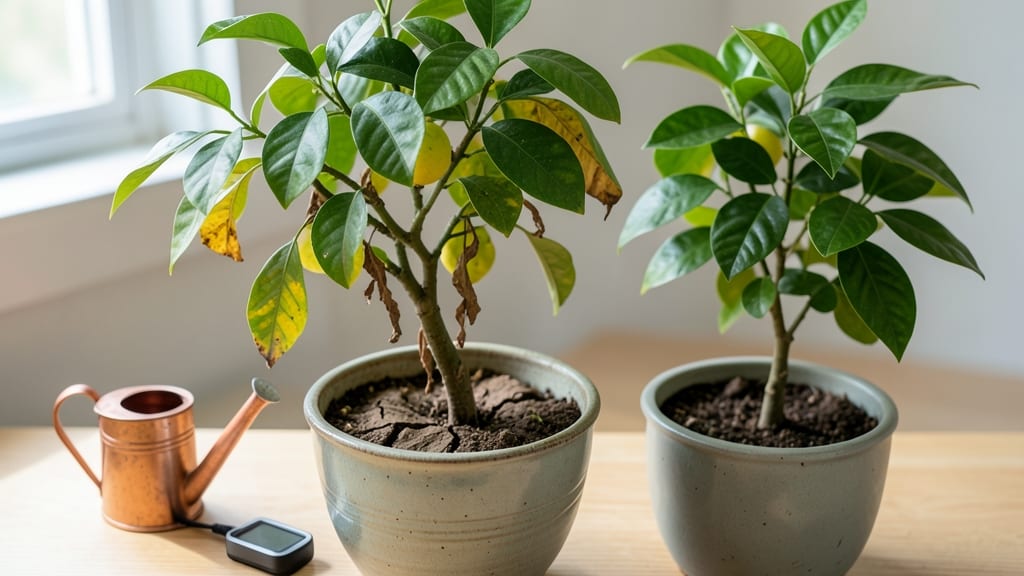
Your indoor lemon tree losing leaves is usually a cry for help—not a death sentence. 🌿 The good news? Most cases are fixable with simple adjustments, and I’ve helped dozens of these citrus trees bounce back to their vibrant, fragrant selves.
The key is identifying the exact stressor: too much water, not enough light, or maybe those pesky spider mites hiding on the undersides of leaves.
Start by checking the soil—if it’s soggy, you’re overwatering; if it’s bone-dry, you’re underwatering. Lemon trees hate wet feet but also need consistent moisture. Next, move it closer to a bright window (south-facing is ideal) and wipe the leaves with a damp cloth to remove dust and pests.
A quick inspection for yellowing or crispy edges will tell you if it’s thirst, sunburn, or something more serious like nutrient deficiency.
Within a week of adjusting care, you’ll see new growth pushing through. I’ve revived trees that looked hopeless with just these tweaks—no fancy fertilizers or expensive treatments needed.
The secret? Consistency: stick to a watering schedule, keep the air humid (a pebble tray helps), and avoid drafts or sudden temperature swings.
If the leaves keep falling despite your efforts, it might be time for a closer look—think root rot or a fungal issue. But 90% of the time, it’s just a matter of getting the basics right.
Let’s diagnose your tree’s specific needs so you can enjoy those fragrant blooms and sweet lemons again.
Root Causes of Leaf Drop
If your indoor lemon tree is shedding leaves, it’s often a cry for help—whether from environmental stress, care mistakes, or hidden health issues. Understanding the specific triggers behind the problem is the first step to reviving your citrus companion.
Below, we break down the most common reasons your lemon tree might be losing leaves, complete with science-backed explanations and actionable clues to identify the culprit.
Lemon trees (Citrus × limon) thrive in consistent warmth (ideal range: 65–75°F / 18–24°C). Sudden drafts, cold windowsills, or heating vents can shock the tree, causing it to drop leaves as a survival mechanism. Here’s why:
- Cold Stress: Temperatures below 50°F (10°C) disrupt cellular metabolism, leading to chlorosis (yellowing) and leaf abscission (dropping). The tree prioritizes root and fruit survival over foliage.
- Heat Shock: While lemon trees love warmth, direct sunlight above 90°F (32°C) can scorch leaves, triggering ethylene gas production—a plant hormone that signals leaf shedding.
- Drafts: Cold air from AC units, open windows, or doors forces the tree to expend energy on thermoregulation, diverting resources from leaves.
🔍 How to spot it: Check for yellowing leaves with crisp edges near windows or vents. If the soil feels cold to the touch, that’s your clue.
Lemon trees are semi-tropical and hate soggy roots. Overwatering leads to anaerobic conditions (lack of oxygen in the soil), which suffocates roots and triggers leaf drop. Here’s the science:
- Root Rot: Fungal pathogens like Phytophthora thrive in waterlogged soil, blocking nutrient uptake. The tree sheds leaves to conserve energy.
- Nutrient Starvation: Waterlogged roots can’t absorb oxygen, nitrogen, or phosphorus, causing deficiency symptoms (yellow leaves, stunted growth).
- Salinity Buildup: Overwatering flushes out nutrients but leaves behind salt deposits, which disrupt cellular function and cause leaf scorch.
🔍 How to spot it: Wilting despite wet soil, mushy brown roots, or a foul smell from the pot are red flags. Tap the soil—if it stays clumpy, it’s too wet.
Lemon trees are photoperiod-sensitive, meaning they rely on light for photosynthesis—and stress when deprived or overexposed. Here’s how lighting affects them:
- Insufficient Light: Below 6–8 hours of bright, indirect light, the tree enters a dormancy-like state, shedding leaves to conserve energy. Chlorophyll breaks down, leading to pale, yellow leaves.
- Direct Sunburn: Harsh midday sun (especially south-facing windows) causes oxidative stress, creating brown, crispy patches on leaves. The tree drops damaged foliage to protect itself.
- Artificial Light Deficits: Grow lights below 4,000–6,000 lux won’t replicate natural sunlight, leading to etiolation (weak, leggy growth) and leaf drop.
🔍 How to spot it: Leaves turning yellow only on one side (shady side) or developing white/brown patches (sunburn) are telltale signs.
Lemon trees have shallow, fibrous root systems that despise confinement. When roots become root-bound or disturbed during repotting, the tree sheds leaves as a survival tactic. The science:
- Root Circulation Blockage: Roots growing in circles or pressing against pot walls restrict water and nutrient uptake, triggering leaf abscission.
- Trauma Response: Repotting disrupts mycorrhizal fungi (beneficial soil microbes), causing temporary stress. The tree drops leaves to reduce transpiration (water loss).
- Pot Size Mismatch: Too-large pots retain excess moisture, while too-small pots cause roots to compete for space, both leading to stress.
🔍 How to spot it: Roots circling the pot’s bottom or emerging from drainage holes. New leaves may appear small or deformed after repotting.
Hidden invaders like spider mites, scale insects, or fungal diseases can drain your lemon tree’s vitality, causing leaf drop. Here’s how they wreak havoc:
- Sap-Sucking Pests: Mites and scale insects inject toxic saliva into leaves, disrupting photosynthesis. The tree sheds foliage to limit damage.
- Fungal Infections: Citrus canker or root rot clog stomata (leaf pores), preventing gas exchange. The tree drops infected leaves to contain the spread.
- Bacterial Blight: Xanthomonas bacteria cause oozing lesions, leading to premature leaf drop. The tree sacrifices leaves to protect vital organs.
🔍 How to spot it: Sticky residue (honeydew), tiny webs, or dark spots on leaves. Check the undersides of leaves and stem joints for pests.
💡 Pro Tip: Keep a plant journal to track changes in light, water, or temperature. Sudden leaf drop often correlates with a recent change—your tree’s way of saying, “That didn’t work!”
Revive Your Lemon Tree Fast
Now that you know why your indoor lemon tree is shedding leaves, let’s tackle the fixes—step by step—so you can see those vibrant green leaves return in no time! 🌿💚 The good news?
Most issues are reversible with simple adjustments. Below, we’ve mapped out direct solutions for each common cause, plus prevention tips to keep your tree thriving long-term.
Fix it:
- Check the soil 🌱 – Stick your finger 1-2 inches deep into the soil. If it’s damp, hold off on watering. If it’s bone-dry, it’s time to hydrate.
- Adjust your watering routine 📅 – Lemon trees prefer moderate moisture but hate soggy roots. Water only when the top 1-2 inches of soil are dry (usually every 7-10 days in winter, more frequently in summer).
- Upgrade your pot 🏺 – If your tree is in a container without drainage holes, repot it immediately into one with holes. Use a well-draining potting mix (like a blend of cactus soil, perlite, and peat).
- Let excess water drain 🚰 – After watering, empty the saucer under the pot to prevent root rot.
Prevention tip: 💡 Use a moisture meter to avoid guesswork, or group your lemon tree with other plants to water them all at once.
Fix it:
- Move your tree to indirect sunlight 🌞 – If leaves are bleached or crispy, it’s getting too much direct sun. Shift it to a bright, east-facing window or a spot 6+ feet from a south-facing window.
- Rotate the pot weekly 🌀 – This ensures even light exposure so the tree doesn’t lean or develop uneven browning.
- Supplement with grow lights 💡 – If natural light is lacking, use a full-spectrum LED grow light for 12-14 hours/day (especially in winter).
Prevention tip: ✨ Observe leaf color—healthy lemon tree leaves should be deep green and glossy. Yellowing near the edges? Too much sun. Pale or stretched leaves? Needs more light.
Fix it:
- Keep temps stable 🌡️ – Lemon trees thrive in 65–75°F (18–24°C). Avoid drafts (like AC vents or heaters) and never let temps drop below 50°F (10°C).
- Boost humidity 💦 – If leaves are crispy or curling, your air is too dry. Try:
- Misting leaves (morning-only to prevent fungus).
- Placing the pot on a pebble tray (fill a tray with water and pebbles, set the pot on top).
- Using a humidifier near the tree.
- Avoid cold drafts ❄️ – Keep the tree away from windows in winter (cold glass can shock roots).
Prevention tip: 🌡️ Group plants together to create a microclimate with higher humidity naturally.
Fix it:
- Identify the culprit 🔍 – Check for:
- Spider mites (tiny webs, yellow stippling on leaves).
- Scale insects (brown bumps on stems/leaves).
- Fungal spots (black/yellow patches, often from overwatering).
- Treat pests organically 🍋:
- Spider mites/scale: Wipe leaves with neem oil solution (1 tsp neem oil + 1 quart water + a drop of dish soap). Repeat every 5–7 days.
- Fungus: Prune infected leaves and spray with copper fungicide or a baking soda mix (1 tsp baking soda + 1 quart water + a drop of soap).
- Quarantine the tree 🚫 – Isolate it from other plants until pests/disease are gone.
Prevention tip: 💡 Inspect new leaves weekly—catch pests early before they spread!
Fix it:
- Fertilize in growing season 🌿 – Use a balanced citrus fertilizer (like 6-6-6 or 8-3-9) every 4–6 weeks in spring/summer. Reduce to once every 2 months in fall/winter.
- Check for specific deficiencies 📊:
- Yellow leaves with green veins? → Iron deficiency (use an iron chelate supplement).
- Purple stems? → Phosphorus deficiency (switch to a high-phosphorus fertilizer).
- Flush the soil 🚿 – Once a year, water thoroughly with plain water to prevent salt buildup from fertilizers.
Prevention tip: 💪 Avoid over-fertilizing—more isn’t better! Follow package instructions closely.
Fix it: 1. Repot if roots are crowded 🏺 – If roots are circling the pot or growing out of drainage holes, move to a pot 1–2 inches larger with fresh potting mix.
- Trim damaged roots ✂️ – If roots look mushy or black (signs of rot), snip them off with sterilized scissors before repotting.
- Let it recover 🛌 – After repotting, keep the tree in low light for a week and avoid fertilizing for 4–6 weeks.
Prevention tip: ✨ Repot every 2–3 years or when roots fill the pot to prevent stress.
If your lemon tree is suffering from multiple issues (e.g., overwatering + pests), tackle them one at a time:
- First, adjust watering (let soil dry out).
- Then, treat pests (neem oil spray).
- Finally, fertilize (once the tree shows new growth).
Patience is key! 🌱 With these fixes, you should see new leaves in 4–8 weeks. Keep an eye on your tree’s progress and adjust as needed—your citrusy green friend will be back to its lush self in no time.
Frequently asked questions
Why are my indoor lemon tree leaves turning yellow BEFORE falling?
Yellowing before leaf drop usually signals nutrient deficiency or overwatering. Check the leaves: yellow with green veins? Likely an iron deficiency—use an iron chelate supplement. If the entire leaf yellows, it’s probably too much water causing root stress. Let the soil dry 2 inches deep before watering again.
Is it normal for my lemon tree to lose leaves in winter?
Some leaf drop in winter is normal due to reduced light and growth slowdown, but excessive shedding isn’t. Lemon trees need 6+ hours of bright light daily—supplement with a grow light if natural light drops below 4,000 lux. Keep temps above 55°F (13°C) and reduce watering to every 10-14 days.
How do I know if my lemon tree is overwatered vs. underwatered?
Check the soil and leaves: Overwatered = soggy soil, mushy roots, yellow leaves with brown edges. Underwatered = dry soil, crispy brown edges, wilting despite dry soil. Stick your finger 2 inches deep—if damp, hold off on watering; if dry, it’s thirsty. Lemon trees prefer moderate moisture, not soggy or bone-dry soil.
Can I save my lemon tree if the leaves are already falling heavily?
Yes! Act fast: Stop watering immediately if soil is wet, move to bright indirect light, and check for pests. Prune 25% of healthy leaves to reduce stress. Within 2-4 weeks, new growth should appear if the roots are still healthy. If no improvement after 6 weeks, the tree may be beyond saving.
Will my lemon tree grow new leaves if I fix the problem?
Lemon trees are resilient. Once you correct the issue (light, water, pests), new growth typically appears in 4-8 weeks. Start with lower branches—these are often the first to regrow. Avoid fertilizing until you see new leaves, as fertilizer can stress a recovering tree.