
Propagation
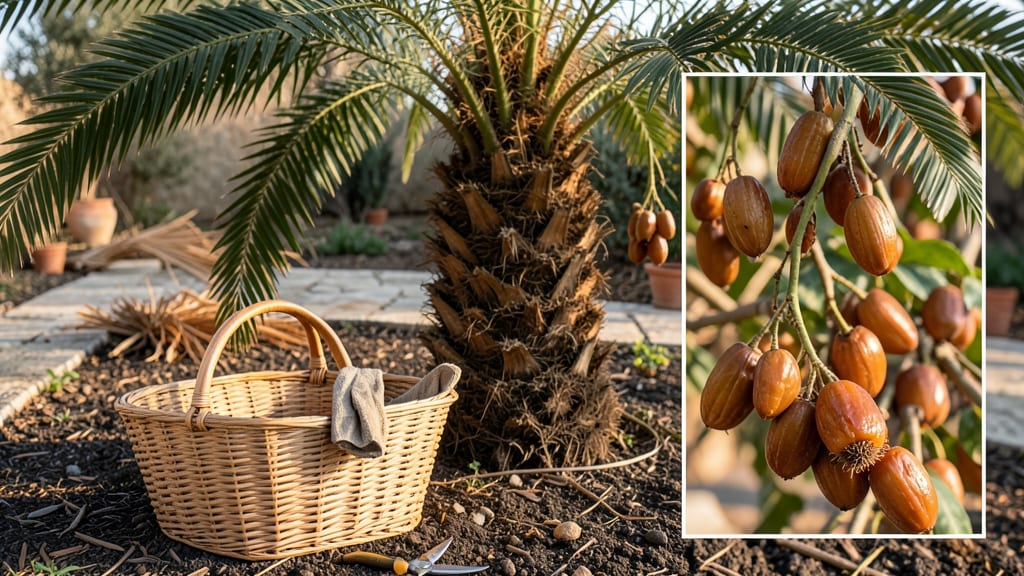
Dates come from the Phoenix dactylifera tree, a hardy palm native to arid regions of the Middle East and North Africa, thriving in hot climates with well-drained soil and minimal water once established.
The Phoenix dactylifera isn't just any palm—it's a desert specialist with deep roots (literally and figuratively) that let it survive extreme heat and drought. 🌵 These trees can live for centuries in their native habitats, growing up to 100 feet tall with fronds that spread 15 feet wide, creating natural shade.
What's fascinating is how their root systems spread wide rather than deep, perfect for absorbing rare desert rains while avoiding competition with other plants.
While they originated in the Middle East, these palms now grow in USDA zones 9-11 worldwide, including parts of California and Arizona. The key to their success? They're incredibly low-maintenance once established—just 1-2 inches of water per week during dry periods keeps them thriving.
This makes them ideal for both commercial orchards and home gardens in suitable climates.
💡 In This Article
- Phoenix Dactylifera Tree Characteristics and Growth Requirements
- How to Grow Date Palms at Home: Step-by-Step Cultivation Guide
Phoenix dactylifera tree characteristics and growth requirements
The Phoenix dactylifera tree is a single-stemmed palm that can reach heights of 65-100 feet in ideal conditions, though most cultivated varieties max out around 80 feet.
What makes this tree truly remarkable is its lifespan—some specimens in the Middle East have lived for over 150 years, with trunks that can grow up to 3 feet in diameter.
The tree's crown, featuring 15-20 fronds that fan out 10-15 feet wide, creates a dense canopy that provides shade and regulates temperature around its base.
This palm's survival strategy is built around its shallow but extensive root system, which spreads horizontally rather than vertically. These roots can extend 20-30 feet outward from the trunk, allowing the tree to quickly absorb rare desert rains while minimizing water loss through transpiration.
The leaves themselves are adapted for water conservation—they have a waxy coating that reduces evaporation, and their silver-blue undersides reflect sunlight away from the tree. The tree's natural defenses also include sharp spines along the frond stalks, which deter animals from browsing on the leaves.
The ideal climate for Phoenix dactylifera falls within USDA hardiness zones 9-11, where temperatures rarely drop below 20°F. In their native habitats, these trees experience 100-120°F days but can survive brief cold snaps down to 15°F if established.
Soil requirements are surprisingly flexible—they thrive in sandy loam with excellent drainage but can also grow in calcareous soils common in desert regions. The key factor is avoiding waterlogged conditions, which can cause root rot.
Once mature, these trees are remarkably drought-tolerant, needing only 1-2 inches of water per week during dry periods.
One of the most fascinating adaptations is the tree's flowering process. Phoenix dactylifera produces separate male and female flowers on the same plant, with female flowers developing into dates only after pollination by wind or insects.
The fruit itself starts as a small, green bud that grows over 4-6 months to become the sweet, caramel-colored date we recognize.
This long maturation period explains why date palms take 5-7 years to produce their first viable crop after planting, though some varieties can bear fruit as early as 3 years under optimal conditions.
In commercial orchards, growers often use drip irrigation to deliver water directly to the roots, mimicking natural desert conditions. This method not only conserves water but also prevents fungal diseases that thrive in moist environments.
The tree's ability to photosynthesize efficiently at high temperatures (up to 110°F) means it continues producing energy even when most plants would be stressed. This efficiency is why date palms have been cultivated for over 6,000 years—they're one of the most resilient agricultural crops in the world.
For those considering growing date palms at home, understanding these botanical traits is crucial. The tree's slow growth rate and specific climate needs mean it's not a quick project, but the rewards—both in terms of fruit and ornamental value—are substantial.
In urban settings, many growers start with container-grown saplings rather than seeds, as saplings mature 3-5 years faster and are less susceptible to pests. The tree's striking appearance, with its feathery fronds and graceful arch, also makes it a popular choice for landscaping in warm climates.