
Size
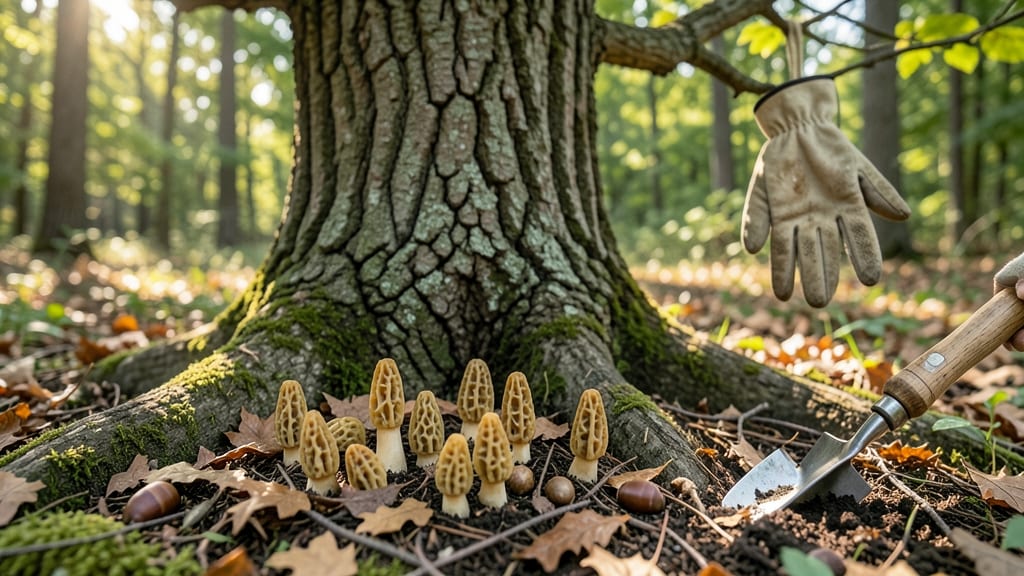
Morel mushrooms grow by specific trees like ash, apple, elm, and sycamore, often near dead or dying wood, though they thrive best under mature hardwoods in moist, well-drained soil with partial shade. Ash trees are their most common host.
Morels have a fascinating relationship with their tree hosts, often forming near decaying wood where nutrients are rich. 🌳 The mushrooms don't grow directly on the trees but instead emerge from the mycelium network beneath the soil, which thrives near specific hardwoods.
Ash trees, in particular, are a favorite because their decaying roots create the perfect microclimate—moist but well-drained—morels crave. I've found that apple and elm trees also produce strong morel patches, especially in regions with cool spring nights and warm days, which trigger their fruiting cycle.
What many foragers don't realize is that morels prefer slightly acidic soil, often found under these hardwoods. The key is looking for trees with a history of damage—broken branches or dead limbs—where the mycelium can establish itself.
This ecological partnership explains why you'll rarely find morels under conifers or young trees; they need the mature, nutrient-rich environment only older hardwoods provide.
💡 In This Article
- Morel Mushroom Tree Hosts: Science Behind Symbiotic Relationships
- Best Trees for Morel Hunting: Forager’s Field Guide
Morel mushroom tree hosts: science behind symbiotic relationships
Morels don't actually grow on trees but instead form a fascinating underground partnership with specific hardwood species. Their mycelium networks thrive near decaying roots and wood, where the breakdown releases nutrients like nitrogen and phosphorus that morels need to fruit.
Ash trees, their most common host, produce compounds during decay that create the ideal pH 5.5-6.5 soil environment morels prefer—slightly acidic but not too sour. This chemical relationship explains why you'll find morels clustering near ash trees with 1-2 inch diameter broken limbs or hollow trunks.
The fruiting process begins when spring temperatures hit 50-60°F after a cold winter, triggering the mycelium to send up those iconic honeycomb caps.
What's remarkable is how morels time their growth with the tree's decay cycle—peak morel season often coincides with when ash trees are shedding their dead leaves, creating the perfect moisture-rich microclimate. 🌱 The mushrooms' spore dispersal happens through rain splashing their caps, which explains why you'll find clusters near tree bases where water collects.
This symbiotic relationship extends beyond ash trees to other hardwoods because they share similar decay patterns. Elm trees, for example, produce a slightly different decay profile that still supports morel growth, though the mushrooms prefer the 10-20 year decay stage rather than fresh cuts.
The key difference between productive and non-productive trees lies in their bark composition—smooth-barked hardwoods like apple trees retain moisture better than rough-barked species, creating ideal conditions for morel mycelium to establish.
What most foragers overlook is the soil's role in this partnership. Morels need well-drained soil to prevent their delicate mycelium from drowning, yet they require consistent moisture to fruit.
This explains why you'll find them in 3-6 inch deep soil layers under partial shade—enough sunlight to warm the ground but not so much that it dries out the mycelium network. The tree's root system acts as a natural moisture regulator, creating the perfect balance for morel growth.
Regional variations come into play here too. In the Midwest, ash trees dominate morel production, while in the Appalachians, you'll find them more commonly near tulip poplars. This regional specificity stems from local tree populations and climate patterns that influence decay rates.
For example, southern states with warmer winters see morels fruiting earlier than northern regions where the cold extends the mycelium's dormant phase.
The science gets even more interesting when you consider morels' role in forest ecology. While they don't directly parasitize trees, their presence indicates a healthy forest ecosystem where decay is happening at the right pace.
The mushrooms help break down complex organic matter, returning nutrients to the soil that would otherwise remain locked in decaying wood. 🌿 This makes them both an indicator species and an active participant in forest regeneration cycles.