
Plants
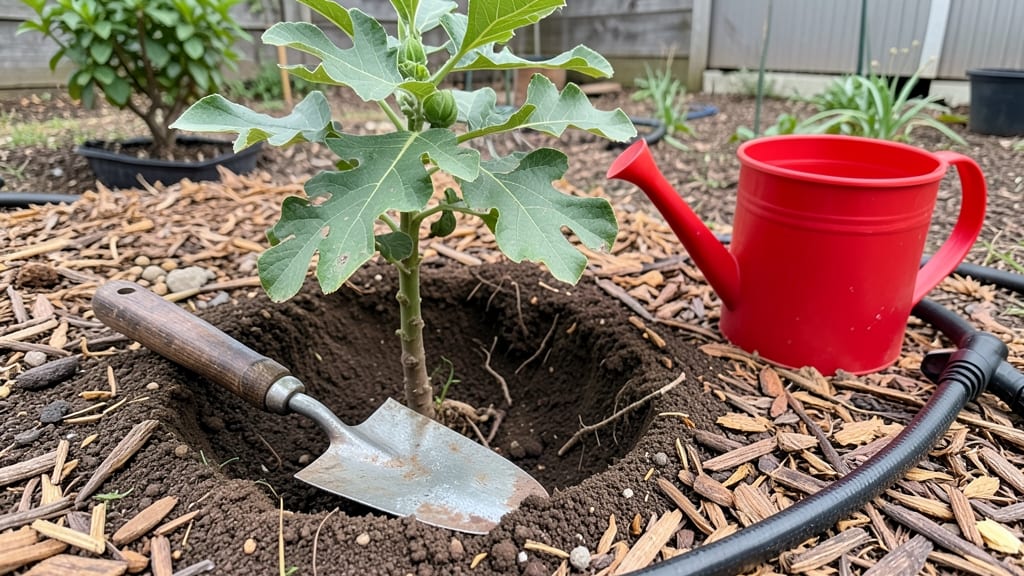
Planting a fig tree in the ground after the last frost date is the key to giving it the strong start it needs to thrive in USDA Zone 6 and warmer climates.
Timing your fig tree planting perfectly can mean the difference between a thriving orchard and a struggling sapling—especially in climates where frost sneaks up unexpectedly.
Most gardeners in Zone 6 wait until April or May, once soil temperatures hit 60°F and the risk of frost has passed.
But in warmer regions like Zones 8–11, fall planting is also an option, as long as you get the tree in the ground at least 6–8 weeks before the first frost.
Below, I’ll break down the exact planting window for your zone, how to prep the soil for maximum root growth, and the one mistake that kills young fig trees faster than anything else.
Best months to plant fig trees in ground by climate Zone
Fig trees thrive when planted at the right time—too early risks frost damage, while waiting too long limits root establishment before summer heat arrives. Since figs are semi-tropical plants, your USDA zone and local frost patterns dictate the perfect window.
In Zone 7, for example, I wait until mid-April when soil temps hit 60°F, while in Zone 11, I plant year-round but avoid monsoon rains in summer.
Your last frost date is your planting deadline's anchor point. Count back 4-6 weeks to prepare soil and roots before transplanting. In Mediterranean climates (like coastal California), fall planting works too—just avoid winter rains that cause root rot.
Meanwhile, in Deep South zones (8-11), I often plant in early spring or late summer to escape extreme heat.
Key factors to consider: soil warmth, frost risk, and summer heat intensity. Fig roots need consistent temps above 60°F to establish. In Zone 9, I plant in March-April or September-October, while in Zone 10, I plant year-round but prioritize fall for cooler root zones.
| USDA Zone | Best Planting Months | Soil Temp Requirement | Regional Notes |
|---|---|---|---|
| 7 | April-May (after last frost) | 60°F+ consistently | Avoid late spring frosts; mulch heavily |
| 8 | March-April or Sept-Oct | 55°F+ minimum | Fall planting ideal for cooler root zones |
| 9 | March-April or Sept-Oct | 60°F+ | Avoid summer planting in extreme heat |
| 10 | Year-round (avoid monsoons) | 65°F+ | Fall planting preferred for cooler roots |
| 11 | Year-round (avoid heavy rains) | 70°F+ | Plant in cooler months (Nov-Feb) |
In Zone 7, I've learned to monitor soil temperatures closely—using a soil thermometer helps track when roots can safely establish. Aim for 60°F+ for 2+ weeks before planting.
For Zone 8-9, I prioritize spring planting (March-April) to give roots time to grow before summer's heat peaks, but fall planting in September-October works too.
Southern gardeners in Zones 10-11 have more flexibility—planting year-round is possible, but I avoid summer monsoons (June-August) that drown roots. Instead, I plant in fall or winter when temps are cooler. In Mediterranean climates, like coastal California, I plant in late winter to escape summer drought stress.
Watch for heatwave warnings in Zones 9-11—newly planted figs can suffer from transplant shock if summer arrives too soon. I always mulch heavily (4-6 inches) to retain moisture and water deeply 2-3 times per week until roots establish (6-8 weeks).
For container planting, timing shifts slightly—I plant 1-2 weeks earlier in spring to account for drier potting mixes. Containers also let me move figs indoors during winter freezes in Zones 7-8. Just ensure pots have drainage holes and use lightweight, fast-draining soil.
Pro tip: Test soil moisture before planting—stick your finger 6 inches deep. If dry, water 24 hours before transplanting to reduce shock. In sandy soils, I add compost to improve water retention, while in clay soils, I mix in perlite for drainage.
Remember, fig trees are forgiving but not indestructible. Even in Zone 11, I avoid planting during hurricane season (June-November)
Soil preparation timeline for fig trees: 6 weeks before planting
Fig trees thrive when planted in well-amended soil that mimics their Mediterranean roots. Six weeks before planting, your focus should be on creating an environment where roots can establish quickly. Poor soil preparation leads to stunted growth or even root rot—two problems no fig grower wants to face.
Start by testing your soil’s pH level. Fig trees prefer a slightly acidic to neutral range of 6.0-7.0. If your soil tests higher or lower, you’ll need to adjust it with lime (for acidity) or sulfur (for alkalinity).
This step is critical because pH affects nutrient availability, and fig trees are sensitive to deficiencies.
- 🌱 Week 6: Test soil pH (target 6.0-7.0)
- 🪴 Week 5: Mix in 3-4 inches of compost
- 💧 Week 4: Improve drainage with sand/perlite if clay-heavy
- ✂️ Week 3: Loosen soil to 12 inches deep
- 🌿 Week 2: Apply organic mulch (3-inch layer)
- 🌡️ Week 1: Warm soil to 60°F+ (use black plastic if needed)
Next, focus on drainage. Fig trees despise soggy roots, so if your soil is heavy clay, mix in coarse sand or perlite to create air pockets. Aim for a 50/50 blend of native soil and amendments—this balance ensures roots get both structure and nutrients without compacting.
Two weeks out, add a 3-inch layer of organic mulch like wood chips or straw around the planting area. Mulch does three things: retains moisture, regulates soil temperature, and suppresses weeds. Just keep mulch 3-4 inches away from the trunk to prevent rot.
Finally, warm the soil to at least 60°F before planting. Fig roots grow best in warm conditions, so if your spring is chilly, use black plastic sheeting for 1-2 weeks to accelerate warming. This mimics the Mediterranean climate figs love.
With these steps, your fig tree will have the perfect foundation to establish strong roots and burst into growth once planted. The extra effort now means fewer headaches later—like wilting leaves or poor fruiting—and more delicious figs in just a few seasons! 🌳