
Pruning
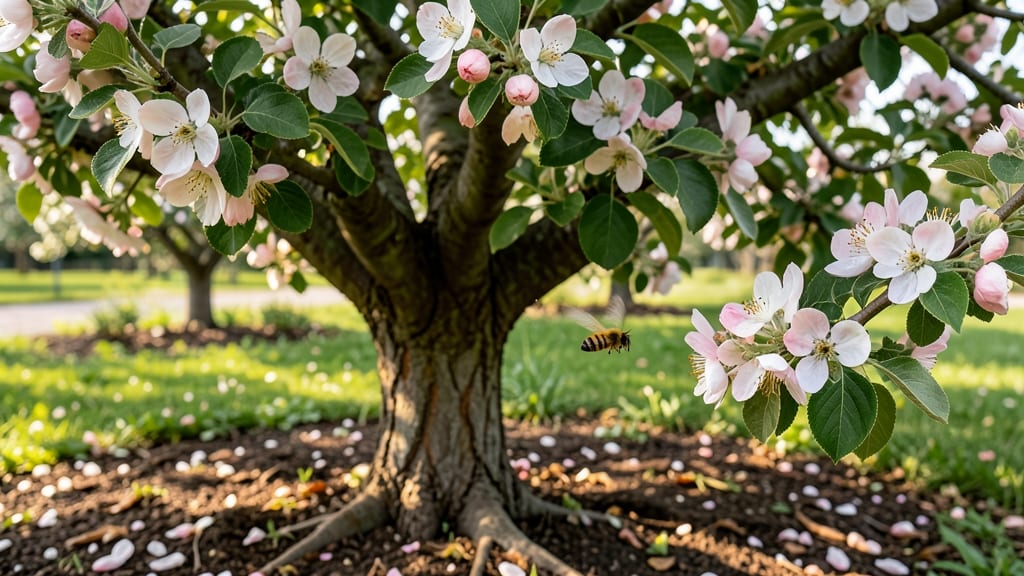
Best pollinating partners for Winesap apple trees to maximize fruit set
Your Winesap apple tree might look stunning during bloom, but without the right pollinating partners, those flowers will turn into a disappointing harvest. Most gardeners unknowingly plant single apple trees, which explains why you're seeing fewer apples than expected.
Winesap is a self-unfruitful variety, meaning it needs cross-pollination from another apple tree to produce fruit. The good news? Planting just one compatible variety can double or triple your harvest.
Apple trees rely on insect pollinators like bees to transfer pollen between flowers, but even with bees buzzing around, genetic compatibility matters. If your Winesap blooms alongside an incompatible variety, you'll still end up with minimal fruit set.
The key is planting a compatible pollinator that blooms at the same time—typically within a 3-day window—to ensure successful fertilization. Let's explore the top pollinating partners that work best with Winesap in various climate zones.
Why does this matter? When pollination fails, you'll notice small, misshapen apples or an alarming number of dropped blossoms. Even if some fruit forms, it may lack the size and quality you expect. By choosing the right pollinating partners, you'll create an optimal cross-pollination environment that leads to larger, healthier apples and a bountiful harvest.
🍎 Best Pollinating Partners for Winesap Apple Trees
| Variety | Bloom Time | Compatibility | Climate Zones | Notes |
|---|---|---|---|---|
| Golden Delicious | Mid-season | Excellent | 3-8 | Reliable pollinator, widely available |
| Fuji | Late-season | Good | 4-9 | Longer storage life, high yield |
| Granny Smith | Mid-season | Good | 5-9 | Tart flavor, disease-resistant |
| Honeycrisp | Mid-season | Excellent | 4-8 | Sweet-tart, high-quality fruit |
| Gala | Early-season | Fair | 3-7 | Early bloom, good for warm climates |
Note: For best results, plant your Winesap and pollinator within 50 feet of each other. If you're in USDA zones 9-11, consider dwarf varieties to save space.
Now that you know the best pollinating partners, let's talk about bloom timing. The 3-day pollination window is critical—this is when your Winesap's flowers are most receptive to pollen.
If you're in Zone 5-7, blooms typically appear in late April to early May, while warmer zones (8-10) see blooms in February to March. Planting a mix of early, mid, and late-season bloomers ensures continuous pollination throughout the flowering period.
If you're wondering whether to plant one or two pollinators, the answer depends on your space. A single compatible variety like Golden Delicious or Honeycrisp will work, but adding a second pollinator (like Fuji) can increase fruit set by 30-50%. For
How to hand-pollinate Winesap trees when bees aren't enough
If your Winesap apple tree is producing fewer fruits than expected, hand-pollination might be your solution. While bees handle most pollination naturally, cooler climates or low bee activity can leave your tree struggling.
The good news? You can mimic nature with simple tools and precise timing to boost your harvest significantly.
Hand-pollination works best when you understand the bloom timing and weather conditions. Winesap trees bloom in early spring, and their pollen needs to transfer to compatible varieties within a 3-day window for successful fertilization.
With the right approach, you can ensure every bloom has a chance to develop into a fruit.
Step-by-Step Guide to Hand-Pollination
- Step 1: Choose the right time—7-9 AM on a clear, dry day when temperatures are between 60-75°F. Avoid windy or rainy conditions.
- Step 2: Gather tools: a soft paintbrush (new, clean), a small bowl of water, and a compatible pollinator tree nearby.
- Step 3: Dip the paintbrush in water to collect pollen grains from the anthers of a blooming Winesap flower. Gently brush the brush over the stamens.
- Step 4: Transfer the pollen to the stigmas of another Winesap flower or a compatible variety (e.g., Golden Delicious or Fuji).
- Step 5: Repeat for 50-100 flowers per tree to maximize fruit set. Focus on healthy blooms with fully opened petals.
- Step 6: Monitor for fruit set in 7-10 days. If flowers drop prematurely, repeat the process or check for pollen viability.
Timing is everything when hand-pollinating. The best window is during the first 3 days of bloom, when pollen is freshest. If you miss this, wait for the next bloom cycle—Winesap trees often produce secondary blooms later in the season.
Just ensure you have a compatible pollinator tree nearby to cross-pollinate effectively.
Troubleshooting low fruit set starts with checking your technique. If you’re not seeing results, re-evaluate your timing—pollen must land on the stigma when it’s receptive. Also, ensure your paintbrush is clean to avoid contaminating pollen.
If flowers still drop, consider thinning excess fruit later to help the tree focus energy on developing larger, healthier apples.
Hand-pollination isn’t just for emergencies—it’s a proactive strategy to guarantee a bountiful harvest, especially in years when bee populations are low. With practice, you’ll become efficient, and your Winesap tree will reward you with juicy, sweet apples that are the envy of the neighborhood.
Once you’ve mastered the technique, share your success with fellow gardeners! A well-pollinated Winesap tree isn’t just a feast for the eyes—it’s a reliable source of homegrown fruit that beats store-bought any day. 🍎