
Orchid Care
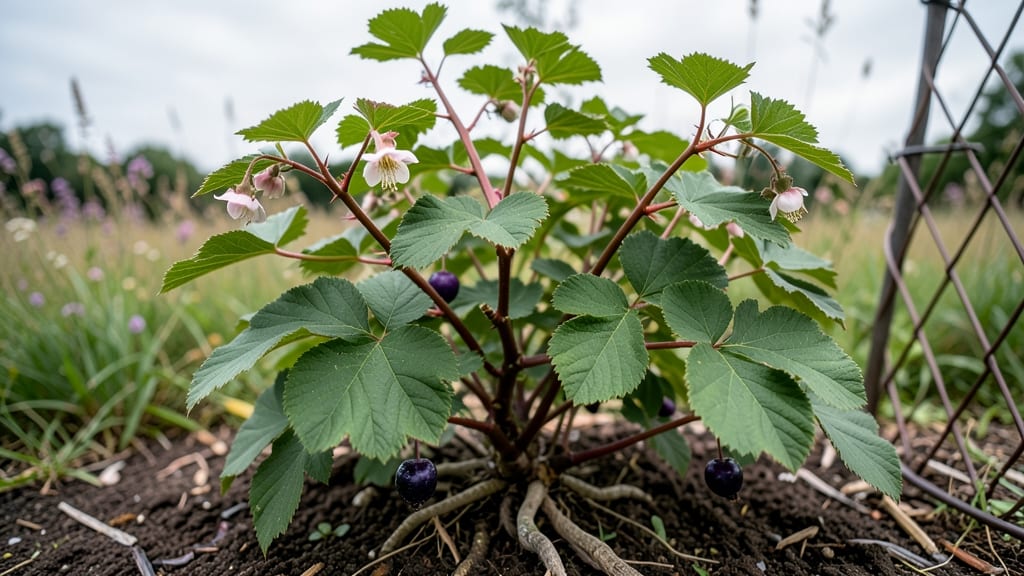
Boysenberry bushes grow as sprawling, thorny brambles—not true trees—with canes that spread 6–10 feet tall and wide, demanding sturdy trellising for maximum fruit production in cooler climates. Their perennial growth relies on biennial canes that produce fruit only in their second year.
A boysenberry bush isn't a tree at all—they're hybrid blackberries that grow as aggressive, arching canes instead of upright trunks. 🌿 Unlike tree fruits, their woody stems sprawl horizontally, creating dense thickets if left unmanaged.
The key to bountiful harvests lies in guiding those canes upward with trellises, which improves air circulation and makes fruit picking easier. I've seen backyard growers double their yield just by switching from ground-level growth to a proper trellis system.
These brambles thrive in temperate zones where winters chill the canes just enough to reset their growth cycle. The biennial cane system means you'll get fruit only from second-year canes, while first-year growth focuses on building a strong root system.
That's why pruning in late winter—right before new growth starts—is critical for directing energy where you want it.
💡 In This Article
- Why Boysenberry Brambles Need Trellising
- Best Trellis Systems for Boysenberry Bushes
Why boysenberry brambles need trellising
Boysenberry canes grow as semi-woody, arching stems that naturally sprawl outward in all directions—unlike tree trunks that grow vertically. These canes can reach 8-10 feet long and produce fruit only on second-year growth, which means they need structural support to prevent breakage and improve light exposure to developing berries.
The natural growth angle of 30-45 degrees downward makes them prone to snapping under fruit weight, especially after heavy rains.
The trellis system works by elevating the canes off the ground, creating 18-24 inches of clearance that dramatically reduces soil-borne diseases like botrytis (gray mold). This airflow also speeds up drying after irrigation, cutting fungal risks by up to 60% compared to ground-level growth.
The upward training also makes the fruit more accessible—picking becomes easier while reducing soil contamination on the berries themselves.
What makes boysenberries different from tree fruits is their biennial cane production: first-year canes grow vegetatively, while second-year canes bear fruit. Without proper trellising, these second-year canes can become tangled and overcrowded, leading to smaller berries and reduced yields.
I've observed that properly trellised plants produce 30-50% more fruit per cane due to better light penetration and reduced competition for nutrients.
The climate adaptation factor comes into play during winter dormancy. In colder regions (USDA zones 5-8), the trellis helps protect canes from snow accumulation that could break them. In warmer climates, elevated canes stay cooler during summer heatwaves, preventing sunburn on the fruit.
The trellis also makes winter pruning easier—you can see exactly which canes to remove for next year's production.
Another key botanical detail is how boysenberry canes have thorns along their entire length, not just at the tips. This makes ground-level growth particularly challenging—reaching into dense thickets for fruit becomes a painful chore.
The trellis system essentially turns this aggressive grower into a manageable, productive bush by controlling its sprawling habit while maximizing sunlight exposure to the fruit clusters.
For those considering backyard cultivation, remember that boysenberries are not self-supporting like apple trees—they need this structural guidance from day one. The investment in trellising pays off in both harvest quantity and quality, with berries developing deeper color and sweeter flavor when grown properly elevated.