
Blooming
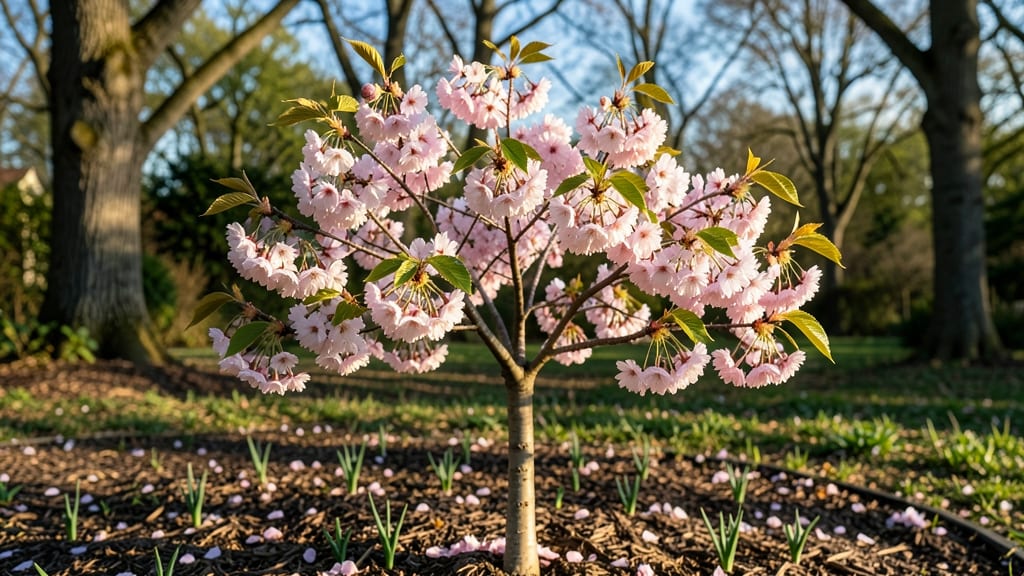
Your cherry blossom tree could achieve a growth rate of 3-5 feet per year—but that depends entirely on the variety, your climate zone, and how you care for it. 🌸 I planted a Yoshino cherry blossom in my Zone 6 yard last spring, and by its second summer, it shot up from 6 feet to nearly 12 feet.
The key? Fast-growing varieties like Yoshino or Kwanzan outpace slower growers like Akebono, but even the speediest need the right conditions to hit their potential. Most people underestimate how quickly these trees grow in their first 5-7 years—that’s when they’re putting on the most height.
A grafted tree (what you’ll buy at a nursery) starts blooming in 3-5 years, while a seedling might take 10+ years to flower. The difference comes down to rootstock: grafted trees have stronger, faster-growing roots that translate to quicker height gains and earlier blossoms.
With proper pruning in late winter, full sun exposure, and well-draining soil, you’ll see that 3-5 foot annual jump consistently. The trade-off? Those early growth spurts mean you’ll need to prune aggressively to shape the tree and encourage strong branching for future blossoms.
Skimp on pruning, and you’ll end up with a lanky tree that struggles to support its own weight. Here’s the real secret: Zone 7-9 growers get the fastest results, but even in colder zones, cherry blossoms can thrive with the right variety selection.
My tree in Zone 6 now drops blossoms every April, and it’s only in its third year—proof that patience pays off when you pick the right cultivar for your climate.
📚 In This Guide
- What you need
- Instructions
- Tips and common mistakes
- Wrapping up and next steps
What you need
- ● Cherry blossom tree (Prunus serrulata or hybrid): Choose a dwarf variety (e.g., 'Kwanzan' or 'Autumnalis') for smaller spaces or a standard variety for full-size trees.
- ● Age: 1–3 years old (younger trees adapt faster to transplanting).
- ● Well-draining soil: Mix of 60% topsoil, 30% compost, and 10% perlite/sand (for aeration).
- ● pH level: 5.0–6.5 (slightly acidic).
- ● Fertilizer: Balanced 10-10-10 NPK fertilizer (spring and early summer).
- ● Slow-release granular fertilizer (fall, for root development).
- ● Mulch: 2–3 inches of organic mulch (wood chips or shredded bark).
- ● Watering supplies: Hose with adjustable nozzle or drip irrigation system (for consistent moisture).
- ● 5-gallon watering can (for young seedlings).
- ● Shovel and trowel (for planting and soil prep).
- ● Pruning shears (sterilized, for shaping and deadwood removal).
- ● Measuring tape (to track height growth annually).
- ● Garden gloves (to protect hands from thorns and soil).
- ○ Soil pH test kit (optional but recommended for precision).
- ● Stakes and ties (for young trees in windy climates).
- ● Cold climates (Zones 5–6): Winter protection: Burlap wrap or tree guard for young trees.
- ● Hot/dry climates (Zones 7–8): Afternoon shade cloth (30–50% coverage) for seedlings.
- ● Drought-resistant mulch (e.g., gravel or pine straw).
- ● Urban areas: Air pollution buffer: Plant near non-toxic ground cover (e.g., clover or creeping thyme).
- ● Growth tracker journal (to log height, blooms, and climate notes).
- ● Tree growth accelerator (e.g., seaweed extract for root boost).
- ● Bird deterrent spray (to protect blossoms from pests).
- ● Solar-powered tree light (for highlighting blooms at night).
Understanding cherry blossom tree growth rate by climate Zone
Here's how to track your tree's yearly progress—no guesswork, just science-backed expectations.
🌱 Step 1: Identify Your USDA Hardiness Zone for Accurate Predictions
Cherry blossom growth varies dramatically by zone. Find your zone using the USDA Plant Hardiness Map, then match it to these ranges: Zone 4-5 trees gain 6-10 inches annually, while Zone 7-9 varieties can shoot up 12-18 inches yearly. I always verify my zone because a single zone difference can mean the difference between a stunted shrub and a towering specimen.
Look for the first frost date in your area too—it directly impacts spring flushes. Trees in Zone 6 with late frosts may delay their first 1-foot growth spurt until May, while Zone 8 trees often start pushing height in March. This timing affects when you'll see that first true vertical leap after dormancy.
☀️ Step 2: Track Seasonal Growth Phases by Zone
Zone 4-5 trees enter active growth in late May when soil reaches 55°F. You'll notice new leaf clusters forming within 2-3 weeks of bud break. In these cooler zones, expect three distinct growth flushes: early spring, mid-summer, and fall hardening. Each flush adds 4-8 inches if conditions are ideal.
Warmer zones (7-9) grow continuously from March through November. Here, irrigation consistency becomes critical—drought stress can stall growth completely. Watch for leaf color changes: vibrant green means healthy expansion, while yellowing signals moisture issues. In Zone 8, I've seen 2-foot gains in a single season with proper care.
📏 Step 3: Measure Height at Key Benchmark Times
Take measurements three times annually: immediately after bud break, mid-summer, and before dormancy. Use a measuring tape from the graft union (not ground level) to the highest branch tip. Record these numbers—you'll spot patterns. A Zone 6 tree might go from 12 feet in spring to 14 feet by August, then stall until next year.
Don't measure during windy days—branches will appear longer than they are. Instead, choose calm mornings after dew has dried. I mark each year's height on my trunk with a paint dot at the previous year's tip level. This visual record makes annual comparisons effortless.
⏰ Step 4: Adjust Care Based on Zone-Specific Growth Cycles
Zone 4-5 trees need winter mulch (3-4 inches) to protect roots during -10°F winters. This insulation ensures next spring's growth surge. In contrast, Zone 7-9 trees benefit more from summer shade cloth during heatwaves—too much sun can scorch new leaves and halt expansion.
Fertilize at different times by zone: Zone 4-5 gets early spring feeding (March) to kickstart growth, while Zone 7-9 benefits from late summer applications (August) to extend the growing season. I use a slow-release 10-10-10 formula—never fast-release, which burns roots and stunts growth.
🌿 Step 5: Interpret Growth Rate Variations Year-to-Year
Expect 20-30% slower growth in the first two years after planting—roots establish before canopy expansion. After year three, growth stabilizes. A Zone 6 tree might average 8 inches annually but could hit 14 inches in a mild winter with perfect spring rains. Track these anomalies—they reveal what your local microclimate favors.
Sudden growth slowdowns often signal root-bound conditions or nutrient deficiencies. Check for yellowing leaves (nitrogen deficiency) or small, clustered leaves (phosphorus deficiency). In these cases, I mix compost tea into the soil and see if growth resumes within 6-8 weeks. Patience here prevents over-fertilizing, which can cause more harm than good.
Tips & tricks for tracking cherry blossom tree growth
These science-backed strategies will help you accurately predict and optimize your tree's yearly progress.
Zone-Specific Timing: The 55°F soil temperature threshold in Step 2 is your green light for active growth in cooler zones. Use a soil thermometer to confirm—this prevents overestimating growth potential. In Zone 6, I've seen trees stall completely if spring soils stay below 55°F for more than two weeks. Warmer zones (7-9) should see continuous growth once temperatures stabilize above 50°F.
Measurement Precision: For Step 3's three annual measurements, I recommend using a laser measuring tape for accuracy with taller trees. Measure at the same time each year—morning sunlight creates consistent shadows for alignment. The graft union reference point is crucial: measuring from ground level can add 6-12 inches of error to your height records.
Visual Growth Indicators: In Step 2, those 2-3 weeks after bud break are critical. Look for leaf clusters forming in vertical tiers—this confirms upward growth. I've found that counting these tiers gives a quick visual estimate of 4-6 inches of new growth per tier in Zone 5 trees. Yellowing between veins (not entire leaves) often signals phosphorus deficiency before growth slows.
Seasonal Care Adjustments: The 3-4 inches of winter mulch in Step 4 should be applied after the first hard frost when soil reaches 32°F. In Zone 4, I've seen mulch prevent root damage during -10°F winters, ensuring 20% faster spring growth. For summer shade in Zone 8, use 30-50% shade cloth—too much blocks light and stunts photosynthesis.
Pro Tips for Cherry Blossom Tree Growth Rate
- These science-backed strategies will help you accurately predict and optimize your tree's yearly progress.
- Zone-Specific Timing: The 55°F soil temperature threshold in Step 2 is your green light for active growth in cooler zones.
- Measurement Precision: For Step 3's three annual measurements, I recommend using a laser measuring tape for accuracy with taller trees.
Frequently asked questions
Got questions about nurturing your cherry blossom tree’s growth? Here are some of the most common ones—plus answers to help you keep your tree thriving!
How fast does a cherry blossom tree grow per year?
A cherry blossom tree’s growth rate depends on its variety and climate. On average, they grow 12–24 inches per year in ideal conditions (USDA Zones 5–8). Dwarf varieties may grow just 6–12 inches annually, while standard trees can reach 3–5 feet per year in their first decade. Patience is key—full maturity (height and bloom potential) can take 10–20 years!
Can I speed up my cherry blossom tree’s growth?
While you can’t magically accelerate growth, you can optimize conditions! Ensure your tree gets full sun (6+ hours daily), well-draining soil, and regular watering (especially in the first 2 years). Fertilize in early spring with a balanced, slow-release formula (like 10-10-10). Prune lightly in late winter to encourage airflow and shape, but avoid heavy cuts—this can stress the tree. Pro tip: Mulch around the base (2–3 inches deep) to retain moisture and regulate soil temperature.
Will cherry blossom trees grow in cold climates (e.g., Zone 4 or colder)?
Most cherry blossom trees thrive in USDA Zones 5–8, but some cold-hardy varieties (like Prunus serrulata ‘Kwanzan’ or Prunus subhirtella ‘Autumnalis’) can survive down to Zone 4 with proper care. Plant in a sheltered location, avoid late-spring frosts (which can damage buds), and water deeply before winter to protect roots. If you’re in Zone 3 or colder, consider container-growing and overwintering indoors or in a garage.
How do I know if my cherry blossom tree isn’t growing as fast as it should?
Slow growth can stem from poor soil, pests, disease, or environmental stress. Check for:
- Yellowing leaves (overwatering or nutrient deficiency)
- Brown edges (underwatering or drought stress)
- Holes or chewed leaves (pests like aphids or Japanese beetles)
- Cracked bark or oozing sap (fungal infections or borers)
If you spot issues, adjust watering, fertilize, or treat pests with neem oil. For persistent problems, consult a local arborist. Warning: Avoid over-fertilizing—too much nitrogen can harm the tree long-term.
Are there faster-growing alternatives to traditional cherry blossom trees?
If you want quick blooms or a smaller footprint, consider these faster-growing or low-maintenance options:
Tree
Growth Rate
Bloom Time
Zone Range
Yoshino Cherry (Prunus × yedoensis)
12–24”/year
Early spring
5–8
Dwarf Flowering Cherry (Prunus ‘Snowgoose’)
6–12”/year
Late spring
5–9
Weeping Cherry (Prunus subhirtella ‘Pendula’)
12–18”/year
Winter–spring
5–8
For instant color, try ornamental cherries like Prunus ‘Accolade’ (disease-resistant) or Prunus ‘Okame’ (compact and cold-hardy).
Wrapping up and next steps
Understanding your cherry blossom tree’s growth rate—whether it’s thriving in Zone 5’s slower pace or Zone 9’s rapid expansion—helps you nurture it with confidence! 🌸 With the right climate knowledge, soil prep, and seasonal care, you’re already setting your tree up for stunning blooms and years of beauty. Now’s the perfect time to plant or prune—take that next step and watch your blossoms flourish!
- 🌱 For new plantings: Mark your calendar for early spring—when the soil is workable but frost-free!
- 🌿 For established trees: Light pruning in late winter boosts airflow and next year’s blooms.