
Trees
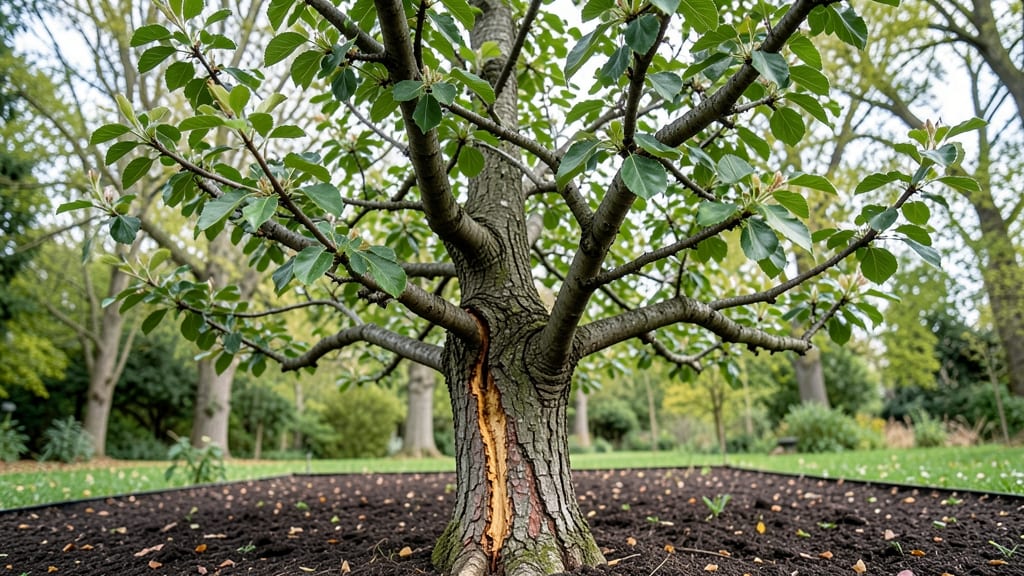
That jagged split in your cherry tree’s bark isn’t just unsightly—it’s a potential safety hazard. 🌳 I’ve seen these deep cracks turn into entry points for pests and rot, threatening the tree’s stability. The good news? You can assess, repair, and prevent further damage before it becomes a major issue.
Most splits happen from age-related wood shrinkage, sudden temperature swings, or heavy fruit loads. Thin bark tears easily, exposing the vulnerable inner layers. If the crack is deep or oozing sap, it’s time to act—otherwise, you might end up with a weakened branch or even a fallen limb during storms.
Here’s what works: clean the wound with a sterilized knife, apply a tree sealant to prevent decay, and wrap the area with protective tape. For severe cases, consult an arborist to avoid pruning mistakes that could stress the tree further.
Prevention starts with proper watering (deep but infrequent) and mulching to stabilize soil moisture. Check your tree every spring for new cracks—early action keeps your cherry tree healthy and standing strong for years.
Root Causes Behind Bark Splits
Understanding why your cherry tree’s bark splits is the first step toward effective repair—and preventing future damage. These cracks often signal deeper issues, from environmental stress to biological weaknesses. Let’s break down the key culprits behind this problem, so you can address them with precision.
Cherry trees, especially young or newly planted ones, are highly sensitive to rapid temperature swings. When bark heats up quickly in sunlight but cools dramatically at night (or during frost), the outer layer expands and contracts unevenly. Over time, this creates stress fractures that deepen into visible splits.
- Why it happens: - The xylem (wood tissue) and phloem (bark tissue) have different thermal expansion rates.
If the bark can’t flex enough, it cracks. - Frost cracks (common in winter) occur when water inside the tree freezes, expands, and forces the bark apart. - Sun scald (summer/early fall) happens when bark warms excessively on sunny sides but stays cold on shaded sides, causing uneven stress.
- Actionable fix:
- Mulch heavily (3–4 inches) around the base to insulate roots and stabilize soil temps.
- Wrap young trees in burlap or tree guard during winter to protect against frost.
- Avoid pruning in late summer/fall, as new growth is more vulnerable to temperature shock.
Both overwatering and drought can weaken a cherry tree’s structural integrity, making it prone to bark splits. The issue stems from imbalanced moisture levels in the wood and bark:
- Why it happens: - Drought stress: When soil dries out, the tree’s vascular system struggles to transport water, causing the wood to shrink.
The rigid bark, unable to shrink at the same rate, cracks. - Overwatering: Excess moisture can lead to root rot or anaerobic conditions, weakening the tree’s ability to support its own weight.
The bark may split as the tree’s internal pressure shifts. - Sudden water changes: Moving a potted cherry tree or altering irrigation patterns without acclimation can trigger splits.
- Actionable fix:
- Water deeply but infrequently (1–2 inches per week in dry climates) to encourage deep root growth.
- Use drip irrigation to maintain consistent moisture levels.
- Monitor soil moisture with a probe—never let it dry out completely or stay soggy.
Cherry trees, particularly tall or top-heavy varieties, are prone to mechanical damage from wind, storms, or even hail. The force can strip bark layers or cause longitudinal splits where the trunk meets major branches.
- Why it happens:
- Wind abrasion: Constant wind rubs bark against rough surfaces (like fences or other trees), creating friction cracks.
- Storm damage: High winds or falling branches can tear bark or split the trunk at weak points (e.g., old pruning cuts).
- Hail impact: Ice pellets can puncture bark, creating entry points for pests/disease and weakening structural integrity.
- Actionable fix:
- Prune strategically to reduce wind resistance—remove crossing branches or deadwood that could act as sails.
- Stake young trees temporarily to prevent swaying in strong winds.
- Install a windbreak (like a lattice fence) if your tree is in an exposed area.
Sometimes, insects or pathogens weaken the bark from the inside out, making splits more likely.
Common offenders include: - Bark beetles (e.g., Scolytus species) bore into the phloem, disrupting nutrient flow. - Fungal infections (like Cryphonectria parasitica, which causes canker disease) rot the bark, reducing elasticity. - Bacterial infections (e.g., Pseudomonas syringae) create oozing cankers that weaken structural support.
- Why it happens:
- Weakened bark lacks tensile strength, so even minor stress (like temperature shifts) can cause splits.
- Girdling roots (roots growing around the trunk) can strangle the tree, leading to bark separation.
- Actionable fix:
- Inspect for pests (look for sawdust-like frass or tiny holes).
- Treat fungal/bacterial issues with copper-based sprays or prune infected branches (sterilize tools with rubbing alcohol).
- Avoid wounding the tree during pruning—make cuts at a 45° angle just outside the branch collar.
Cherry trees, especially fast-growing varieties, can outpace their bark’s ability to expand. Poor pruning (like topping or over-pruning) also leaves jagged wounds that split over time.
- Why it happens:
- Uneven growth: If the trunk grows thicker faster than the bark, the outer layer cracks to accommodate the expansion.
- Improper pruning cuts: Large, rough cuts don’t heal properly, creating stress points that split.
- Removing too much foliage: Sudden defoliation (from pests or heavy pruning) reduces the tree’s ability to photosynthesize and repair bark.
- Actionable fix:
- Prune in late winter/early spring (dormant season) to avoid stressing the tree.
- Use the "three-cut method" for large branches to prevent bark tearing.
- Avoid removing more than 25% of foliage in one season.
Older cherry trees may develop deep splits due to natural aging or internal decay. Even if the tree looks healthy, hidden rot (from past injuries or disease) can compromise its stability.
- Why it happens:
- Heartwood decay: Fungi or bacteria break down the inner wood, leaving the outer bark unsupported.
- Cavity formation: Large splits can widen into cavities, making the tree more prone to windthrow (toppling).
- Root decline: If roots weaken (from compaction, disease, or poor soil), the tree can’t anchor its trunk properly.
- Actionable fix:
- Consult an arborist if splits exceed 1/3 of the trunk’s circumference—the tree may need cabling/bracing.
- Remove severely decayed wood (if safe) to prevent further spread.
- Improve soil drainage with organic matter to support root health.
Pro Tip: 💡 Preventative care is key! Regularly check your cherry tree for early signs of stress (peeling bark, oozing sap, or fungal growth) and address them before splits form. A little maintenance now can save your tree—and your wallet—from costly repairs later!
Fixing and Preventing Tree Bark Damage
When your cherry tree’s bark splits, swift action can save its life—and your yard’s beauty. Below are practical, step-by-step solutions tailored to the most common causes, along with prevention tips to keep your tree strong for years.
🔥 Step 1: Assess the Damage Check if the split is shallow (surface-level) or deep (extending into the trunk). If it’s deep, the tree may need emergency support to prevent further cracking.
🍳 Step 2: Apply a Protective Wrap For shallow splits, use tree wound dressing (like Tanglefoot Tree Wound Pruning Sealer) to seal the crack and prevent pests/disease entry. For deep splits, wrap the area with flexible tree bandage (e.g., TreeFixer or rubber tree wrap) to stabilize the bark.
👨🍳 Step 3: Prune Dead or Damaged Branches Remove any hanging or dead branches that could worsen the split. Use clean, sharp pruners and cut at a 45-degree angle just outside the branch collar.
⏰ Step 4: Monitor and Mulch Keep the tree well-watered (1–2 inches per week) and mulch around the base (2–4 inches deep) to regulate soil temperature and reduce stress.
💡 Prevention Tip:
- Winterize your tree by wrapping the trunk with burlap or tree guard before frost hits.
- Avoid over-fertilizing in late summer/fall, as new growth is more vulnerable to cold damage.
🔥 Step 1: Drain the Soil If the split is from root rot or waterlogged soil, improve drainage by:
- Digging a shallow trench (6–12 inches deep) around the tree to redirect excess water.
- Adding organic matter (compost or peat moss) to heavy clay soil.
🍳 Step 2: Adjust Watering Habits
- Water deeply but less frequently (1–2 times per week, depending on climate).
- Avoid overhead sprinklers—use drip irrigation or soaker hoses instead.
👨🍳 Step 3: Support the Trunk If the split is structurally weak, install stakes and ties (soft fabric, not wire) to stabilize the tree while it heals.
✨ Prevention Tip:
- Test your soil’s drainage—dig a hole near the tree, fill it with water, and time how long it takes to drain. If it’s slower than 6 hours, amend the soil.
- Plant cherry trees in well-draining soil (avoid low-lying areas where water pools).
🔥 Step 1: Clean the Wound Use a sterilized pruning saw to trim away loose or jagged bark edges for a smoother surface.
🍳 Step 2: Seal the Damage (If Necessary) For small tears, apply tree sealant to prevent decay. For large splits, a flexible wrap (like TreeFixer) can help hold the bark together.
👨🍳 Step 3: Avoid Further Harm
- Never use a chainsaw on small branches—opt for hand pruners or a pruning saw.
- Stop topping the tree—this weakens the structure and invites splits.
🎯 Prevention Tip:
- Prune in late winter/early spring (when the tree is dormant) to minimize stress.
- Train young trees with proper staking to prevent weak branch growth.
🔥 Step 1: Identify the Culprit Check for:
- Fungal growth (black mold, oozing sap) → Likely silver leaf fungus or canker disease.
- Boring insects (sawdust-like frass) → Wood-boring beetles or borers.
🍳 Step 2: Treat the Tree
- For fungus: Apply copper fungicide (like Bordeaux mixture) as directed.
- For pests: Use insecticidal soap or neem oil for light infestations. Severe cases may require professional pest control.
👨🍳 Step 3: Remove Infested Wood Cut out and dispose of (do not compost) any severely damaged branches.
💡 Prevention Tip:
- Inspect your tree annually for early signs of disease or pests.
- Keep the area around the tree clean—remove fallen leaves/debris where pests hide.
If the split is large and threatens the tree’s stability:
- Call an arborist—some splits require professional bracing or cabling.
- Avoid heavy pruning—this can weaken the tree further.
- Monitor for leaning—if the tree tilts, it may need staking or guying (support poles).
Final Thought: Most cherry tree bark splits can be managed with quick action and proper care. By addressing the root cause (literally!) and following these steps, your tree can heal and thrive—keeping your yard safe and stunning for seasons to come. 🌿✨
Frequently asked questions
Is it safe to leave a split in my cherry tree’s bark untreated?
No, leaving splits untreated invites serious problems. Deep cracks create entry points for pests, fungi, and bacteria that can cause rot or disease. Even small splits weaken the tree's structural integrity, making it more vulnerable to storms or wind damage. Seal shallow cracks with tree sealant and consult an arborist for deep splits that exceed 1/3 of the trunk’s circumference.
What’s the best way to tell if a bark split is from frost damage?
Look for vertical cracks that start near the top of the trunk and extend downward. Frost cracks often appear in late winter or early spring on the south or west side of the tree, where sunlight warms the bark during the day. If the split is jagged and oozing sap, frost is likely the culprit.
Can I use duct tape to repair a split in my cherry tree?
Not recommended! Duct tape isn’t flexible enough to accommodate the tree’s natural expansion and contraction. Use a flexible tree wrap (like TreeFixer) or tree bandage designed for bark repair. These materials allow the tree to grow while protecting the wound from pests and moisture.
How often should I check my cherry tree for new bark splits?
Inspect your tree twice a year: once in early spring (after frost) and again in late summer (before winter). This helps catch new splits early. If your tree is young or in a high-stress environment (like extreme temperature swings), check it monthly during peak seasons.
Will pruning help prevent bark splits in my cherry tree?
Yes, but only if done correctly! Avoid topping (cutting back to stubs) or removing more than 25% of foliage in one season. Instead, prune in late winter/early spring using the three-cut method to prevent bark tearing. Proper pruning reduces wind resistance and balances the tree’s structure.