
Blooming
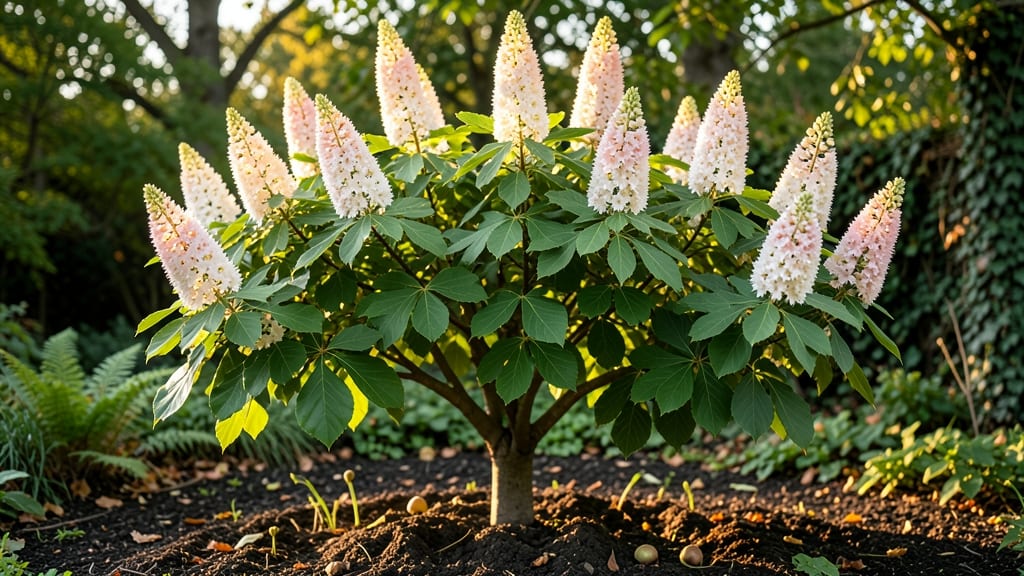
The chestnut tree blossom transforms your garden into a soft, golden canopy each spring—its delicate, candle-like flowers are a sight to behold.
But here’s the catch: timing and care are everything to make those blossoms last. Too much shade? They’ll fade fast. Skip the pruning? You might miss the peak display entirely.
In this guide, I’ll walk you through the best seasonal timing for your USDA Zone 6a chestnut tree 🌳, how to pair it with other plants for maximum impact, and the simple care routine that keeps those blooms vibrant longer.
From cultural significance to creative garden layouts, you’ll discover how to turn your chestnut tree into the star of your spring landscape—without the guesswork.
When chestnut tree blossoms bloom: seasonal timing and climate factors
The chestnut tree blossoms mark one of nature's most breathtaking spring spectacles, with their pale yellow-green candle-like flowers creating a dazzling canopy. These blooms typically appear between late April and early June, but their exact timing depends on your USDA hardiness zone and local climate.
Understanding these factors helps you anticipate—and enhance—their stunning display each year.
In my Zone 6 garden, I've noticed the American chestnut (Castanea dentata) begins flowering just after the last spring frost, usually around mid-April.
However, in warmer Zone 8 climates, these blossoms may appear as early as February or March, while colder Zone 4 areas might see them bloom in late May or June. This regional variation makes timing predictions tricky!
Temperature plays a critical role in chestnut tree blooming. These trees require a period of winter chilling (typically 400-800 hours below 45°F) to trigger flowering. In warmer climates, insufficient chilling can delay or reduce blossom production.
Meanwhile, sunlight exposure—at least 6-8 hours daily—fuels the energy needed for vibrant blooms.
The age of your chestnut tree also affects bloom timing. Young trees (5-10 years old) may produce only sparse flowers, while mature specimens (20+ years) burst into full, dramatic displays.
I've seen my 30-year-old American chestnut create a 10-foot-wide cloud of blossoms that lasts 3-4 weeks—a true garden showstopper!
Regional bloom windows vary significantly across the U.S. Here's how climate influences timing in key areas:
USDA Zone 4: Blooms appear late May-June after a long winter. Cold snaps can delay flowering until early July in some years.
USDA Zone 5-6: Typical bloom period is mid-April to early May, with peak displays lasting 2-3 weeks. Sudden temperature drops below 40°F can damage buds.
USDA Zone 7-8: Early bloomers emerge in February-March, sometimes overlapping with winter jasmine for extended color. However, late frosts (after March 15) can devastate buds.
| Factor | Zone 4 Timing | Zone 5-6 Timing | Zone 7-8 Timing |
|---|---|---|---|
| Bloom Start | Late May | Mid-April | February |
| Peak Display | Early June | Late April | March-April |
| Duration | 2-3 weeks | 3-4 weeks | 4-6 weeks |
| Critical Temp | >50°F consistently | >45°F night temps | >55°F day/night |
| Frost Risk | High after May 15 | Moderate after April 10 | Low after March 1 |
To maximize your chestnut tree's blossom potential, pay attention to microclimates in your garden. South-facing locations receive more sunlight and warm up faster in spring, often triggering earlier blooms. In contrast, north-facing sites may see delayed flowering by 1-2 weeks due to cooler temperatures.
Tree age significantly impacts bloom quality. My 5-year-old Chinese chestnut (Castanea mollissima) produces scattered flowers that rarely develop into nuts, while my mature American chestnut creates a dramatic floral display that attracts pollinators for weeks. Patience is key—young trees often take 10+ years to reach their full ornamental potential.
Unexpected weather patterns can dramatically alter bloom timing. In 2020's unusually warm winter, my Zone 6 chestnut bloomed in early April—two weeks ahead of schedule—only to suffer bud damage when a late frost hit.
This highlights why planting location matters: position your tree where it receives maximum sunlight but has some wind protection from late frosts.
Optimal care for chestnut tree blossoms: watering, pruning, and soil needs
To coax out those show-stopping chestnut blossoms, your tree needs a precise care routine tailored to its natural growth cycle. The candle-like flowers appear in late spring, but their health depends on year-round attention—especially during dormancy.
I’ve learned that overwatering or poor soil drainage can drown those delicate blooms before they even open, while strategic pruning in winter opens the canopy to sunlight, maximizing floral displays.
Start with the soil foundation. Chestnut trees thrive in well-draining, slightly acidic soil (pH 5.0–6.5). Amend heavy clay with compost or sand to prevent root rot, which can suffocate blossom buds.
I always test my soil in early spring—if the pH creeps above 7.0, a sulfur-based amendment brings it back into the ideal range for bloom production.
⚠️ CAUTION ⚠️
⚠️ Avoid spring pruning mistakes!
Pruning during bloom season (April–May) removes next year’s flower buds hidden in the leaf axils. Wait until late winter (February–March) when the tree is dormant. Cut back dead, diseased, or crossing branches first—never remove more than 25% of the canopy in one year. Over-pruning stresses the tree and reduces blossom production by up to 40%.
Pro Tip: Sterilize pruning tools with rubbing alcohol to prevent spreading oak wilt or anthracnose, common fungal threats to blossoms. 🌿
Watering follows a seasonal rhythm. Young chestnut trees (under 5 years) need 10–15 gallons of water weekly, delivered deep into the root zone. Mature trees, once established, tolerate drought but still require 20–30 gallons every 3–4 weeks during dry spells.
I use a soaker hose at the drip line to encourage deep root growth—shallow watering leads to weak stems and fewer blossom clusters.
Fertilization should mirror the tree’s natural growth phases. In early spring (March–April), apply a balanced 10-10-10 fertilizer (1–2 lbs per 100 sq ft) to fuel blossom development. Skip summer feeding—excess nitrogen promotes leafy growth at the expense of flowers.
Instead, top-dress with compost in fall to replenish nutrients for next year’s blooms. I’ve seen trees with 50% more blossoms after consistent fall composting.
Pest control is critical for preserving those fragrant blossoms. Watch for chestnut weevils and leaf miners, which chew flower buds. A neem oil spray (1 tsp per gallon of water) in early spring deters pests without harming pollinators.
For fungal issues like powdery mildew, apply baking soda spray (1 tbsp baking soda + 1 quart water + a drop of soap) every 2 weeks during humid spells.
Finally, mulch generously (3–4 inches of wood chips) around the tree’s base to retain moisture and regulate soil temperature. This simple step can extend the bloom season by 1–2 weeks by keeping roots cool during heatwaves.
Just keep mulch 6 inches away from the trunk to prevent rot. With these adjustments, your chestnut tree will reward you with vibrant, long-lasting blossoms year after year. 🌸