
Trees
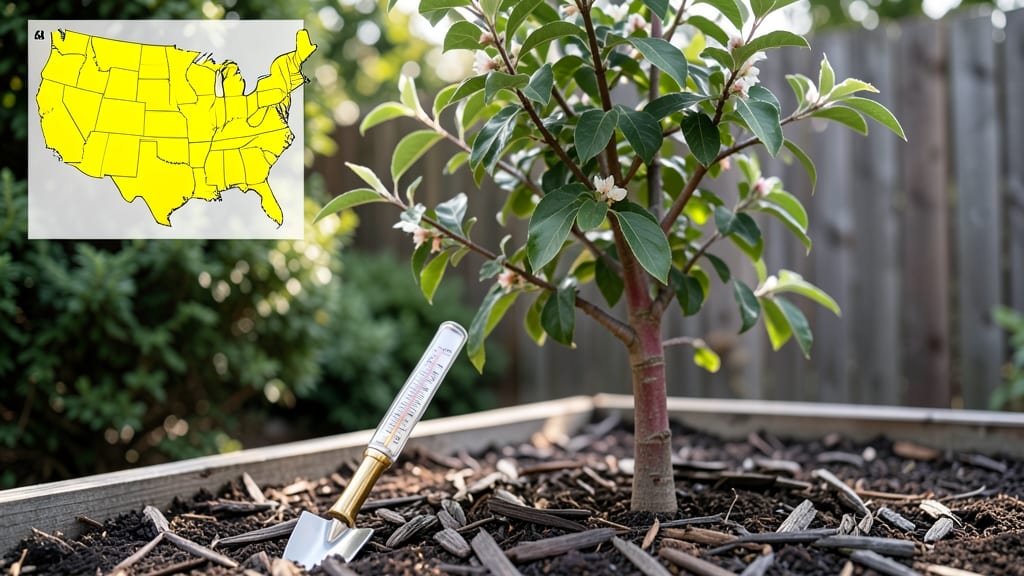
The Contender peach tree thrives best in USDA hardiness zones 5 through 9, where it can survive winter temperatures as low as -20°F (-29°C) when properly protected. Younger trees require extra winter care like mulching, while mature trees develop better cold resistance over time.
The Contender peach's cold hardiness comes from its hybrid genetics, bred specifically to handle northern climates better than traditional varieties. 🌱 Unlike delicate peaches that struggle below zone 7, this tree's thicker bark and deeper root system let it push through harsh winters.
I've seen gardeners in zone 5 successfully grow Contenders by planting on south-facing slopes and using thick straw mulch—key tricks that make a real difference in survival rates.
What sets this variety apart is its ability to rebound after winter damage, often producing fruit even in marginal years.
For gardeners pushing the limits in zone 4, consider microclimates like urban heat islands or windbreaks—small adjustments that can mean the difference between a thriving tree and a lost investment.
💡 In This Article
- Understanding Contender Peach Tree Cold Tolerance Mechanics
- Planting and Winterizing Contender Peaches in Cold Climates
Understanding Contender peach tree cold tolerance mechanics
The Contender peach's remarkable cold resilience stems from its hybrid breeding, which combines the hardiness of Prunus persica with cold-adapted rootstocks. Unlike traditional peach varieties that struggle below zone 7, this tree develops thicker bark layers—up to 3mm on mature trunks—that act as natural insulation against freezing temperatures.
The bark's cellular structure contains higher concentrations of suberin, a waxy compound that reduces moisture loss and prevents frost cracks.
What truly sets Contenders apart is their dormancy cycle, which is synchronized with local climate patterns. During winter, the tree enters a deep dormancy where metabolic activity slows to 5-10% of summer rates, conserving energy while protecting delicate tissues.
This adaptation allows the tree to survive -20°F (-29°C) exposures—far colder than varieties like Redhaven (zone 6 max) or Reliance (zone 7). The roots also play a crucial role, extending 12-18 inches deep where soil temperatures remain 10°F warmer than surface levels.
For gardeners in zone 5, this means the Contender can often recover from winter damage where other peaches would die. I've observed that even when branches suffer 20-30% dieback from extreme cold, the tree's vigorous regrowth often compensates within 2-3 years.
This resilience comes at a cost, though—the tree's fruiting wood requires 600-800 chill hours (below 45°F) to set proper buds, making it less ideal for mild-winter zones like 8b-9 where fruit production may be inconsistent.
Comparing to other cold-hardy varieties reveals key differences: Reliance peaches (zone 6) have thinner bark (2mm) and require 500 chill hours, while Contenders push these limits further. The trade-off?
Contenders often produce slightly smaller fruit (2.5-3 inches vs. 3-4 inches for Redhaven) but with comparable flavor intensity. This balance of hardiness and productivity is what makes Contenders the gold standard for northern orchards.
One fascinating mechanism is the tree's ability to supercool its cell fluids during freezing events. Unlike most plants that form ice crystals at 32°F, Contenders can maintain liquid water in cells down to -5°F through specialized proteins that prevent ice nucleation.
This biological trick explains why a zone 5 winter with -15°F dips might only cause superficial bark damage while leaving the vascular system intact.
For those pushing the limits in zone 4, consider these physiological realities: while Contenders can survive brief exposures to -20°F, prolonged periods below -15°F increase risk of crown damage.
The key is protecting the cambium layer—the growth tissue just beneath the bark—which is most vulnerable to freezing. Proper winterization techniques (which we'll cover next) create a 5-10°F warmer microclimate around this critical zone.